Recent studies shed light on the intricate lives of the Red-winged Fairywren (Malurus elegans), a small bird native to southwestern Australia. These investigations go beyond simple observation, uncovering complex social behaviors and life cycle strategies that challenge initial perceptions. The research indicates that these wrens engage in surprising reproductive and dispersal patterns, and their survival is significantly impacted by environmental factors.
Key Behaviors and Life Cycle Observations
The Red-winged Fairywren exhibits a distinct life cycle and social structure, particularly regarding its offspring.
Dispersal and Mating: Upon reaching independence around three months of age, young Red-winged Fairywrens begin to move to new territories. It is noted that some males may mate with females in these new areas while still laying eggs in their original territory.
Sibling Assistance: In the Manjimup region, male offspring of the Red-winged Fairywren have been observed to remain with their parents. Their role involves assisting in the care and raising of their younger siblings.
Environmental Influence: Adverse weather conditions are identified as a significant challenge, making life considerably more difficult for these birds.
Taxonomic Stability and Nomenclature
The Red-winged Fairywren, scientifically known as Malurus elegans, has a consistent scientific name across various ornithological classifications.
Consistent Identification: Numerous reputable ornithological databases and checklists, including those from Clements, eBird, and the Handbook of the Birds of the World, have consistently identified the species as Malurus elegans. This stability suggests a well-defined taxonomic status.
Common Names: The bird is known by several common names, including Red-winged Fairywren, Red-winged Wren, Marsh Wren, Elegant Fairy Wren, and Graceful Wren. In French, it is referred to as Mérion élégant.
Physical Characteristics
Detailed descriptions of the Red-winged Fairywren's appearance are available, aiding in its identification.
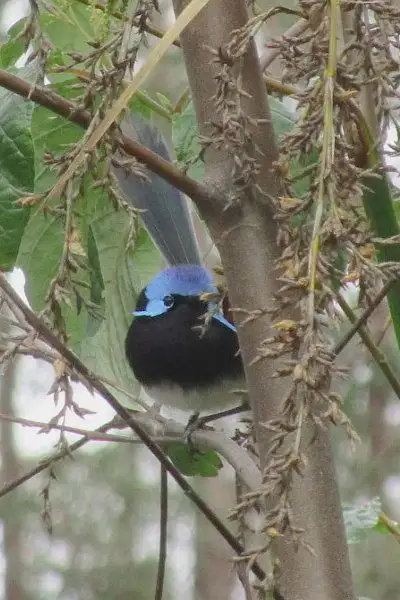
Male Plumage: Breeding males are characterized by a pale blue "helmet," a black throat and breast, a small pale blue patch on the back, and a distinct chestnut shoulder patch.
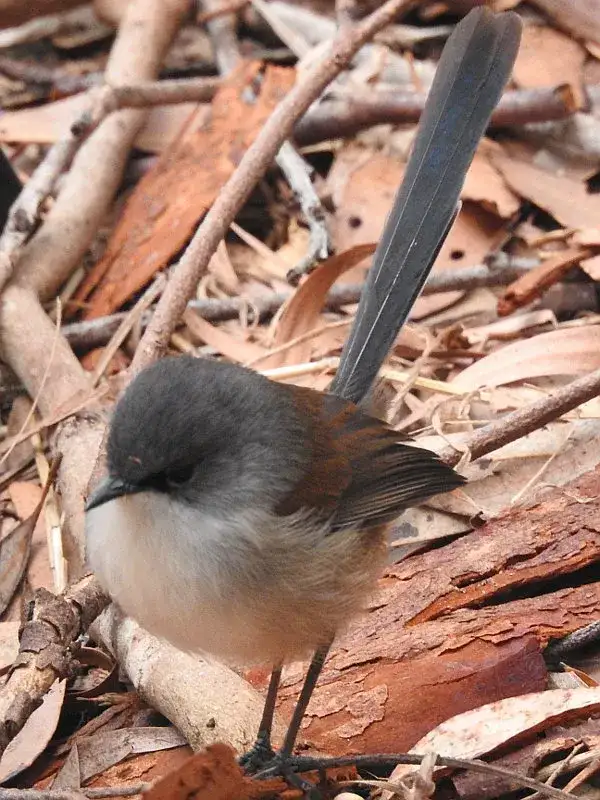
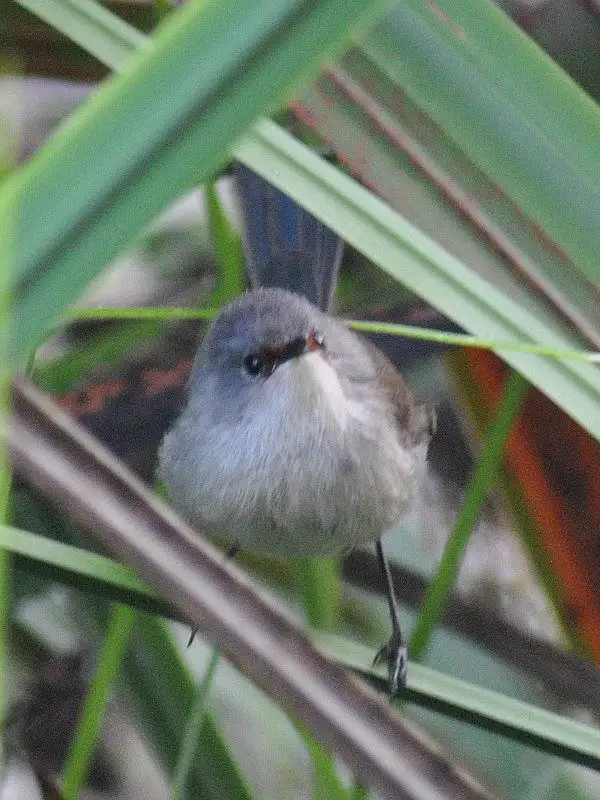
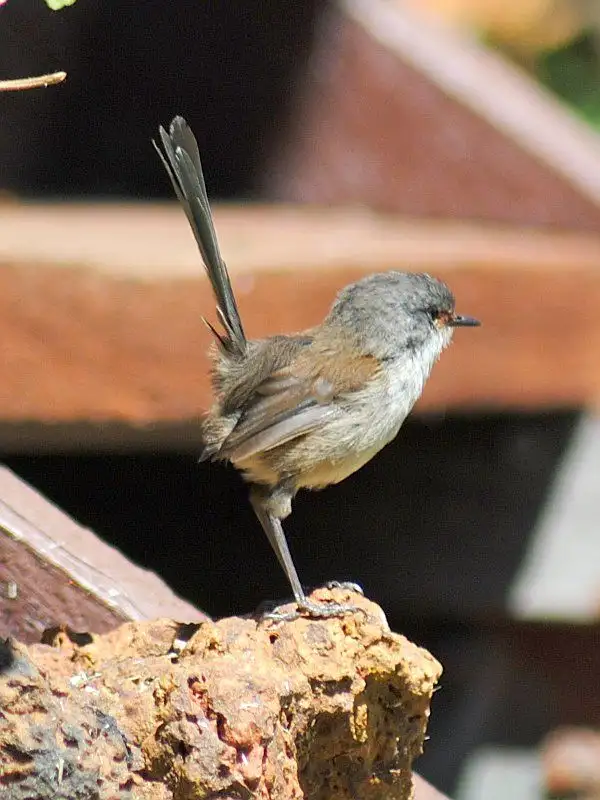
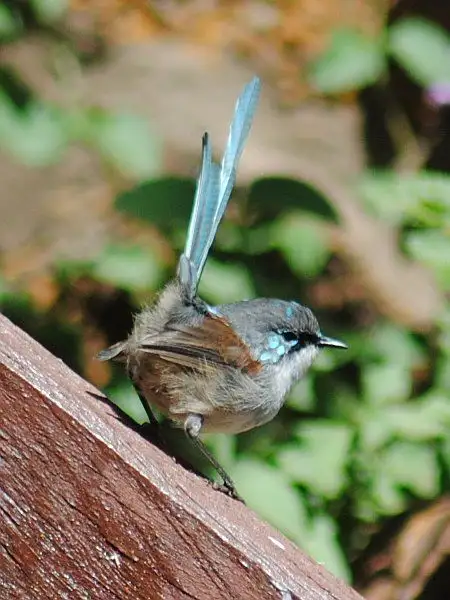
Female Plumage: Females are generally grayish-brown with lighter underparts. They possess warm brown upperwings, a long blue-gray tail that is often held cocked, rufous lores (the area between the eye and the beak), and a black bill.
Size and Tail: It is a small bird distinguished by a notably long blue-gray tail, which is frequently held in an upright position.
Habitat and Distribution
The Red-winged Fairywren is specifically found in certain ecological niches within Western Australia.
Read More: Orangutan Mothers Plan Playdates for Babies in Borneo
Geographic Range: The species is located in southwestern Western Australia.
Preferred Habitat: They inhabit wet areas that feature dense vegetation. The type locality, the original location where the species was described, is noted as the Swan River in southwestern Australia.
Conservation Status
While detailed conservation status is not extensively covered in the provided text, one source briefly lists it as "Least Concern" (LC). However, another source indicates "Near threatened" status with categories of "Extinct in the Wild (EW)" and "Critically Endangered (CR)" to "Vulnerable (VU)" and "Near Threatened (NT)" also listed, suggesting a complex or possibly debated conservation outlook. Further investigation into these varied assessments would be beneficial.
Sources consulted for this report indicate differing conservation statuses, ranging from Least Concern to Near Threatened. This discrepancy warrants further examination to ascertain the current precise conservation standing of the Red-winged Fairywren.
Sources Used:
Particle:
https://particle.scitech.org.au/earth-water/the-radical-world-of-red-winged-fairy-wrens/- Provides insights into behavioral aspects, including dispersal and sibling assistance, and notes environmental challenges.Avibase:
https://avibase.bsc-eoc.org/species.jsp?avibaseid=378EF7E4- Primarily details the consistent taxonomic naming of the species across various global checklists and databases.eBird:
https://ebird.org/species/rewfai1?siteLanguage=en_AU- Offers a descriptive summary of the physical appearance of both male and female Red-winged Fairywrens, along with habitat information.Birds of the World:
https://birdsoftheworld.org/bow/species/rewfai1/cur/introduction- Confirms the scientific name and provides details on its type locality, also mentioning common names in various languages.mdahlem.net:
https://mdahlem.net/birds/16/rwfairy.php- Lists alternative common names and provides context for their own observations and sound recordings.oiseaux.net:
https://www.oiseaux.net/birds/red-winged.fairywren.html- Lists common names in multiple languages and provides a summary of conservation status categories, indicating potential threats.