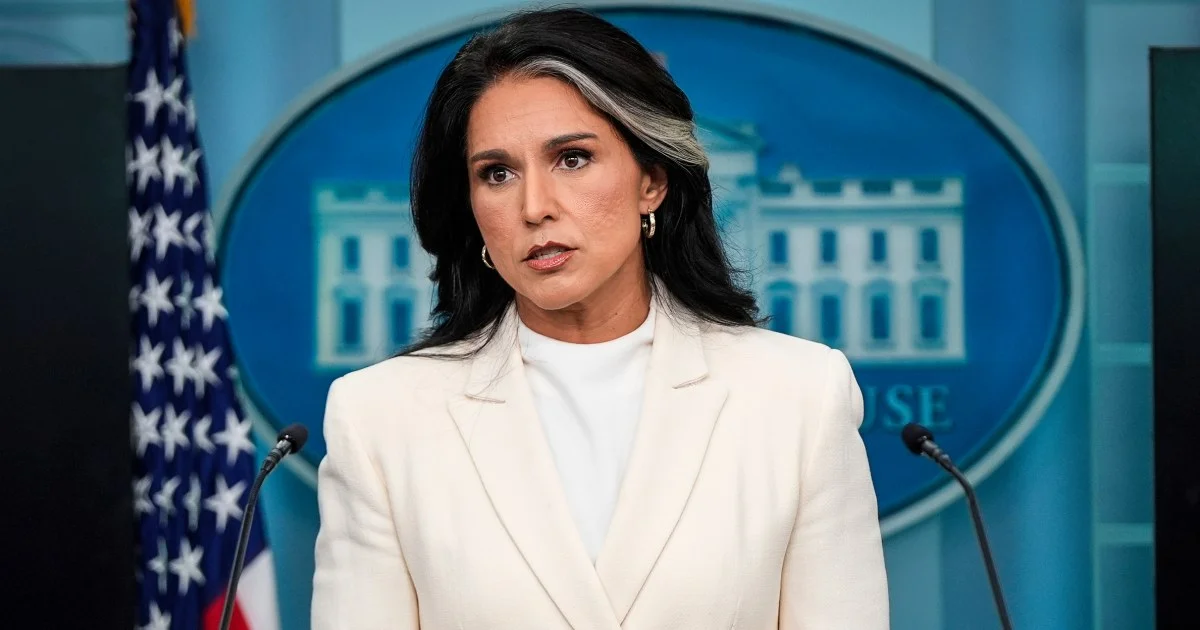
A highly classified whistleblower complaint, reportedly detailing allegations of wrongdoing by Director of National Intelligence Tulsi Gabbard, has been transmitted to Congress after an eight-month period during which its disclosure was delayed. The complaint, which was kept in a safe, has become a focal point of contention, with the whistleblower's attorney accusing Gabbard's office of stonewalling and Gabbard's office asserting the complaint's lack of credibility and blaming previous inaction by the Inspector General.

Background of the Complaint
The core of the issue revolves around a whistleblower complaint filed in May. This complaint alleged that Director of National Intelligence Tulsi Gabbard restricted the distribution of a highly classified intelligence report for political reasons. It further claimed that the Inspector General for the Intelligence Community failed to report a potential crime to the Department of Justice, also for political motives. The substance of the complaint has not been publicly disclosed, citing its highly classified nature.
Read More: Trump Disagrees with Federalist Society, Judge Stops His Courtroom Talk
The complaint was reportedly filed in May.
Allegations include restricting classified information distribution and failure to report a potential crime to the Justice Department.
The nature of the allegations involves highly classified intelligence.
Timeline of Events and Key Actors
The handling of the whistleblower complaint has been protracted, involving several key individuals and offices. The timeline suggests a significant delay between the filing of the complaint and its eventual transmission to Congress.

May: Whistleblower complaint filed, alleging wrongdoing by DNI Tulsi Gabbard.
October: Jack Dever takes over as ODNI General Counsel. The ODNI official states Gabbard did not learn of her responsibility for outlining security guidance for sending the complaint to Congress until this time.
Late October/Early November: Christopher Fox begins his role as current Inspector General. Fox later stated he learned of the complaint the day after his appointment.
November: Whistleblower's attorney, Andrew Bakaj, reportedly sends a letter to Gabbard's office and Congress, accusing the Director of preventing the complaint from reaching lawmakers and requesting an investigation into its handling.
January 30: Inspector General Christopher Fox receives security guidance from Gabbard and states his intention to pass along the memos.
February 2: Inspector General Christopher Fox sends a letter to congressional intelligence committee leaders.
Early February: The complaint is hand-carried to Congress by a spokesperson for the Inspector General's office.
Present: Key congressional figures, including Senators Tom Cotton and Mark Warner, and Representative Rick Crawford, have reviewed the complaint.
Conflicting Narratives on Delay and Credibility
Accounts from Gabbard's office and the whistleblower's legal representation present divergent explanations for the delay and the complaint's validity.
Read More: New Law Stops Government Payments to People Who Have Died

Gabbard's Office Position
A spokesperson for Director of National Intelligence Tulsi Gabbard, Olivia Coleman, has characterized the complaint as "baseless allegations" and "a classic case of a politically motivated individual weaponizing their position."
Gabbard herself has stated she is not and never has been in possession or control of the complaint.
She claims she first saw the complaint two weeks prior to her statement (from early February) for guidance on secure transmittal to Congress.
The complaint was not credible, according to Director of National Intelligence Tulsi Gabbard and Inspector General Christopher Fox.
The ODNI maintains that any perceived "delay" in forwarding the complaint to Congress rested with the former IC IG's inaction.
Coleman stated on X that it took six months of negotiation with the director of national intelligence to share the complaint.
Whistleblower's Representation
Attorney Andrew Bakaj, representing the whistleblower, has publicly stated that Gabbard's office is deliberately obstructing the disclosure of the complaint.
Read More: Lawmakers Question Attorney General Bondi on Epstein Files
Bakaj has accused Gabbard of "stonewalling" the complaint and argues there is no justification for keeping it from Congress since the previous spring.
He stated that his client is willing to speak with lawmakers about the complaint.
Bakaj claims he was never informed that any determinations about the complaint's credibility had been reached.
The whistleblower's lawyer asserted that the delay of eight months was unreasonable.
Congressional Response and Review
Members of Congress who have been briefed on the complaint offer varying perspectives on its credibility and the circumstances surrounding its handling.
Senator Tom Cotton (R-Ark.), Chairman of the Senate Intelligence Committee, stated he agreed with the inspectors general who concluded the complaint is "not credible."
Representative Rick Crawford (R-Ark.), Chairman of the House Permanent Select Committee on Intelligence, also believes the complaint was an attempt to "smear Gabbard’s reputation" and concurred that it was not credible.
Senator Mark Warner (D-Va.), top Democrat on the Senate Intelligence Committee, pointed out that Gabbard failed to report the complaint to Congress in due time and that she pledged under oath to protect whistleblowers.
Investigative and Legal Ramifications
The complaint implicates multiple federal agencies and raises potential issues of executive privilege. The Inspector General's office has provided information regarding the complaint's handling.
Read More: Minister Asks to Stop New Top Job Choice Until Old Files Are Out
The Intelligence Community Inspector General, Christopher Fox, confirmed in a letter to Congress that the intelligence underlying the complaint was exceptionally sensitive.
Fox stated he received final approval on January 30th to share the complaint, after which it was transmitted to Congress.
The complaint also implicates another federal agency beyond Gabbard's office.
The situation raises potential claims of executive privilege that may involve the White House.
The whistleblower's legal team has asked Congress to investigate the handling of the complaint.
Conclusion and Outstanding Questions
The whistleblower complaint against Director of National Intelligence Tulsi Gabbard has surfaced with significant controversy regarding its delay and credibility. While key Republican members of congressional intelligence committees have dismissed the complaint as not credible, Democrats have highlighted the extended delay in its transmission to Congress. Gabbard's office has asserted the complaint is baseless and politically motivated, while the whistleblower's attorney maintains it is being intentionally obstructed.
Read More: Congress Leader Accuses Finance Minister of Lying to Parliament About WTO Deal
The exact substance of the complaint remains undisclosed due to its classified nature.
The differing accounts of when security guidance for sharing the complaint was sought and provided create a point of contention.
The role of previous Inspector General Tamara Johnson in the delay remains a subject of differing interpretations.
Further clarification is needed on the Inspector General's office's determinations regarding the complaint's credibility, as Bakaj claims he was not informed of any such findings.
Sources
NBC News:
Tulsi Gabbard calls claim she mishandled whistleblower complaint a 'blatant lie'
Tulsi Gabbard accused of trying to 'bury' whistleblower complaint
The New Republic:
Tulsi Gabbard’s Whistleblower Case Just Got a Whole Lot Worse for Her
Is Tulsi Gabbard Stalling a Giant Whistleblower Complaint Against Her?
The Guardian:
Republicans dismiss whistleblower complaint against Tulsi Gabbard
Esquire:
CBS News:
Daily Mail:
Secret whistleblower complaint against Tulsi Gabbard finally shared after eight-month standoff
The Daily Beast:
Freedom.press:
Newsweek:
Tom Cotton gives update on Tulsi Gabbard "whistleblower" after review
MSNow:
A whistleblower complaint about Tulsi Gabbard has been kept from Congress for months
SAN:
DNI Tulsi Gabbard denies whistleblower allegations, which remain secret
PBS NewsHour:
Attorney says Gabbard is holding up a complaint about her actions, which her office denies
Read More: Immigration Leaders to Speak to Senate as Government Funding May End