Secretary of War Pete Hegseth has greenlit a second wave of appointments to the Science, Technology and Innovation Board (STIB), an advisory group now comprising 33 members. This expansion signifies a concerted effort by the Pentagon to bolster its pursuit of technological advancement. The STIB itself is a recent consolidation, formed earlier this year by merging the older Defense Science Board (DSB) and the Defense Innovation Board (DIB).
The STIB aims to provide "clear answers, not more bureaucracy," unifying scientific expertise with private-sector innovation to accelerate the delivery of new capabilities to warfighters. The board's mandate includes addressing priorities such as the Kwajalein Atoll and Reagan Test Site. Newly appointed members were chosen for their backgrounds in science, technology, and private industry. Notable additions include former Wash100 honorees James Geurts, Bruce Jette, David Norquist, and Steven Walker.
Read More: Air Force Major Detained for Calling for President's Impeachment

Focus on Innovation and Private Sector Integration
The STIB is structured to leverage the strengths of its predecessor organizations. It is intended to combine the "deep scientific and technical rigor" of the DSB with the "private-sector agility and disruptive mindset" of the DIB. A specific Subcommittee on National Security Innovation is tasked with examining and advising on innovation pathways, emerging technologies, commercial best practices, organizational design, and human capital, all while seeking to integrate America's broader innovation ecosystem into national security efforts.

This move follows other initiatives aimed at embedding private sector expertise within the Department of War. Earlier this year, a program designated B.O.N.D. saw over 250 business executives from companies like Apple, Ford, Microsoft, and Tesla being integrated into military acquisition processes. This program has reportedly engaged over 100 private-sector experts and embedded 72 former CEOs, COOs, and CIOs into active Department of War missions, spanning research and engineering, acquisition, personnel, and information technology. The stated goal of B.O.N.D. is "WARFIGHTER SUPREMACY THROUGH INDUSTRIAL DOMINANCE."
Read More: Chrome mimeHandler API lets extensions handle file types

Shifting Academic Ties and Departmental Culture
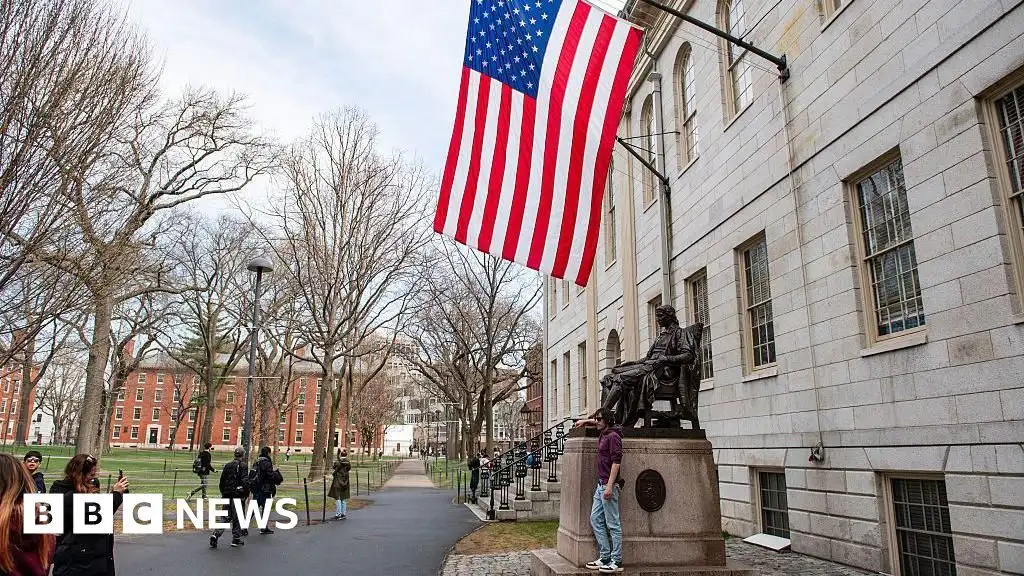
Secretary Hegseth has also been active in reshaping the Pentagon's relationship with academic institutions. He has ordered the cancellation of military attendance and fellowships at numerous elite universities, including Harvard, Yale, Princeton, Columbia, MIT, and Brown. Hegseth has publicly criticized these institutions for perceived political bias, labeling it "wokeness and weakness," and has stated the military will no longer fund what he calls "woke indoctrination." Some reports suggest this academic realignment is tied to concerns over research programs partnering with entities like the Chinese Communist Party.
These actions have prompted debate regarding their impact on officer development and the broader defense innovation pipeline. Critics worry about severing connections to institutions that foster critical thinking and provide diverse perspectives, potentially narrowing the military's access to cutting-edge research and talent. Hegseth, a former Army National Guard infantry officer who served in Iraq and Afghanistan, has himself been a vocal critic of certain academic trends, suggesting a desire to "refocus on building lethal, effective leaders."
Read More: Pentagon Unites Drone Programs Under New Office
Broader Context and Hegseth's Tenure
The establishment of the STIB and Hegseth's broader policy shifts occur against a backdrop of perceived efforts to streamline Pentagon operations and accelerate procurement. Hegseth has spoken of a "war on Pentagon bureaucracy," emphasizing the need to increase competition, adopt commercial technology by default, and reduce excessive regulations.
Hegseth's tenure has been marked by a departure from traditional non-partisan defense secretary conduct, with some observers noting a tendency towards partisan rhetoric. His public statements have included strong critiques of previous administrations and a focus on what he terms "warrior ethos" and "lethality over likability." His background includes extensive media appearances and prior considerations for other cabinet positions. The Department of Defense was renamed the Department of War in September 2025.