


Major U.S. stock indexes ended a tumultuous week lower, marking a third consecutive period of decline, as oil prices surged above $90 a barrel amidst escalating geopolitical tensions. The Dow Jones Industrial Average, S&P 500, and Nasdaq Composite all registered losses by the week's close on March 13, 2026. This downturn occurred despite attempts by the International Energy Agency (IEA) to stabilize markets with a record release of 400 million barrels of oil from strategic reserves.

"The Dow Jones Industrial Average dropped 475 points, or 0.97%, to 47,230.87 on Wednesday, March 11, 2026 — a session that delivered a February CPI print matching expectations at 2.4%, a 13% Oracle (ORCL) explosion on extraordinary AI earnings, and the largest emergency oil reserve release in the history of the International Energy Agency, and still could not prevent the third day of meaningful index losses in four sessions."
The surge in oil prices appears linked to renewed conflict in the Middle East, specifically concerning Iran and the Strait of Hormuz. Reports indicate Iran has threatened to keep the vital shipping lane closed, leading to concerns about global supply disruptions. This instability has also coincided with rising mortgage rates, reaching 6.11%, and a potentially destabilizing war with Iran, which could impact economic growth. The U.S. economy's growth rate of just 0.7% last quarter adds another layer of uncertainty to the financial landscape.
Read More: Middle East Conflict Tax Raises Shipping Costs by 250% from March 2, 2026
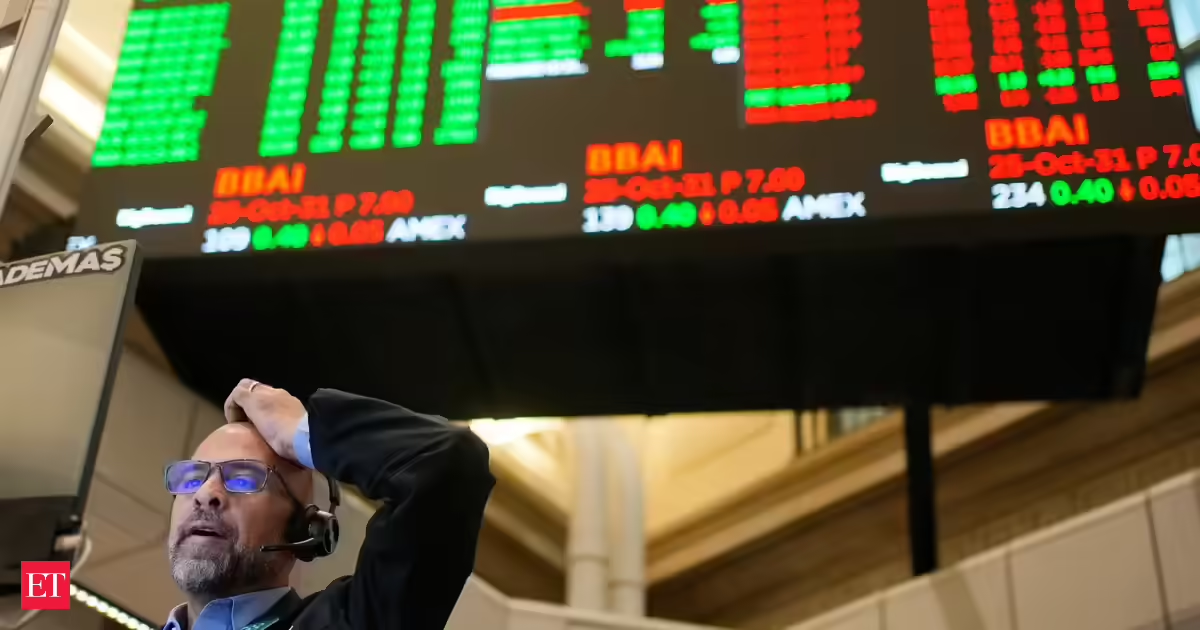
Market Swings and Sector Performance
Throughout the week, market activity reflected significant volatility. Indexes experienced sharp swings, with some days seeing rebounds followed by further declines. The energy sector, however, showed strength, with stocks like VLO, MPC, and PSX standing out as oil prices climbed. Conversely, the financial sector faced headwinds, with the KBW Bank Index heading for its lowest close in nearly a year.
Individual stock performances were mixed. Oracle (ORCL) experienced a significant surge of 13% driven by strong earnings reports related to artificial intelligence. In contrast, CPB saw its shares crash to a 23-year low, and AeroVironment (AVAV) fell 10% after missing revenue expectations.
Broader Economic Signals
Economic data released during the week painted a mixed picture. While the February Consumer Price Index (CPI) print matched expectations at 2.4%, suggesting some inflation control, other indicators pointed to potential weakness. The aforementioned meager economic growth of 0.7% in the prior quarter and concerns that the ongoing conflict could alter inflation trends add to the complex economic narrative. The Federal Reserve's approach also came under scrutiny, with odds for a "no-cut" policy increasing to 19.3%.
Read More: US Military Operation Epic Fury May Lower Crude Oil Prices Soon
Global Market Divergence
While U.S. markets faced pressure, markets in the Asia-Pacific region closed mostly higher, reflecting a degree of optimism perhaps stemming from geographic distance from the Middle Eastern conflict. European markets, however, opened lower, indicating a global divergence in market sentiment driven by varying exposures to the escalating tensions.
Background and Context
The market's reaction appears to be a complex interplay of factors, including geopolitical events, commodity price fluctuations, and underlying economic conditions. The conflict in the Middle East, specifically Iran's actions and rhetoric regarding the Strait of Hormuz, has become a primary driver of market sentiment, impacting energy prices and broader investor confidence. This, combined with a less-than-robust economic growth figure and mixed inflation data, has created an environment of significant market uncertainty. The ongoing volatility underscores the fragile nature of global financial markets when confronted with both geopolitical instability and underlying economic vulnerabilities.
Read More: NASCAR Antitrust Lawsuit Settled by Bob Jenkins' Team and 23XI Racing