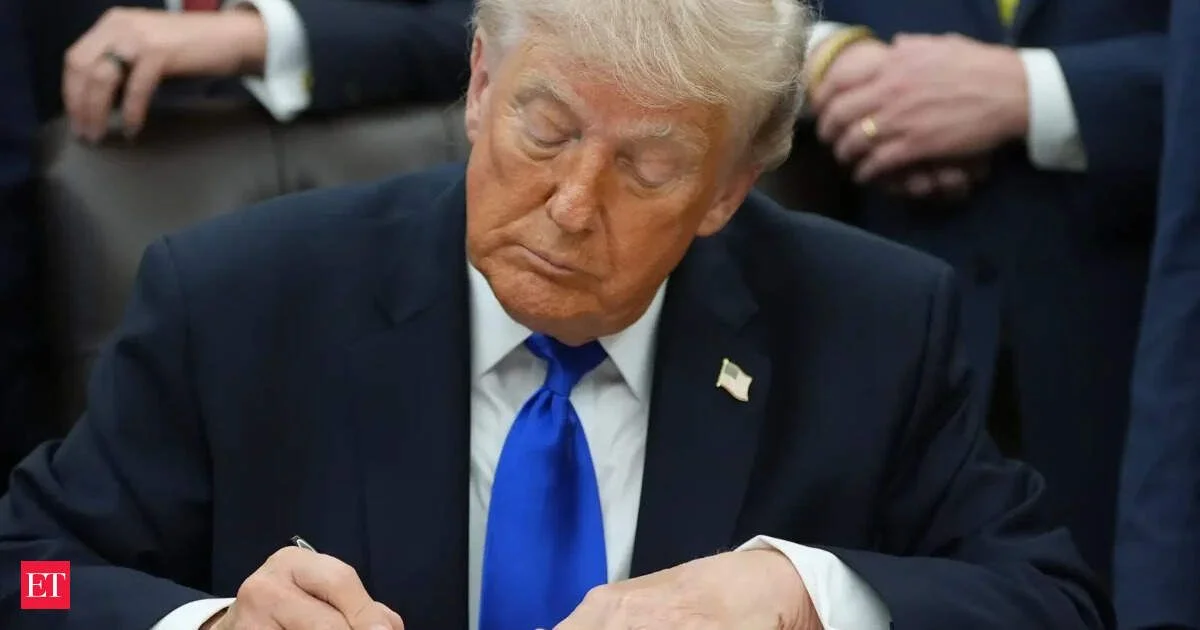
President Donald Trump announced on Friday a substantial hike in tariffs on cars and trucks imported from the European Union, pushing the rate to 25% effective next week. This action escalates trade tensions and signals a sharp departure from a previously agreed-upon trade framework. The stated justification for this move is the EU's alleged non-compliance with the terms of a trade deal struck in July 2025.
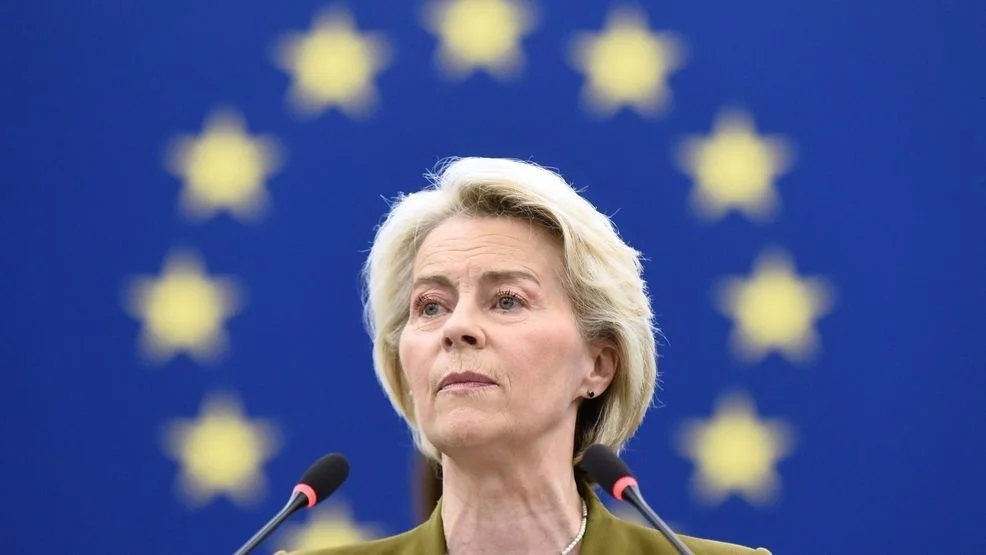
The president declared his intention via a social media post, asserting that the EU "is not complying with our fully agreed to Trade Deal." Details regarding the specific breaches or objections were not elaborated upon in his statement. This escalation could significantly impact the global economy, especially given its current delicate state.
Trade Deal Discontent
The "Turnberry Agreement," named after Trump's golf course in Scotland, was intended to smooth trade relations between the US and the EU. It was brokered last July between Trump and European Commission President Ursula von der Leyen. At the time, the EU agreed to remove tariffs on US imports in return for a 15% tariff on most EU products. Trump's latest pronouncement revises this, raising the automotive tariff to 25% and indicating an expectation for European carmakers to shift production to the United States. He suggested that if cars and trucks are produced in US plants, "there will be NO Tariff."
Read More: US May Add Tariffs on Australian Goods Due to Forced Labour
However, the agreement has faced prior challenges. Reports from January indicate that progress on the deal had stalled due to disputes over steel and aluminum tariffs, with major European economies resisting US plans. Furthermore, a Supreme Court ruling in February reportedly reduced certain EU tariffs to 10%, questioning the president's authority to impose economic emergency tariffs.
Trump also linked the move to potential domestic political pressures, with rising inflation levels creating a backdrop as he heads into the November midterm elections.