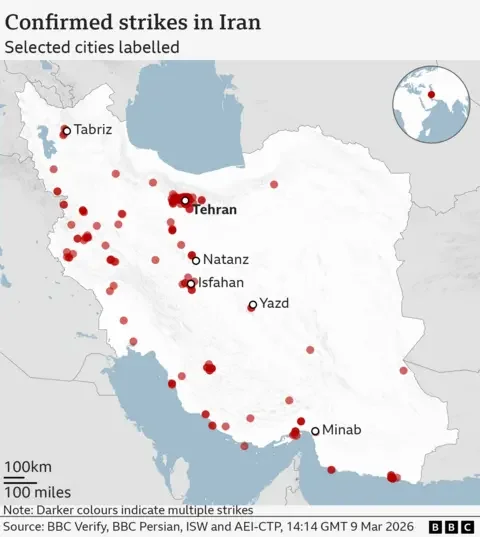
New footage appears to show a US Tomahawk missile striking an Iranian naval base in Minab, a city in southern Iran, located perilously close to a primary school. The strike occurred near the Shajarah Tayyebeh elementary school, where Iranian authorities report 168 people, many of them children, were killed in a separate incident. The newly surfaced video, verified by multiple weapons experts, directly challenges official narratives and raises significant questions about the origin of the deadly blast.
Munitions Analysis Points to US Involvement
Several independent analyses of the video converge on the identification of the munition as a US-made Tomahawk missile. Experts, including NR Jenzen-Jones, director of Armament Research Services, and former US Army explosive ordnance disposal technician Trevor Ball, have publicly stated that the missile depicted in the footage is not an Iranian Soumar, pointing to distinctive features absent from Iranian weaponry. “The munition in question is clearly not an Iranian Soumar missile,” stated Jenzen-Jones, underscoring the missile's external engine configuration as a key differentiator. The presence of a Tomahawk missile, a weapon not known to be possessed by either Israel or Iran, strongly implies US responsibility for the strike on the base.
Read More: Russia Ukraine War Casualties Pass 2 Million Mark in July 2026
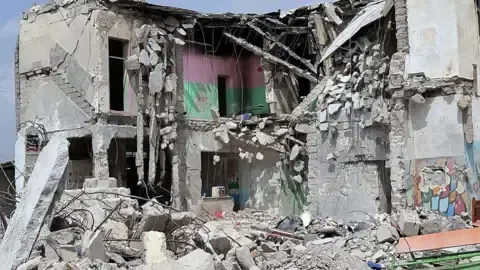
Geographic Proximity and Context
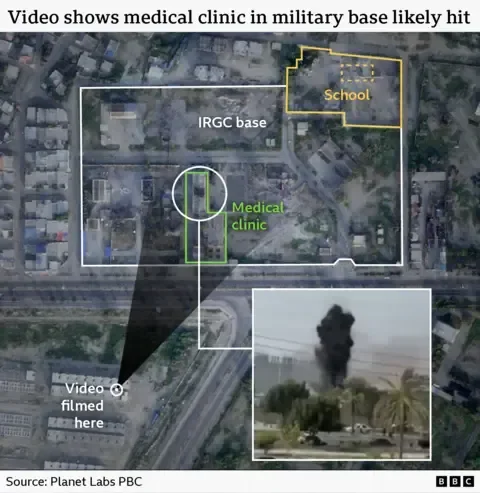
The video, filmed from a construction site opposite the naval base, captures a missile hitting a building within the Islamic Revolutionary Guard Corps (IRGC) compound. Satellite imagery confirms that at least four buildings were impacted in the broader attack, including the school and three structures within the IRGC compound. While the school building was historically part of the wider IRGC complex, it had been segregated for at least eight years and bore clear markers of being an educational facility, such as playing fields and colorful murals. This physical separation complicates claims that the school was directly targeted as part of the military operation.

Conflicting Accounts and Official Statements
US officials have acknowledged striking military targets in southern Iran, stating that American operations have focused on the south, while Israel has largely targeted the north. A US official familiar with internal deliberations indicated to AP that the strike was likely American. Despite this, US President Donald Trump had previously attributed blame for the school strike to Iran. The conflicting statements and the new video evidence create a tangled web of responsibility and accountability in the ongoing conflict.
Read More: Gulf Oil Exports Rise in June but Still Below Pre-War Levels

Background
The incident occurred against the backdrop of a broader war in the Middle East. Iranian state media initially reported scores of children killed in the blast that destroyed approximately half the school during morning classes. The attacks underscore the precariousness of civilian life in conflict zones and the challenges in definitively assigning blame when sophisticated weaponry and layered military operations are involved. The evidence suggests a direct link between US munitions and the area adjacent to the site of the school massacre, demanding further scrutiny of the events of February 28.