


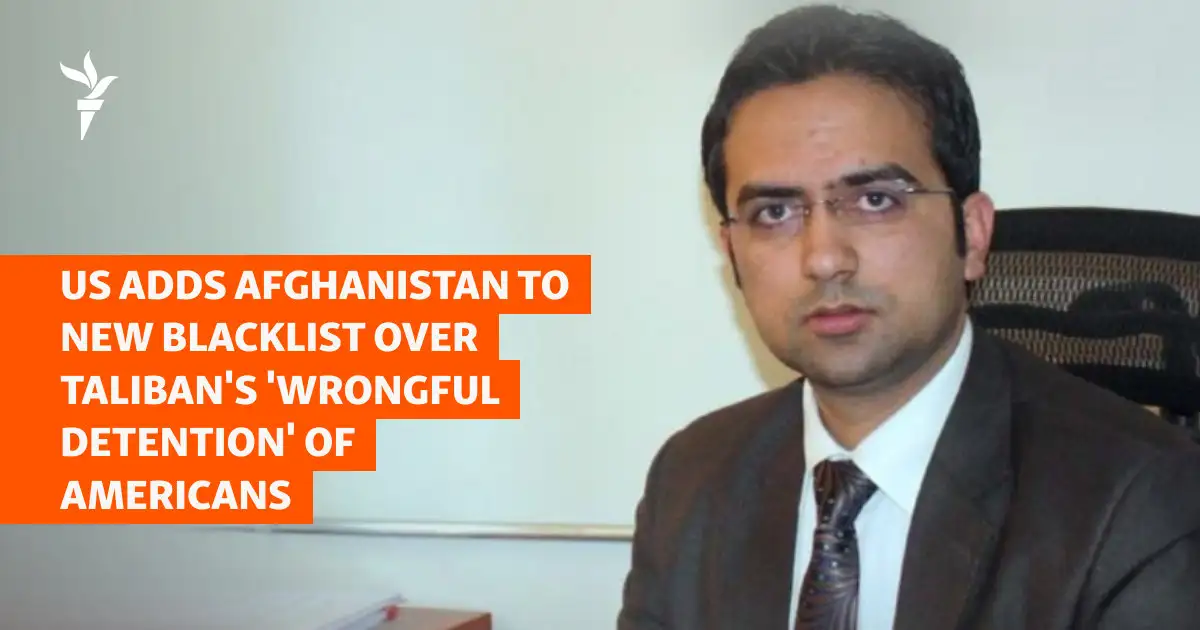
The United States government has officially marked Afghanistan as a state sponsor of wrongful detention as of March 9, 2026. This administrative move by Secretary of State Marco Rubio restricts the use of US passports for travel into the country without explicit, rare permission from Washington. The designation rests on claims that the Taliban-led administration is seizing foreign citizens to use as ' Bargaining Chips ' for money or policy shifts.

Specific names cited by the State Department include Dennis Coyle and Mahmoud Habibi.
The US claims these men are being held without clear legal basis, while the Taliban denies holding Habibi entirely.
This is the second time this specific label has been used; Iran received the same designation just days prior.
The Friction of Narrative
The logic used by Washington suggests a pattern of ' Hostage Diplomacy ' intended to force the US into recognizing or funding the current Afghan government. Conversely, the Taliban’s foreign ministry views these arrests as routine police work. They claim foreigners are only stopped when they trip over local laws and that several have been let go after "legal procedures" ended. The label serves as a formal wall, signaling that the US sees the Afghan legal system not as a court of law, but as a tool for ransom.
Read More: Love Island Star Georgia Harrison May Run for UK Parliament

| US Claims | Taliban Counter-Claims |
|---|---|
| Tactical Kidnapping: Americans taken for ransom/leverage. | Legal Process: Foreigners arrested for breaking specific Afghan laws. |
| Unjust Holding: No evidence of crimes provided to families. | Normal Course: Detainees are released after procedures finish. |
| Non-Recognition: The Taliban government lacks legitimacy. | Sovereignty: Domestic laws apply to everyone inside the border. |
Heavy-Handed Levers and Stuck Gears
"The Taliban needs to release Dennis Coyle, Mahmoud Habibi, and all Americans unjustly detained… and commit to cease the practice of hostage diplomacy forever." — Marco Rubio, US Secretary of State
This designation follows an executive order signed by President Donald Trump in September, which built the machinery for these specific sanctions. The goal is to squeeze the Taliban’s already thin wallet by limiting aid and tightening travel. However, the Taliban response remains stiff. They characterize their ongoing talks with US officials as "constructive" while simultaneously dismissing the "wrongful detention" label as a political fiction.
Mike Waltz, the US ambassador to the UN, told the Security Council that these detentions prove the Taliban is acting in "bad faith."
Human rights groups observe a pattern of "arbitrary arrests" and "disappearances," though the Taliban claims these are isolated incidents of law enforcement.
Family members, like Molly Long (sister of Dennis Coyle), see the new label as a necessary weight to throw on the scale.
Background: The Echoes of Doha
The current standoff is the souring of the 2020 Doha agreement. While that deal paved the way for the US troop exit, the ' Security Promises ' made then are now being used as rhetorical weapons. Washington argues the Taliban failed their international obligations by cracking down on rights and snatching travelers.

The move is investigative in its timing. By labeling Afghanistan and Iran in quick succession, the administration is building a "blacklist" architecture that bypasses traditional diplomacy in favor of high-pressure isolation. For the traveler, the result is simple: the US government will not come for you if you cross this line, as you are now entering a space they have officially deemed a trap.
Read More: US Sub Sinks Iran Ship in Indian Ocean, Survivors Adrift