


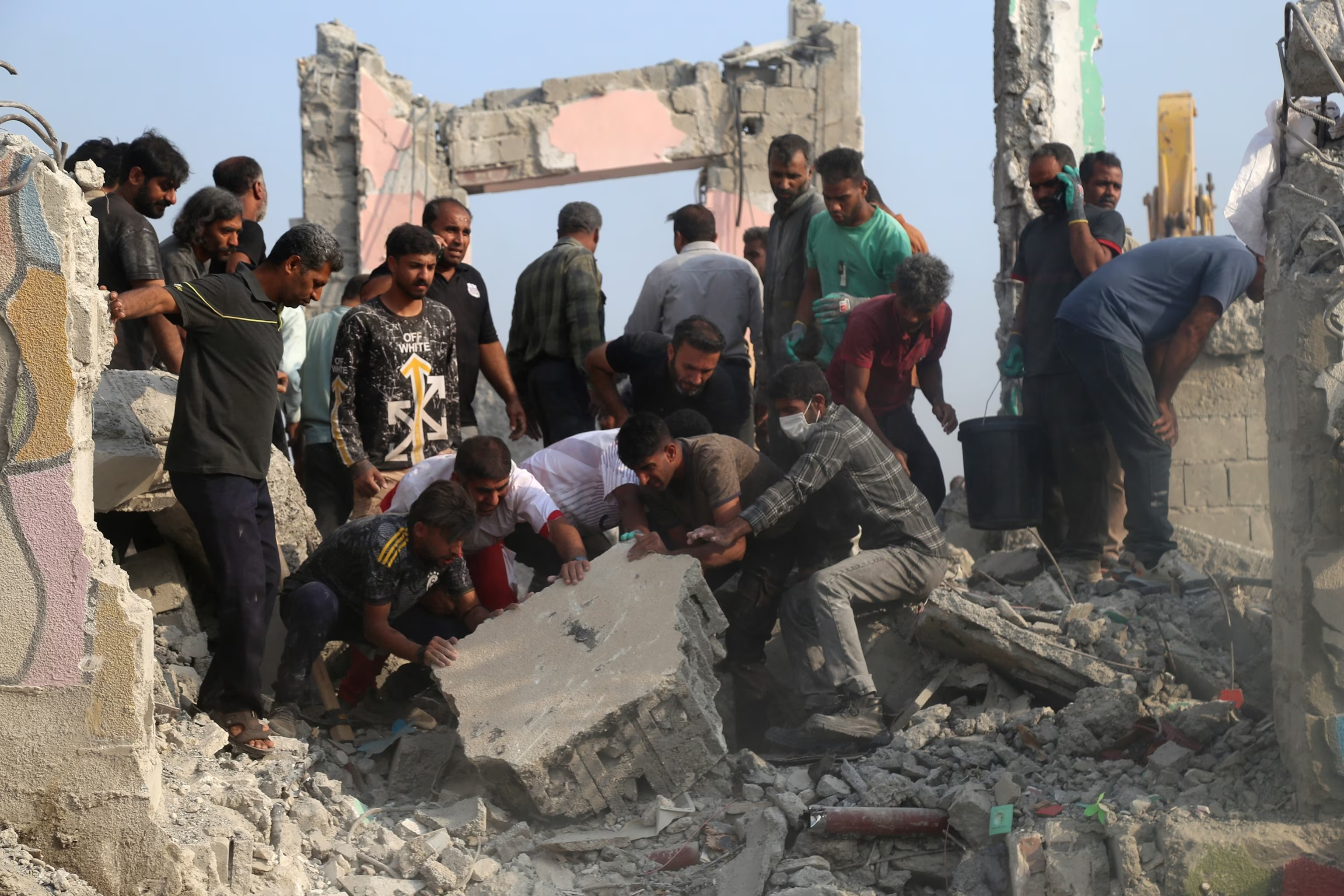
American military investigators signal they believe US forces are most likely responsible for an airstrike on an Iranian girls' school that resulted in significant casualties, including children. The Pentagon has confirmed it is actively investigating the incident, which occurred on February 28th in Minab, a coastal city in southern Iran. Initial assessments from U.S. officials, bolstered by expert analysis of munitions and geolocated footage, point towards an American strike on a neighboring Islamic Revolutionary Guard Corps (IRGC) naval base as potentially being connected to the deadly event at the Shajareh Tayyiba elementary school.

Questions Over Targeting and Intelligence
The strike on the school, reportedly occurring while classes were in session, has ignited sharp criticism and demands for accountability. Iran has reported over 165 fatalities, with some accounts suggesting the death toll could exceed 180, primarily young girls, alongside their parents and school staff. This incident marks one of the deadliest events since military operations involving the U.S. and Israel began against Iran.

U.S. officials have acknowledged the investigation into the airstrike. The Pentagon chief, Pete Hegseth, confirmed the military's engagement with the incident. However, a definitive conclusion on the strike's attribution has not yet been reached by investigators.
Competing Narratives Emerge
While U.S. military investigators are leaning towards American responsibility, the specifics of the targeting and intelligence employed remain subjects of scrutiny. New footage, analyzed by an investigative group, purportedly shows a U.S. Tomahawk missile impacting a compound mere meters from the school. This evidence, coupled with public statements and the location of the strike in relation to known U.S. military operations in southern Iran, strengthens the likelihood of American involvement.
The U.S. Defense Department has referred inquiries regarding the incident to Central Command. Secretary of State Marco Rubio stated that the U.S. would not deliberately target schools, a sentiment echoed by others involved in the ongoing conflict.
International Scrutiny and Iranian Response
The incident has drawn widespread condemnation and calls for investigation from international bodies. The UN human rights office has formally requested an inquiry into the school strike. Iran has vehemently denounced the attack, labeling it a "blatant crime" and demanding action from the international community, including the UN Security Council. Iranian officials have vowed that such "crimes" will not go unanswered.

Iranian state television has broadcast images from the mass funerals of the victims, showing mourners holding photographs of the children and funeral processions. The head of Iran's Red Crescent described the event as uniquely bitter, stating that no single attack had previously resulted in such a simultaneous loss of students, even in other conflict zones.
Context of the Conflict
The airstrike occurred on February 28th, during the initial phase of coordinated attacks by the United States and Israel against Iran. Reports suggest that Israel has primarily targeted northern Iran, while U.S. operations have focused on the south. The rules of engagement governing U.S. military operations have also come under discussion in light of this incident.
Israel, while also investigating the strike, has not taken responsibility for the attack. An Israeli military spokesperson indicated that Israel was unaware of any IDF operations in the specific region where the school was located.
The Shajareh Tayyiba elementary school in Minab, a city within the Hormozgan province, was hit during a period when classes were transitioning between periods. The circumstances surrounding the strike, particularly its proximity to a reported military target, raise complex questions about the efficacy and oversight of precision strikes and the adherence to international humanitarian law.