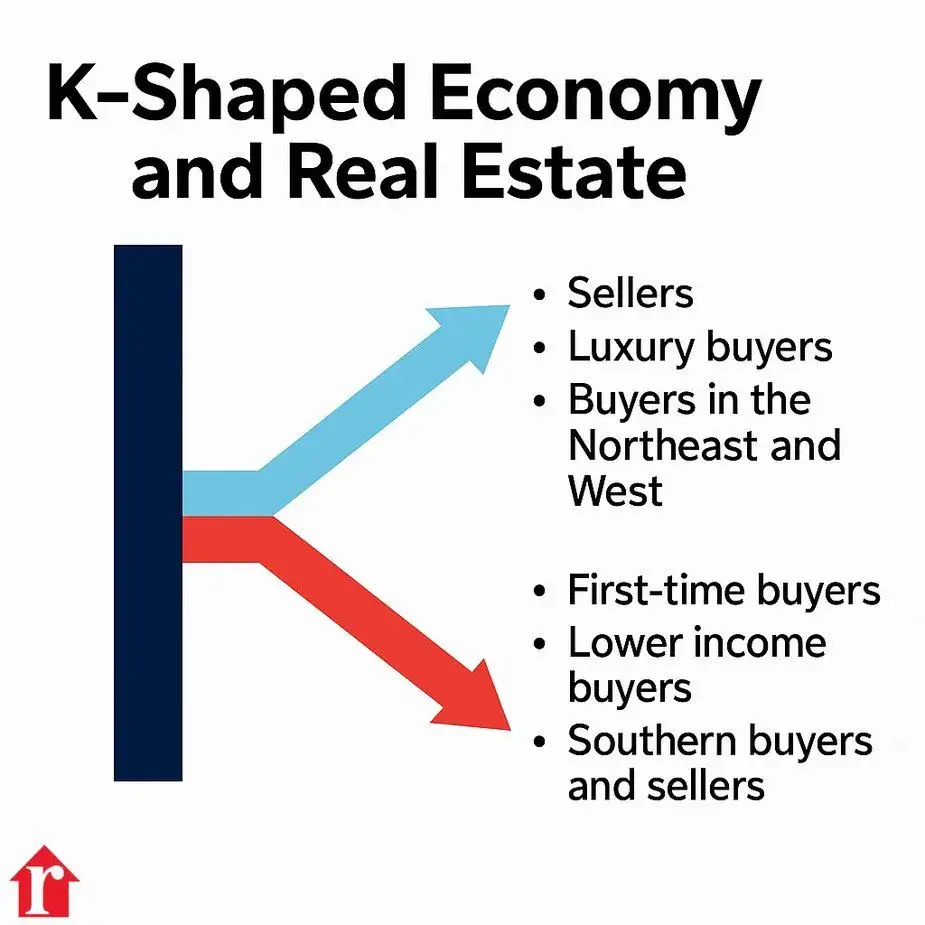
As of today, May 18, 2026, the American housing sector functions as a fragmented dual-track system. Market data reveals that housing has evolved into a primary indicator of a K-shaped economy, where affluent buyers navigate a landscape of choices, while entry-level participants face systemic exclusion.
Market Divergence Indicators
The divergence between buyer demographics is stark, creating two distinct financial realities:

The Upper Track: Equity-rich households and repeat buyers maintain leverage. Luxury housing segments remain stable, supported by consumers insulated from broader affordability constraints.
The Lower Track: First-time buyers are at historic lows. This segment faces a landscape of rising costs, restricted supply, and financing hurdles that inhibit wealth accumulation.
Retail Fallout: Home-improvement and retail entities are recording polar results. Firms targeting the lower track, such as Home Depot and Lowe’s, report reduced guidance as household projects are deferred. Conversely, premium-focused retailers like Williams-Sonoma sustain growth from higher-income segments.
"If mortgage rates came down significantly into the 5% range, that would be a big help. In addition, we simply have to increase the supply of housing." — Professor Wachter, Penn IUR
Strategic Implications
| Demographic Segment | Primary Constraint | Market Position |
|---|---|---|
| High-Income/Equity-Rich | Inventory/Choice | Advantageous / Mobile |
| First-Time/Lower-Income | Affordability / Financing | Sidelined / Stagnant |
The divide is not merely transactional but structural. Research indicates that current market pressures will likely result in lower lifetime wealth accumulation for younger generations who are unable to penetrate the property market today. Financial advisors are increasingly treating home equity as the critical variable in long-term net worth planning, effectively separating clients into those who can leverage their property for intergenerational transfers and those who remain excluded from property-based capital growth.
Contextualizing the Divide
The K-shaped economy serves as a framework for understanding how macroeconomic factors—namely, elevated interest rates and persistent inflation—do not impact all households with uniform severity. While affluent sectors of the market demonstrate resilience, the broader housing supply-demand imbalance ensures that the entry threshold remains prohibitive. Recent reports highlight that housing-related retailers are now reflecting these same disparate patterns of consumption, validating that the housing divide is firmly embedded in the national financial structure.
Read More: North Epping house sells for $2.28 million on 6 April 2026