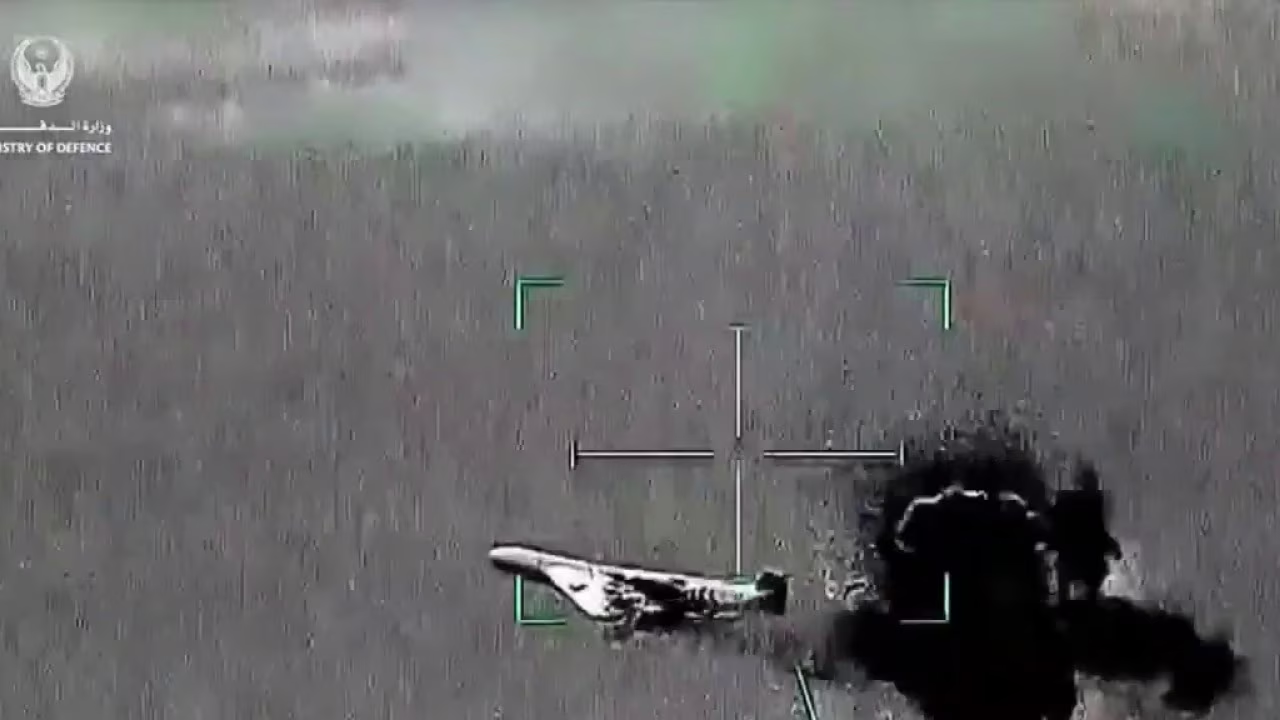
The Pentagon is boasting of a new, aggressive strategy: military strikes against suspected drug-trafficking vessels are allegedly forcing cartel leaders to cease operations. But as the body count rises and transparency dwindles, a critical question remains: Is this a groundbreaking victory, or a dangerous escalation with hidden costs?
Defense Secretary Pete Hegseth has declared a battlefield success, claiming that recent U.S. military strikes in the Caribbean and Eastern Pacific have been so "effective" that some top cartel leaders have "decided to cease all narcotics operations INDEFINITELY." He credits these "kinetic strikes" directed by President Donald Trump as a "lifesaving deterrent." Yet, this triumphant narrative is shrouded in a fog of unanswered questions, particularly when juxtaposed with official figures that paint a starkly different picture of widespread death and destruction, while the Pentagon itself refuses to elaborate on these bold claims.
Read More: House Republicans consider new bill for more military money amid Iran tensions
The Campaign of Fire and Fury: A Timeline of Strikes
The narrative of decisive action against drug cartels escalated significantly following President Donald Trump's early actions. The campaign, primarily operating under the purview of U.S. Southern Command (@SOUTHCOM), involves targeting vessels suspected of narcotics trafficking.
Early September 2025: The offensive appears to gain momentum. Hegseth and Secretary of State Marco Rubio promise further operations. (USAToday)
September 2, 2025: A U.S. strike reportedly kills 11 people on a Venezuelan vessel allegedly carrying narcotics. The specifics of how the vessel's nationality was confirmed remain unclear. (USAToday)
Late September/Early October 2025: Multiple strikes are announced in a single day, with Hegseth posting footage of the attacks. Three strikes in the eastern Pacific target boats accused of carrying drugs, resulting in 14 deaths and one survivor. (Fortune)
October/November 2025: The pace of operations continues. Six people are killed on two vessels in the eastern Pacific, with Hegseth announcing the strikes via social media. (Stripes)
Early December 2025: Hegseth defends the strikes amid growing scrutiny, comparing suspected smugglers to al-Qaeda terrorists and speaking at the Ronald Reagan presidential library. Calls for his resignation begin to surface. (The Guardian)
February 2025 (current reports): Hegseth reiterates claims of cartel leaders halting operations due to the strikes. However, the U.S. military also conducts another lethal strike on a suspected drug-trafficking vessel in the eastern Pacific. (AP News, Fox News)
This aggressive posture has led to a significant death toll. According to official figures, the U.S. offensive has resulted in at least 36 attacks, claiming the lives of 126 to 128 people. Only two individuals have been reported rescued.
| Aspect | Details Provided | Unanswered Questions |
|---|---|---|
| Nature of Operations | Lethal strikes on alleged drug-trafficking vessels. | What intelligence verifies these vessels are actively engaged in drug trafficking? |
| Target Identification | Vessels in Caribbean and Eastern Pacific under @SOUTHCOM. | How is the nationality and intent of these vessels definitively established before a strike? |
| Casualty Figures | 126-128 confirmed deaths; 2 rescued. | What are the criteria for classifying individuals as "suspected narco-terrorists"? |
| Strategic Outcome | Cartel leaders allegedly halting operations indefinitely. | What independent verification exists for this claim of operational cessation? |
| Transparency | Videos posted on social media; limited follow-up. | Why does the Pentagon refuse to answer follow-up questions regarding Hegseth's claims? |
The "Peace Through Strength" Doctrine: A Risky Gamble?
Hegseth's pronouncements echo a broader "peace through strength" rhetoric, framing these operations as a necessary deterrent. The comparison of drug smugglers to al-Qaeda terrorists (The Guardian) suggests a conflation of threats, elevating a criminal enterprise to the level of a global terrorist network.
The Al-Qaeda Comparison: Is this a strategic framing to garner public support, or does it reflect a genuine assessment of the cartel threat? How does this comparison align with established definitions of terrorism and state-sponsored terrorism?
Escalation of Force: The shift from interdiction to lethal strikes represents a significant escalation. What is the legal framework and international law precedent for such actions against vessels not directly engaged in armed conflict?
Deterrence vs. Provocation: While Hegseth claims deterrence, could such aggressive actions, resulting in high civilian or semi-civilian casualties, provoke retaliatory measures from cartels or sympathetic nations?
Focus on Symptoms: Are these strikes addressing the root causes of drug trafficking, or merely targeting the supply chain symptoms, potentially creating vacuums that other actors will fill?
Hegseth's claim that "some top cartel drug-traffickers… have decided to cease all narcotics operations" is particularly striking. This implies a level of influence and fear directly attributable to the military action. However, such a definitive outcome from a series of strikes, often resulting in numerous deaths, warrants deeper scrutiny.
Read More: Former Pakistan Envoy Says Pakistan Would Bomb Mumbai, Delhi If Attacked
The Pentagon's assertion of cartel leaders halting operations due to strikes is a bold claim demanding robust, independent verification, especially given the significant human cost and lack of transparency surrounding the operations.
A Shadowy Theater of Operations: The Caribbean and Pacific
The operational areas – the Caribbean Sea and the Eastern Pacific Ocean – are crucial transit routes for illicit narcotics. U.S. Southern Command (SOUTHCOM) oversees a vast region, and its involvement in these strikes is central to the Pentagon's strategy.
Jurisdiction and Sovereignty: What are the legal understandings with nations in whose waters or near whose territories these strikes are conducted? How is the sovereignty of other nations respected or bypassed in these operations?
Intelligence Gathering: The effectiveness of such strikes hinges on precise intelligence. Given the Pentagon's refusal to answer follow-up questions (AP News), how can the accuracy of this intelligence be assured, and what are the safeguards against misidentification?
Oil Tanker Seizures: The mention of seizing an oil tanker "operating in defiance of President Donald Trump's established quarantine" (Fox News) suggests a broader maritime interdiction strategy beyond just drug boats. What is the legal basis for such quarantines and seizures, and are they directly linked to counter-narcotics efforts?
The Maduro Connection: The mention of a capture of Nicolas Maduro and his wife following counter-narcotics operations (Voz.us) raises questions about the broader geopolitical implications and potential strategic objectives behind these military actions. Was this a drug-related operation, or a political objective disguised as one?
The context provided by Hegseth that President Trump directed these actions positions the strikes as a core element of the administration's foreign policy and national security agenda. However, the lack of detailed information leaves the public to infer the full scope and rationale.
The Human Cost: Beyond the Body Count
The numbers are stark: 126 to 128 lives lost in what are described as strikes against alleged drug boats. While Hegseth has equated these individuals with terrorists, the reality on the water is often more complex.
Read More: FBI Warns California of Unverified Iran Drone Attack Plot in February 2026
Civilian Casualties: What assurances are in place to minimize civilian casualties? How are the distinction between legitimate maritime traffic and suspected trafficking vessels maintained in high-stakes, rapidly evolving situations?
Survivors' Accounts: Only two survivors have been reported. Will their testimonies be sought and made public to corroborate the Pentagon's narrative?
Due Process: These individuals are being targeted and killed without trial. Does this constitute an extrajudicial killing, and what legal justifications are being applied?
Impact on Local Populations: These operations occur in international waters and potentially near coastal communities. What are the long-term effects on maritime trade, local fishing industries, and regional stability?
The refusal of U.S. Southern Command and the Pentagon to answer follow-up questions about Hegseth's claims (AP News) is deeply concerning. It suggests a desire to control the narrative rather than engage in open accountability.
Conclusion: A Strategy Under a Microscope
Pete Hegseth's bold assertion that U.S. strikes have forced cartel leaders to halt operations presents a compelling, albeit unverified, victory narrative. Yet, the growing death toll, the comparison of drug traffickers to al-Qaeda, and the Pentagon's apparent reluctance to provide detailed answers raise profound concerns.
Verification is Paramount: The claim of cartel leaders halting operations must be independently verified. Without this, the narrative of success remains suspect.
Transparency is Non-Negotiable: The American public and the international community deserve to know the legal basis, intelligence protocols, and human cost of these lethal operations.
Root Causes Ignored: While targeting supply lines, are we truly addressing the demand for drugs in America and the socio-economic factors that fuel cartel power?
Legality and Ethics: The legality and ethical implications of conducting lethal strikes on vessels in international waters, resulting in mass casualties, require thorough public and legal debate.
The current strategy, characterized by aggressive, lethal force and a lack of transparency, risks being seen not as a prudent counter-narcotics measure, but as an unchecked exercise of military power with potentially devastating consequences. Until these probing questions are answered, the Pentagon's claims of victory will remain shadowed by doubt.
Read More: Former Envoy Suggests Pakistan Would Target Indian Cities If Attacked
Sources:
Article 1: Hegseth says US strikes force some cartel leaders to halt drug operations (Fox News) -
https://www.foxnews.com/politics/hegseth-cartel-operations-halt-us-strikes?msockid=0d728d0ea02e6e941c4f9bf6a12a6fd8Article 2: US strikes another alleged drug-trafficking boat in Eastern Pacific (AP News) -
https://apnews.com/article/trump-cartels-strike-boat-pacific-576876c948f283958eb2485c0d7b081aArticle 3: 'Peace through strength': Hegseth says some Caribbean cartels halted operations after dozens of strikes on drug boats (Voz.us) -
https://voz.us/en/world/260206/33164/peace-through-strength-hegseth-says-some-caribbean-cartels-halted-operations-after-dozens-of-strikes-on-drug-boats.htmlArticle 4: Hegseth gives defiant speech defending ‘drug boat’ strikes amid scrutiny (The Guardian) -
https://www.theguardian.com/us-news/2025/dec/06/hegseth-boat-strikesArticle 5: Pete Hegseth says cartels 'have killed more Americans than Al-Qaeda' as the U.S. strikes alleged drug boats in the Pacific, killing 14 (Fortune) -
https://fortune.com/2025/10/28/pete-hegseth-us-drug-boats-pacific-ocean-strikes-14-dead/Article 6: Hegseth says US conducted 2 more strikes on alleged drug boats, killing 6 (Stripes) -
https://www.stripes.com/theaters/americas/2025-11-10/us-strikes-2-boats-6-killed-19717773.htmlArticle 7: More US drug attacks are coming, Rubio and Hegseth say after fatal Caribbean strike (USAToday) -
https://www.usatoday.com/story/news/politics/2025/09/03/hegseth-rubio-promise-more-military-strikes-on-drug-targets/85963709007/