U.S. crude oil stockpiles experienced a significant drop, the largest in a year, according to recent data. The Energy Information Administration (EIA) reported a sharp decline in crude inventories last week, a trend amplified by a surge in exports. This comes as gasoline and distillate inventories have seen an increase.
The precipitous fall in crude stockpiles was driven by record weekly exports, indicating a strong demand for American oil on the international stage. This export activity has occurred even as the price difference between Brent and WTI futures has tightened. Analysts suggest that these export volumes were likely arranged some time ago, with a potential slowdown expected in the coming weeks due to the narrowing price gap.
Gasoline Demand Signals Summer Push
While crude inventories dwindle, supplies of gasoline and distillates have risen. This build-up in refined products is seen as a precursor to the upcoming summer driving season, a period typically marked by increased gasoline consumption. Experts anticipate that this demand surge will provide some support for refinery margins in the immediate future.
Read More: Solaris Energy SEI Stock Price Forecast Reaches $91.98 by July 2027
API Data Echoes Inventory Drawdowns
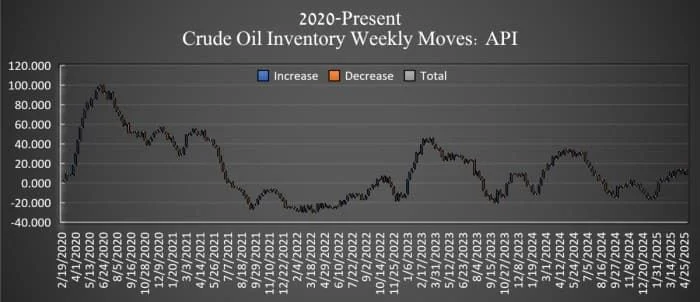
The American Petroleum Institute (API) had previously estimated a substantial draw of 4.49 million barrels in crude inventories for the week ending May 2nd. This figure significantly surpassed analyst expectations of a 2.5 million barrel decrease and contrasts with the previous week's build of 3.76 million barrels. For the year to date, however, crude oil inventories have shown an overall increase of more than 18 million barrels, based on API data calculations.
Strategic Petroleum Reserve and Historical Context
Inventory levels within the Strategic Petroleum Reserve (SPR) remain considerably below their pre-withdrawal figures from the Biden administration. Historically, API crude oil stock changes in the United States have fluctuated, with a recorded average of 0.18 million barrels from 2012 to 2026. The data shows a high of 14.87 million barrels in January 2023 and a low of -15.40 million barrels in July 2023. The most recent update, as of May 2026, indicated a change of -2.19 million barrels for the week of May 8th, a shift from the previous week's -8.10 million barrels.
Read More: FIFA World Cup 2026 Revenue Reaches $15 Billion With New Ticket Prices
Recent market sentiment saw oil prices briefly dip into negative territory before a statement from U.S. President Donald Trump regarding the Israel-Iran conflict and Iran's potential willingness to negotiate.