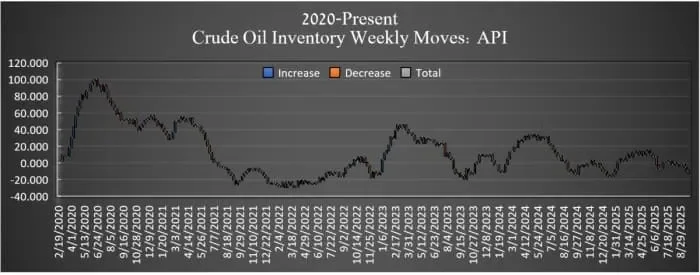
American Petroleum Institute (API) data indicates a notable pattern of dwindling US crude oil inventories, now extending for what sources describe as the fifth consecutive week. This ongoing drawdown comes as a surprise to market watchers who had anticipated an increase in stockpiles. Concurrently, fuel inventories, particularly distillates, are also reported to be falling, though gasoline stockpiles present a more complex picture, with some reports showing a rise and others a fall.
The most recent data, citing sources familiar with API figures, details a fall of 4.236 million barrels in US crude oil inventories. This drop sharply contrasts with expectations of a 1 million-barrel increase. The prior week saw a build of 2.499 million barrels, making the current trend an "unexpected drawdown" that defied market sentiment.
Fuel Stockpiles Show Divergence
While crude oil reserves are shrinking, the situation for refined products is less uniform. Reports suggest that distillate inventories have also declined. However, motor gasoline stocks have shown varied movement, with one account noting a rise while another indicates a fall in the same reporting period.
Read More: FIFA World Cup 2026 Revenue Reaches $15 Billion With New Ticket Prices
This situation occurs against a backdrop of shifting global oil dynamics. Recent geopolitical events in the Middle East have led to disrupted crude oil production, increasing the tightness and demand for immediate crude supplies. Daily Brent spot prices saw a significant jump in late April, a move attributed to this scarcity.
Market Repercussions and Demand Factors
The falling crude inventories have coincided with a reversal in West Texas Intermediate (WTI) crude oil prices, snapping a losing streak. Analysts note that supply and demand remain key drivers of WTI prices. Recent reports from the Energy Information Administration (EIA) also point to falling US crude and fuel inventories, attributing this trend to rising refining activity and increased demand. Gasoline demand, specifically, has been reported at its highest since December 2021, serving as a proxy for broader consumption.
Read More: Goldman Sachs predicts 15 million US jobs lost to AI by 2036
The effect of higher oil prices on production, particularly US shale output, is understood to take several months to materialize. This lag suggests that while higher prices might eventually stimulate supply growth, the immediate impact is on inventory levels and market prices. The complexity of global supply chains, exacerbated by disruptions like shipping route closures, continues to shape the availability and cost of oil.