Washington D.C. - The U.S. Treasury Department has instructed American financial institutions to actively monitor for and flag transactions indicative of Iranian money-laundering operations. This directive targets networks suspected of using shell companies and cryptocurrency channels to move funds from sanctioned oil sales, a critical lifeline for Tehran. The move, issued via a recent directive, effectively enlists the global financial infrastructure in the effort to dismantle Iran's systems for evading economic restrictions.
The Treasury's guidance points to specific indicators that banks should scrutinize. These include:
Newly established companies processing exceptionally large sums of money.
Firms that channel payments through multiple intermediaries before reaching their destination.
Transactions linked to Iranian cryptocurrency entities.
This initiative comes amid a period of strained diplomacy between the U.S. and Iran, with a fragile ceasefire in place and ongoing discussions about de-escalation proving difficult. In April, the Treasury had already communicated its concerns to financial entities in countries including China, Hong Kong, the United Arab Emirates, and Oman, warning of secondary sanctions if they facilitated Iranian illicit activities.
Read More: Australia Budget: Deficits Lowered, But Inflation Worries Remain
Sanctions and Disruption
The U.S. administration, including under the previous Trump presidency, has pursued a strategy of economic pressure against Iran. This approach, alongside other actions, aims to curtail Tehran's financial capacity. Recent designations by the Treasury have targeted entities and individuals involved in Iran's "shadow banking" system.
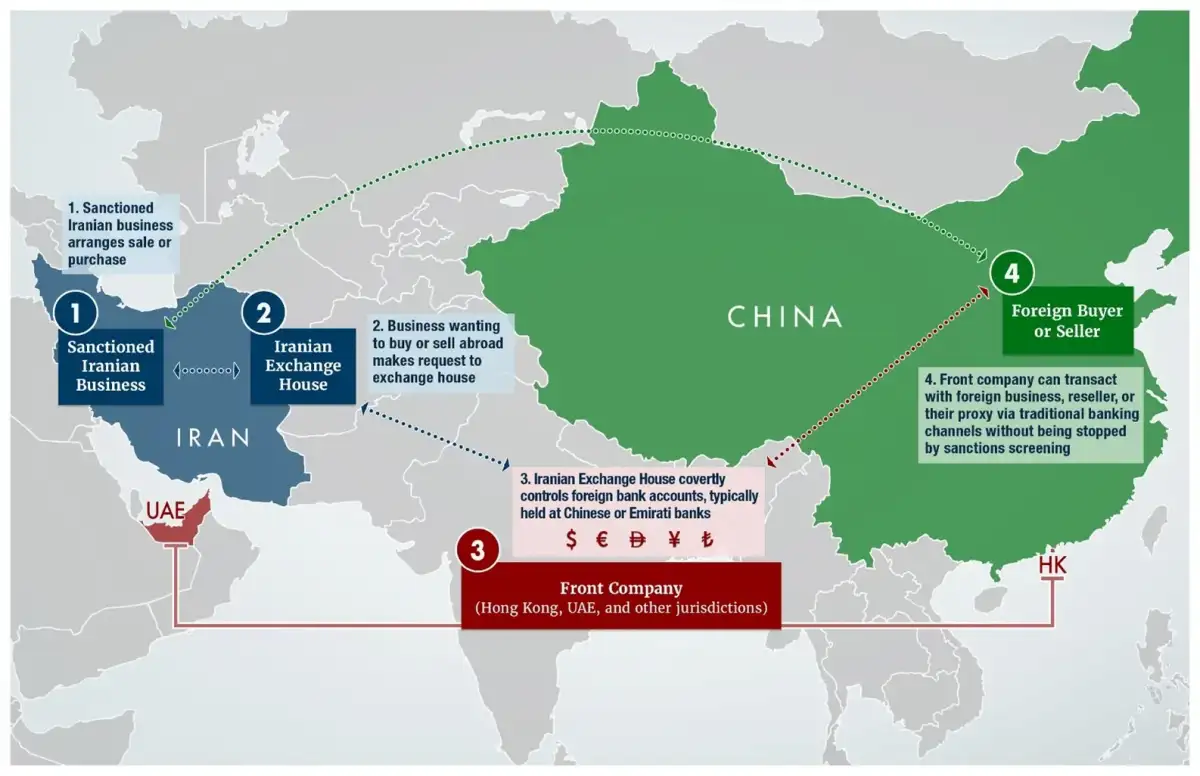
Specifically, on June 6, 2025, the Treasury announced sanctions against a network identified for laundering billions. This network allegedly operated through Iranian exchange houses and foreign front companies, sustaining what the U.S. describes as Tehran’s destabilizing activities and enriching regime elites.
"The United States will continue to deny Iran access to financial networks and the global banking system as long as Iran continues its destabilizing activities." - U.S. Department of State
The sanctioned network involved individuals and companies associated with exchange houses like GCM Exchange (Mansour Zarrin Ghalam and Partners Company) and Berelian Exchange (Nasser Zarrin Ghalam and Partners Company), largely operating from the UAE and Hong Kong. Several companies, including Bstshesh HK Limited, Gutown Trade Limited, and Konosag Trading Limited, were listed for their connection to these operations.
Read More: US naval blockade of Iran starts April 13, 2026, raising oil prices
Broader Economic Strategy
This intensified focus on financial networks is part of a wider economic strategy. The Treasury Department's Financial Crimes Enforcement Network (FinCEN) has also updated an advisory to aid financial institutions in identifying and reporting suspicious activities related to Iran's illicit finance.
The advisory details methods of illicit finance and provides "red flags" associated with Iranian oil smuggling, shadow banking practices, and the procurement of weapons and dual-use components. This marks a significant step, being the first such action against Iran’s shadow banking network since a National Security Presidential Memorandum was issued on February 4th.