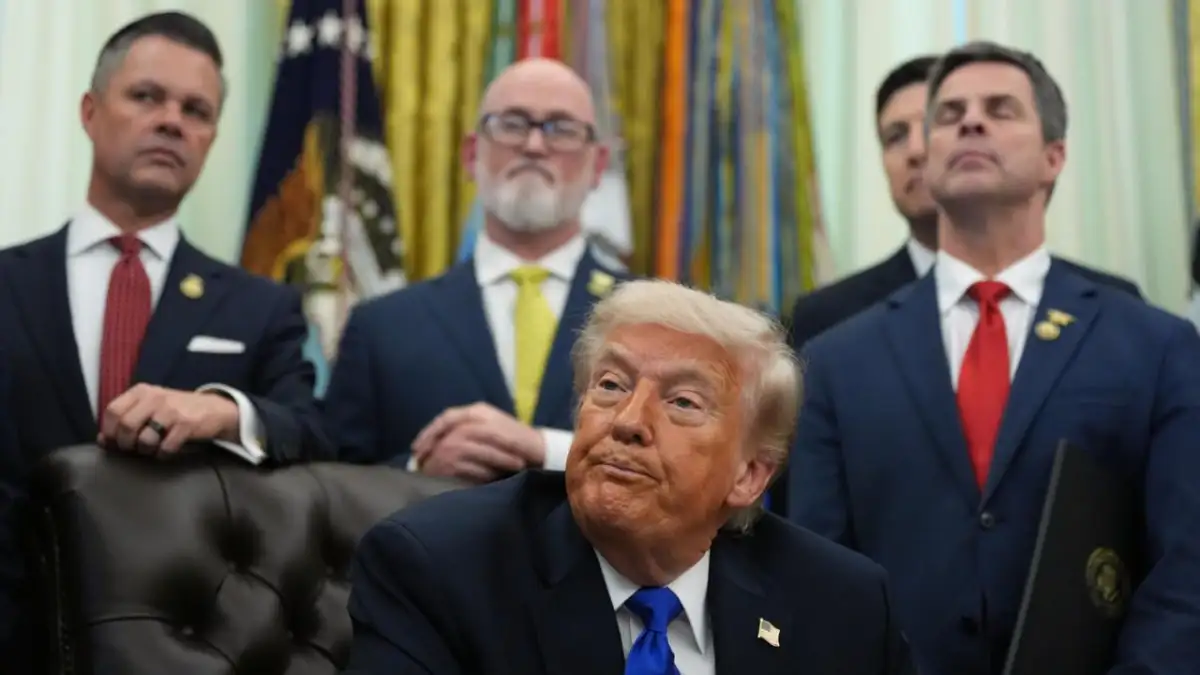
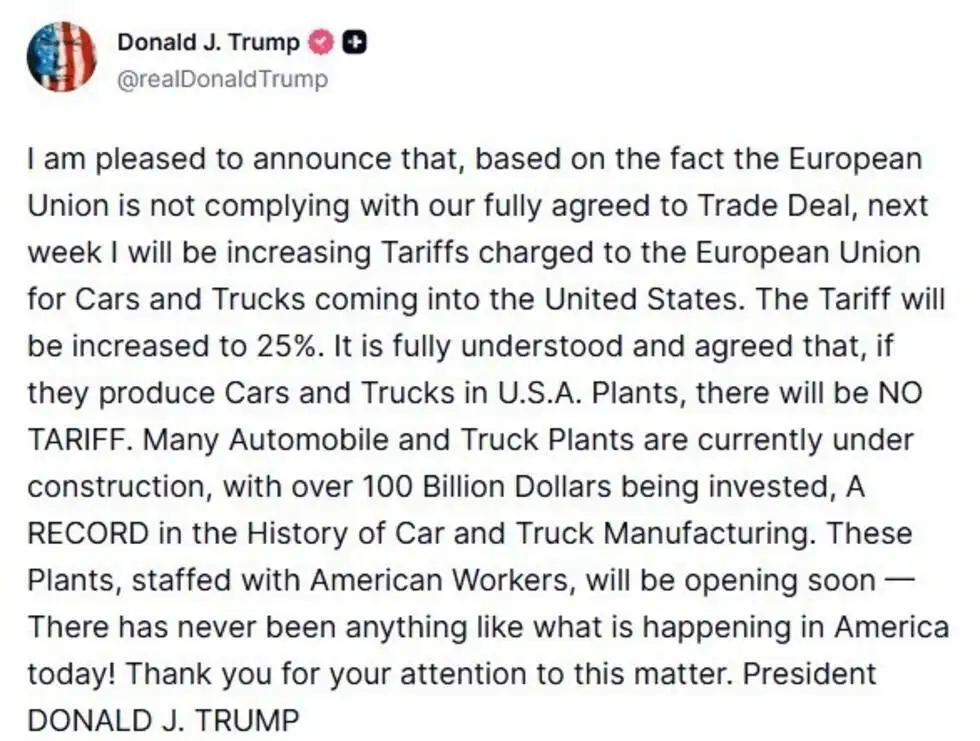
President Donald Trump announced Friday he intends to hike tariffs on cars and trucks imported from the European Union to 25 percent, alleging the bloc has not adhered to a previously agreed-upon trade deal. The announcement, made via social media, follows a period of strained relations and stalled negotiations between the US and the EU over trade terms. The proposed tariff increase threatens to further destabilize transatlantic trade ties, particularly impacting the significant market share held by European automakers in the United States. The core of the dispute centers on alleged non-compliance with the "Turnberry Agreement," a trade framework established last July between Trump and European Commission President Ursula von der Leyen.

The President stated, "I am pleased to announce that, based on the fact the European Union is not complying with our fully agreed to Trade Deal, next week I will be increasing Tariffs charged to the European Union for Cars and Trucks coming into the United States." He provided no further specific details regarding the alleged violations or the mechanism through which the increased tariffs would be implemented. This move comes after a US Supreme Court ruling earlier this year that questioned President Trump's authority to unilaterally impose tariffs using certain emergency economic powers.
Read More: US May Add Tariffs on Australian Goods Due to Forced Labour
Trade Deal Under Scrutiny
The "Turnberry Agreement," named after Trump's golf course in Scotland, had previously set tariffs at 15 percent on most goods traded between the US and the EU. While both sides had affirmed their commitment to upholding this framework, progress on its full finalization has been slow. The European Parliament, while expected to complete its work on the deal next month, has faced internal delays, partly due to broader political issues, including disputes over the US stance on Iran and past tensions surrounding Greenland.
Some reports indicate that stalled discussions on steel and aluminum tariffs, and major European economies like Germany and France resisting US plans for broader tariff adjustments, may have contributed to the current friction. The European Union has reportedly stated it is following standard legislative procedures and keeping the US administration informed. In March, the EU parliament had voted to approve the trade deal but included stipulations that it could be suspended if Washington undermined the deal's objectives, discriminated against EU economic operators, or engaged in economic coercion.
Read More: AFP Reviews War Crime Claims Against Australian in Gaza
Economic and Political Pressures
The announcement of increased tariffs arrives as President Trump faces domestic political pressure heading into the November midterm elections, with rising inflation a significant concern. Automakers producing vehicles within the United States are reportedly exempt from the proposed tariffs. Jennifer Safavian, CEO of Autos Drive America, an industry group representing foreign automakers' US operations, warned that such an increase "would threaten the progress that has already been made to open EU markets and grow the U.S. auto industry." The total value of US-EU trade in goods and services reached approximately $2 trillion in 2024.
Background
Previous trade disagreements between the Trump administration and the EU have been notable, with the President having previously threatened actions regarding Greenland and criticized NATO allies over their contributions to the US effort in the Iran war. The legal basis for the President's tariff actions has also been a subject of contention, particularly following the Supreme Court's decision concerning the International Emergency Economic Powers Act (IEEPA). The US Trade Representative's office is reportedly engaged in separate investigations into trade imbalances and national security risks, which could lead to further tariff impositions.
Read More: US Adds 12.5% Tariff on Indian Goods for Labor Law Failures