Recent periods of substantial rainfall across the United Kingdom have prompted widespread concern and examination. With numerous flood warnings issued and continued forecasts of heavy precipitation, the nation is grappling with a weather pattern that deviates from established norms. This situation is being viewed through the lens of both immediate atmospheric drivers and the broader implications of a changing global climate, with scientists offering insights into the complex forces at play.

Meteorological Drivers of Current Rainfall
The current spell of wet weather is largely attributed to shifts in the jet stream, a fast-flowing, narrow air current found in the upper atmosphere.

When the jet stream moves southward across the Atlantic, it appears to create a channel that directs low-pressure systems directly towards the UK.
These low-pressure systems are often associated with weather fronts that carry significant moisture, thereby increasing the frequency and intensity of rain.
The behavior of the jet stream is considered the primary architect of the UK's current weather conditions.
Concurrently, areas of high pressure have become established over parts of northern Europe, particularly Scandinavia. This high pressure appears to be anchoring weather systems in place.
The combination of a southerly jet stream and anchored high pressure creates a meteorological setup conducive to sustained rainfall over the UK.
The Intensifying Role of Climate Change
Scientists are increasingly linking the observed rainfall patterns to the broader context of climate change, noting that global warming appears to be exacerbating weather events.
Read More: Plan to Build Big Ice Wall to Save Doomsday Glacier

The atmospheric forces contributing to the UK's persistent rain are reportedly the same ones causing severe floods in other regions, such as Spain and Portugal.
Warmer air has a greater capacity to hold moisture. This means that when rain does occur, the downpours are likely to be more intense.
Projections suggest that climate breakdown will lead to wetter winters and drier summers in the UK.
Data indicates that the last decade has seen an increase in both the total amount of rainfall and the number of rainfall events exceeding 50mm.
A study suggests that at the current level of global warming (1.2°C above pre-industrial levels), stormy days with strong winds, accompanied by exceptionally heavy rain, are occurring more frequently than in the past. Specifically, such events are estimated to happen every four years, with extraordinary precipitation occurring every five years.
If global temperatures were to rise to 2°C, these severe wet weather events could occur approximately every three years.
Evidence of Extreme Weather Becoming the Norm
Multiple sources suggest that the UK is experiencing an increase in the frequency and intensity of extreme weather events, with rainfall being a significant component.
Read More: Sir Jim Ratcliffe Says Sorry for Immigration Comments
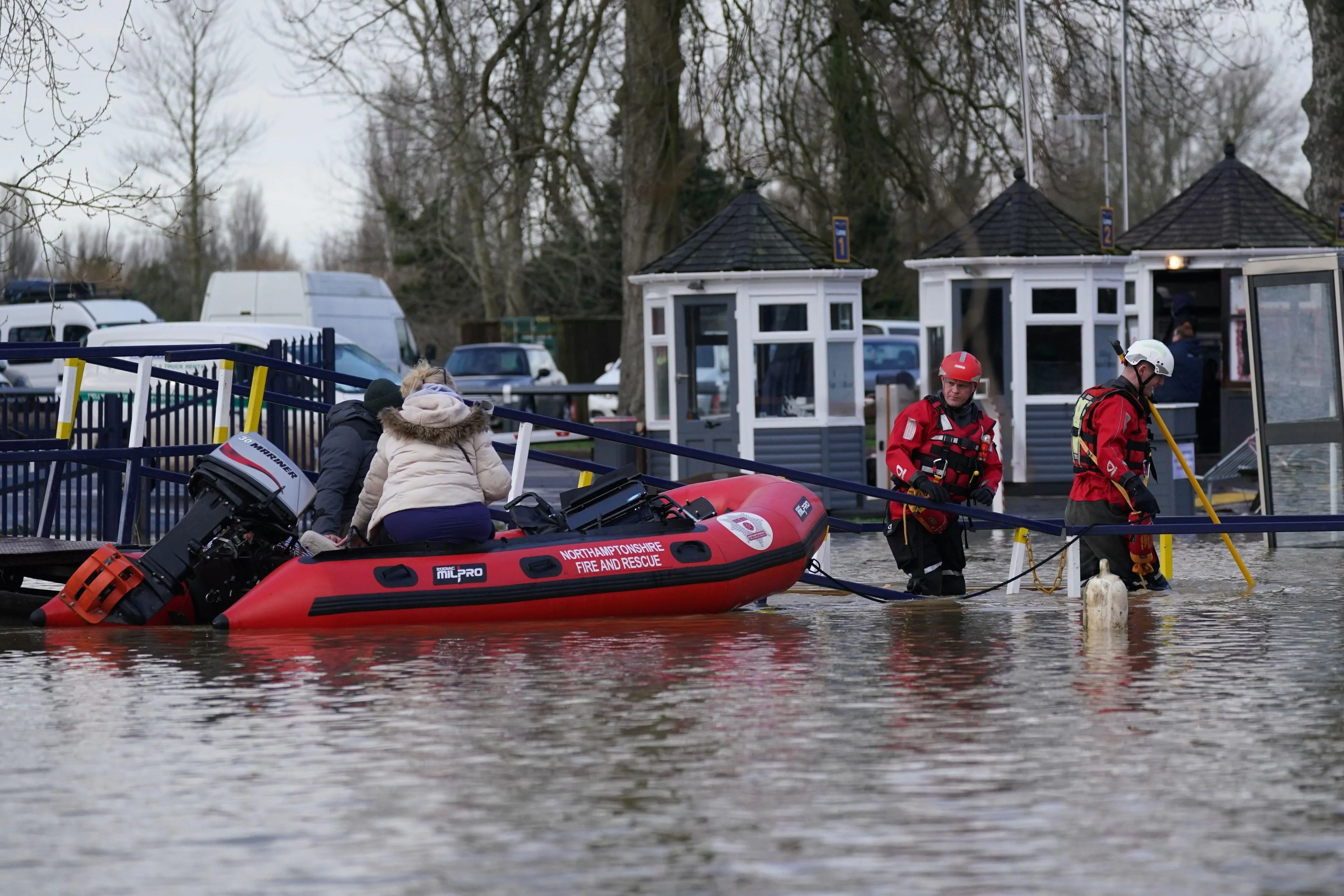
The Met Office, the UK's national weather service, has warned that extreme weather is becoming the "new normal" for the country.
Records indicate that the UK is breaking heat and rainfall records with increasing regularity.
In recent years, floods and storms have been responsible for the most severe weather-related damage in the UK.
One specific location, Astwood Bank in Worcester, reportedly recorded rain every single day of the year up to February 9, 2026.
The country has experienced successive floods that have led to crop failures, damage to homes, transport disruptions, and power outages.
Contrasting and Complementary Perspectives
While scientific consensus points to climate change as a significant factor, understanding the specific atmospheric mechanisms is crucial.
Atmospheric Dynamics: The jet stream's southward shift and the positioning of high-pressure systems over Northern Europe are identified as immediate causes for the current wet spell. This provides a direct meteorological explanation for the current weather patterns.
Climate Change Amplification: Scientific projections and observed trends link global warming to an increase in the intensity and frequency of heavy rainfall events. Warmer air holding more moisture is a key mechanism cited. The intensification of events that might have occurred naturally is a critical distinction.
Long-Term Trends: Historical data, such as the Central England Temperature record, helps track long-term changes. Evidence from the last decade suggests a pattern of increased rainfall totals and more frequent heavy downpours.
Expert Insights and Future Scenarios
Experts emphasize that understanding these shifts is vital for preparation and mitigation.
Read More: Cartoonist Rohan Chakravarty Uses Funny Pictures to Teach About Nature
Met Office chief meteorologist Will Lang has noted that while autumn may see above-average rain, it may not be sufficient to clear existing drought conditions in some areas.
Researchers have highlighted that worst-case climate scenarios, while perhaps low probability, are plausible and could have massive disruptive impacts. These scenarios are being used to inform long-term infrastructure planning, such as drainage systems and urban development.
Awareness of these climate risks could potentially accelerate efforts to reduce fossil fuel emissions.
Summary of Findings and Implications
The United Kingdom is currently experiencing a period of prolonged and intense rainfall. This weather is directly linked to specific atmospheric patterns, namely the positioning of the jet stream and areas of high pressure. However, a significant body of scientific evidence and expert opinion suggests that climate change is playing a crucial role in intensifying these events. Warmer global temperatures are leading to an increase in the moisture-holding capacity of the atmosphere, resulting in heavier downpours.
Read More: Thomas Partey Denies Rape and Sexual Assault Charges
Immediate Cause: The current rain is a result of meteorological phenomena, particularly the behavior of the jet stream.
Exacerbating Factor: Climate change is making these rainfall events more intense and potentially more frequent.
Future Outlook: Projections indicate a trend towards wetter winters and drier summers, with an overall increase in extreme weather events.
Impact: Flooding and storms have already caused significant disruption and damage, with experts warning of potentially more severe consequences in the future if emissions are not curbed.
Action: There is a call for using this understanding of climate risks to inform long-term planning and to hasten the transition away from fossil fuels.
Sources:
The Guardian: "Why is the UK so rainy this year and how is the climate crisis making matters worse?" Published February 9, 2026. https://www.theguardian.com/environment/2026/feb/09/why-is-the-uk-so-rainy-this-year-and-how-is-the-climate-crisis-making-matters-worse
Context: Provides an overview of the current rainy weather in the UK, linking it to scientific projections about climate breakdown and intensifying rainfall due to global heating.
Met Office: "Why has it been so rainy?" Published February 2, 2026. https://www.metoffice.gov.uk/blog/2026/why-has-it-been-so-rainy
Context: Explains the role of the jet stream and high-pressure systems in shaping the current weather patterns, funneling low-pressure systems towards the UK.
BBC News: "Met Office: Extreme weather the UK's new normal" Published July 13, 2025. https://www.bbc.co.uk/news/articles/c74w1gyd7mko
Context: Reports the Met Office's warning that extreme weather, including heatwaves and flooding, is becoming a regular occurrence in the UK due to a warming climate.
Yale Climate Connections: "How is climate change affecting UK rainfall?" Published June 25, 2024. https://yaleclimateconnections.org/2024/06/how-is-climate-change-affecting-uk-rainfall/
Context: Discusses how climate change is leading to higher rainfall totals and more frequent heavy rainfall events in the UK, with warmer air holding more moisture.
Sky News: "UK weather: Rain likely above average this autumn – but why it might not clear the drought" Published September 8, 2025. https://news.sky.com/story/uk-weather-rain-likely-above-average-this-autumn-but-why-it-might-not-clear-the-drought
Context: Reports on forecasts of above-average rain and wind for autumn, while noting that even increased rainfall might not resolve ongoing drought issues in some regions. It also mentions warmer air holding more moisture.
Plant Based News: "Climate Crisis Makes UK's Heavy Rain And Storms 10 Times More Likely, Study Finds" Published May 24, 2024. https://plantbasednews.org/news/environment/climate-crisis-uk-rain-storms/
Context: Cites a study suggesting that the climate crisis significantly increases the likelihood of heavy rain and storms in the UK, detailing potential increases in event frequency and precipitation intensity at different warming levels.
The Guardian: "‘Massive disruption’: UK’s worst-case climate crisis scenarios revealed by scientists" Published December 18, 2025. https://www.theguardian.com/environment/2025/dec/18/massive-disruption-uk-worst-case-climate-crisis-risks
Context: Discusses revealed worst-case climate scenarios for the UK, highlighting potential "massive disruption" and the need for such scenarios to inform long-term infrastructure planning.