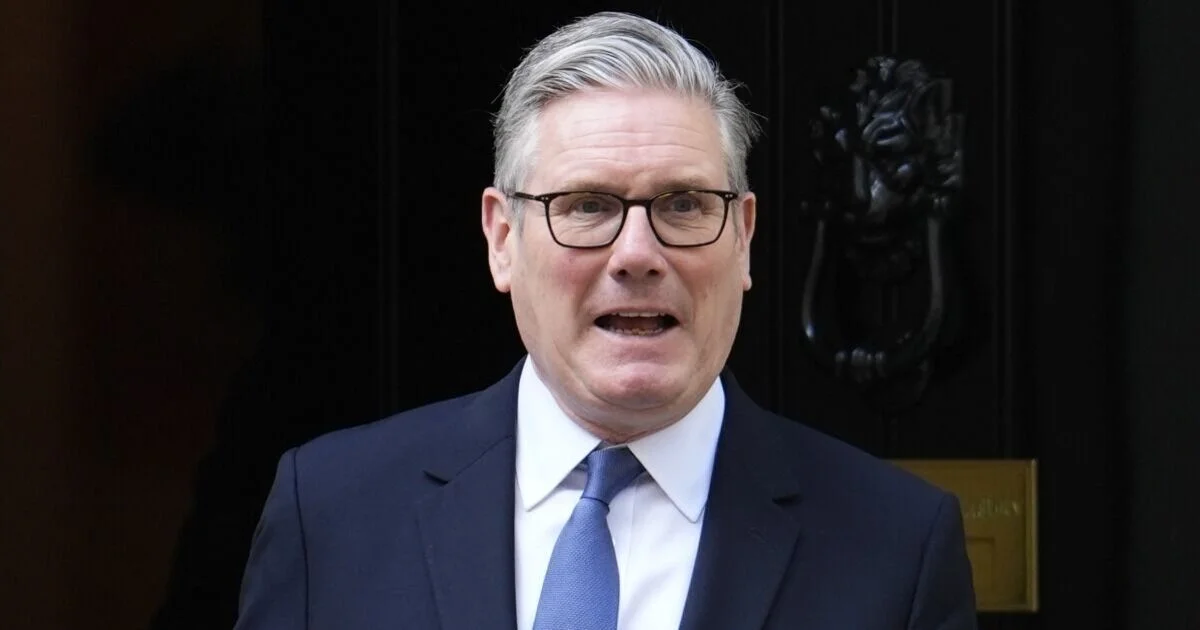
British politicians, it appears, are subjected to a particular brand of visual scrutiny. Photographs have long held sway in the political arena, shaping public perception and, some argue, even defining careers. This is not merely about capturing candid moments; it's about crafting an image, for better or worse. The narrative of a politician's public life can be irrevocably altered by a single frame, whether it’s a moment of perceived gaffe – like eating a bacon sandwich – or a carefully orchestrated public appearance.
The capacity of a single image to sway public opinion is immense, with subtle visual cues potentially leading to significant shifts in perception. This power, wielded intentionally by political actors for impression management, is amplified by the pervasive reach of social media. The manipulation of photographs for political advantage, a practice predating digital age, now finds new and potent tools in generative AI, capable of producing 'deepfakes' that blur the lines between reality and fabrication.
Read More: Kerala IAS Officer Suspended for Criticizing Government Policies

The very act of taking a photograph, let alone presenting it, is imbued with political undertones. Decisions regarding equipment, subject matter, and even the framing of an event can carry implicit political dimensions, making it difficult, if not impossible, to divorce photography from politics entirely. This is particularly evident in how politicians navigate the public stage, a performance space where they must present themselves to be seen and judged.
The discourse surrounding images in politics extends beyond mere representation. It delves into the realms of propaganda, emotional impact, and the symbolic language that permeates political discourse. Visuals are deployed to reveal and conceal, to shape understanding, and to influence broader narratives. In a world increasingly saturated with visual and auditory information, the challenge for any singular message, political or otherwise, to break through the 'collective din' becomes ever more pronounced.
Read More: UK Deaths to be More Than Births From 2026

Political photography, therefore, is not simply a documentation of events. It is an active engagement with power, an attempt to frame narratives, and a tool that can both reinforce and challenge existing power structures. Images do things; they shape our understanding of the world and, more crucially, how we perceive it. Whether this impact is positive or negative for a pluralist democracy remains a subject of ongoing observation and analysis.
The Visual Landscape of Governance
The world of political photography is diverse, encompassing the staged formality of press conferences and congressional hearings, the more dynamic environment of the campaign trail, and the intimate, yet still public, moments of portraits. It involves capturing individuals in what is often described as "governance in action," a process frequently characterized by underlying power struggles. Politicians and those engaged in the political sphere are inherently performers, adept at public presentation.
Read More: Supreme Court Changes Voting Rights Act Rules for Louisiana Map

The increasing reliance on visual communication by political leaders underscores its significance in shaping their public image. This is not confined to extraordinary circumstances; ordinary images can possess potent political weight. The deliberate use of symbolism, amplified by the reach of social media, highlights the constant effort towards impression management.
Historical Precedents and Evolving Technologies
The manipulation of photographic images for political ends is a historical constant. From the days of Abraham Lincoln to Joseph Stalin, alterations were made to enhance reputations. The advent of artificial intelligence introduces novel capabilities, such as generative AI tools capable of creating entirely new images and videos, commonly referred to as 'deepfakes.' However, the underlying motive – employing edited photographs for political spin – remains a familiar tactic.

Photography as a Lens and a Statement
Some photographers focus on the underlying politics of events, while others choose to capture the pageantry and spectacle. The decision to photograph in a particular way, or to focus on specific aspects of political events, is itself a form of statement. The aftermath of significant events, like the attacks of September 11, 2001, has seen collections of photographs emerge, intended to collectively document and interpret the experience, transforming raw imagery into a shared narrative.
Read More: UK Pension Funds May Have to Invest in UK Companies
Photography, Politics, and the Nature of Reality
Photography is intrinsically political; the politics are woven into its fabric. Every choice made in the creation and dissemination of images carries a political dimension. This inextricable link suggests that a complete separation of photography and politics is untenable. The proliferation of communication technologies, characterized by speed and interconnectivity, has led to an overwhelming volume of information, making it increasingly challenging for any single message to resonate.
The Spectacle of Politics and Image Control
The control of the image space in politics is a significant factor. Photographers observing political events, from rallies to behind-the-scenes operations, provide a unique perspective. Their work can offer insights that might otherwise be missed. The question of how to counter dominant image narratives, or to redefine the visual landscape, remains a persistent challenge for image-makers in the political sphere. Despite the complexities, a degree of hope can be found in the ongoing work of individuals who continue to engage with these issues through their craft.
Read More: Supreme Court Makes Voting Rights Harder for Black Voters in Louisiana