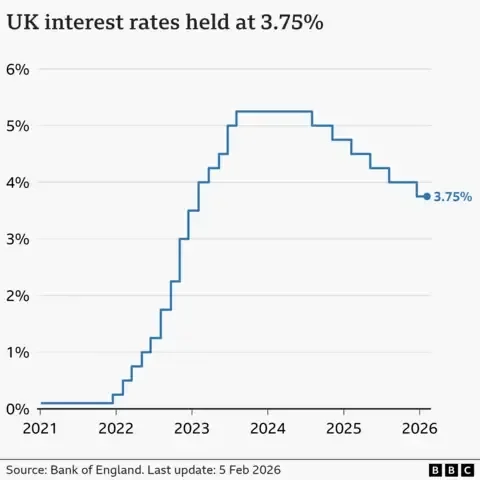
The Bank of England's decision on interest rates is under intense scrutiny, with recent economic data pointing towards a potential reduction in borrowing costs in the spring. A notable increase in the unemployment rate, reaching a five-year high, is a key factor influencing these discussions. This shift in the labor market, coupled with slowing wage growth, suggests that the central bank might have room to ease monetary policy, a move that could have wide-ranging effects on mortgages, loans, and savings for millions.

Economic Indicators Point to Shifting Monetary Landscape
The UK's economic narrative is currently shaped by a tug-of-war between inflation concerns and a softening labor market. While the Bank of England has historically used higher interest rates to control rising prices, the latest figures suggest a re-evaluation of this strategy may be imminent.

Unemployment Surge: The unemployment rate has climbed to 5.2%, its highest point in nearly five years, excluding the pandemic period. This marks a significant shift from previous months, where the rate stood at 4.4% in March 2025 and 4.5% a month prior.
Wage Growth Deceleration: Alongside the rising unemployment figures, average weekly pay growth has slowed to 5.6% in the three months to March 2025, down from 5.7% in the previous period.
Inflation Trends: Inflation, a measure of price rises, was 3.4% in December, an increase from 3.2% in the month before. Despite this recent uptick, the overall trend suggests inflationary pressures are waning.
These economic signals create a complex backdrop for the Bank of England's Monetary Policy Committee (MPC), balancing the need to curb inflation with the potential impact of a tight labor market on economic activity.
Read More: Labour Now Says Brexit Hurts UK Economy

The Bank of England's Dilemma: Inflation vs. Employment
The Bank of England's mandate involves maintaining price stability, primarily by keeping inflation at its target. Higher interest rates are a primary tool to achieve this, by making borrowing more expensive and encouraging saving. However, the recent rise in unemployment and slowdown in wage growth present a contrasting challenge.

The Role of Interest Rates: Higher rates mean increased costs for mortgages and loans, leading consumers to spend less on other goods and services. This reduction in demand can help bring down inflation. Conversely, lower interest rates can stimulate spending and investment.
Conflicting Pressures: While inflation remains a concern, the loosening labor market is creating pressure on the Bank of England to consider rate cuts. This is evident in the increased expectations for a rate cut in March 2026, rather than April.
Evidence of a Shifting Stance
Recent statements and reports suggest a growing consideration within the Bank of England for adjusting interest rates downwards, influenced by the evolving economic data.
"The lack of green shoots of recovery in the labour market and further fall in wage growth supports the idea that the Bank of England has at least a couple more interest rate cuts in its locker, with the chances of the next cut happening in March rather than April edging higher." - Paul Dales, chief UK economist at Capital Economics
Labor Market as a Key Indicator: Bank of England Governor Andrew Bailey has previously indicated that the softening labor market would become a more prominent factor in interest rate deliberations.
Dovish Tilt: Reports suggest a "dovish tilt" at the central bank, with a close vote split on interest rate decisions and more dovish voices on the MPC pushing for reductions.
Conditional Cuts: The Bank appears to be awaiting stronger evidence that inflation is on track to fall to its 2% target before making definitive moves, but the weakening jobs market is a significant consideration.
Expert Perspectives on Rate Cut Prospects
Analysts and economists are closely watching the economic data to predict the timing and extent of potential interest rate changes.
"The Bank's comments meant there would be raised expectations of a rate cut at the Bank's next two meetings." - Analysts
March Cut Anticipation: The current economic climate, particularly the rise in unemployment, has led many to believe that a rate cut in March 2026 is more likely than previously anticipated.
Gradual and Cautious Approach: Despite the indications for cuts, the Bank of England is expected to continue with "gradual and cautious" reductions, reflecting the ongoing uncertainty in the economic outlook.
Impact on Consumers: A reduction in interest rates could lead to significant savings for homeowners on standard variable rates, with an estimated 500,000 households potentially benefiting from lower mortgage payments.
Broader Economic Implications
The prospect of interest rate cuts extends beyond monetary policy, touching upon broader economic dynamics and government finances.
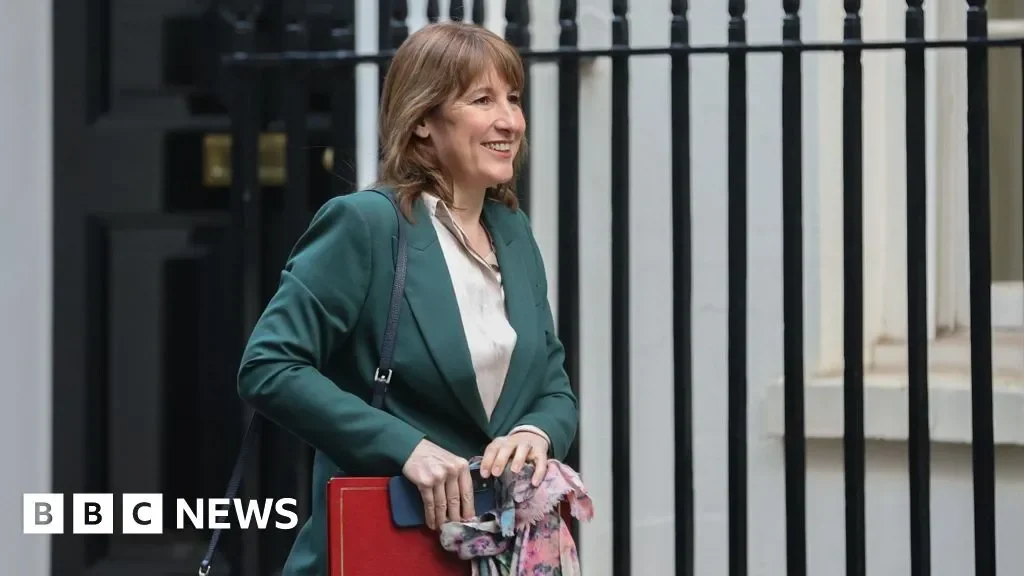
Government Debt: A rate cut could provide some relief to the Chancellor, Rachel Reeves, by reducing the cost of servicing government debt, which is currently under severe financial pressure.
Consumer Confidence: While recent business surveys suggest an improvement in the jobs market as companies renew recruitment plans after budget uncertainties, consumer spending remains a key area to watch. The prospect of lower interest rates could potentially boost confidence and encourage spending.
Global Context: The Bank of England's decisions are also made within a global context, with other central banks like the European Central Bank also setting interest rates, influencing international financial flows.
Conclusion and Next Steps
The economic data, particularly the sustained rise in unemployment and cooling wage growth, has significantly altered the calculus for the Bank of England's interest rate policy. While inflation remains a point of focus, the weakening labor market is increasingly becoming a decisive factor. The prevailing sentiment among analysts and economists points towards a heightened probability of an interest rate cut in March 2026.
Read More: Andy Burnham Labour Leader Fears Cause UK Markets To Drop
Moving forward, the Bank of England will likely continue to monitor a suite of economic indicators, including inflation figures, employment data, and overall economic growth, to guide its "gradual and cautious" approach to monetary easing. The MPC's next meetings will be crucial in determining the timing and magnitude of any adjustments, with profound implications for households, businesses, and the government's fiscal position.
Sources Used:
BBC News (Feb 5, 2026): UK interest rates kept on hold at 3.75%🔗 https://www.bbc.com/news/articles/czx1vly05pvoSummary highlights expectations for rate cuts amid mixed economic signals.
Proactive Investors (May 13, 2025): UK unemployment rise points to further 'gradual' Bank of England interest rate cuts🔗 https://www.proactiveinvestors.co.uk/companies/news/1071105/uk-unemployment-rise-points-to-further-gradual-bank-of-england-interest-rate-cuts-1071105.htmlDetails the unemployment rate hitting 4.5% in March 2025 and its implications for gradual rate cuts.
The Guardian (Feb 17, 2026): UK unemployment rate hits five-year high of 5.2% as wage growth cools🔗 https://www.theguardian.com/business/2026/feb/17/uk-unemployment-rate-ons-interest-ratesProvides the latest unemployment figure of 5.2% and links it directly to increased chances of a March rate cut.
Sky News (Jul 17, 2025): Jobless rate hits four-year high - but makes interest rate cut more likely🔗 https://news.sky.com/story/jobless-rate-hits-four-year-high-but-makes-interest-rate-cut-more-likely-13397766Discusses the impact of a rising jobless rate on interest rate expectations and political pressures.
Financial Times (Feb 4, 2026): UK interest rates🔗 https://www.ft.com/uk-interest-ratesOffers insights into the MPC's views, the weakening jobs market versus firmer growth, and cautious signals on further cuts.
BBC News (Feb 5, 2026): Are UK interest rates expected to fall soon?🔗 https://www.bbc.co.uk/news/articles/c3dky111m40oExplains how interest rate changes affect mortgages, loans, and savings, and the number of homeowners impacted.
MoneyWeek (Feb 10, 2026): Will UK interest rates fall in 2026? Latest Bank of England predictions🔗 https://moneyweek.com/economy/uk-economy/605427/when-will-interest-rates-go-upAddresses constraints on the Bank of England's ability to push through rate cuts based on various economic data.