The average house price in the UK has, for the first time, sailed past the £300,000 mark, according to the latest report from Halifax. This milestone, achieved in January, paints a picture of a market that, on the surface, appears to be steadying and even growing. But beneath this headline figure, a complex and often stark reality unfolds, marked by widening regional disparities, persistent affordability challenges, and lingering economic uncertainties. Are we witnessing a genuine market revival, or is this historic high a temporary illusion masking deeper fissures?
The £300,000 Barrier: A Double-Edged Sword
Halifax's latest data reveals that the average UK house price has now crossed the £300,000 threshold. This isn't just a number; it's a symbolic moment, suggesting a market that, despite economic headwinds, has shown remarkable resilience. The monthly increase in January marked the fastest jump in over a year, a sign that, for some, the housing market is picking up pace.
Read More: Labour Now Says Brexit Hurts UK Economy
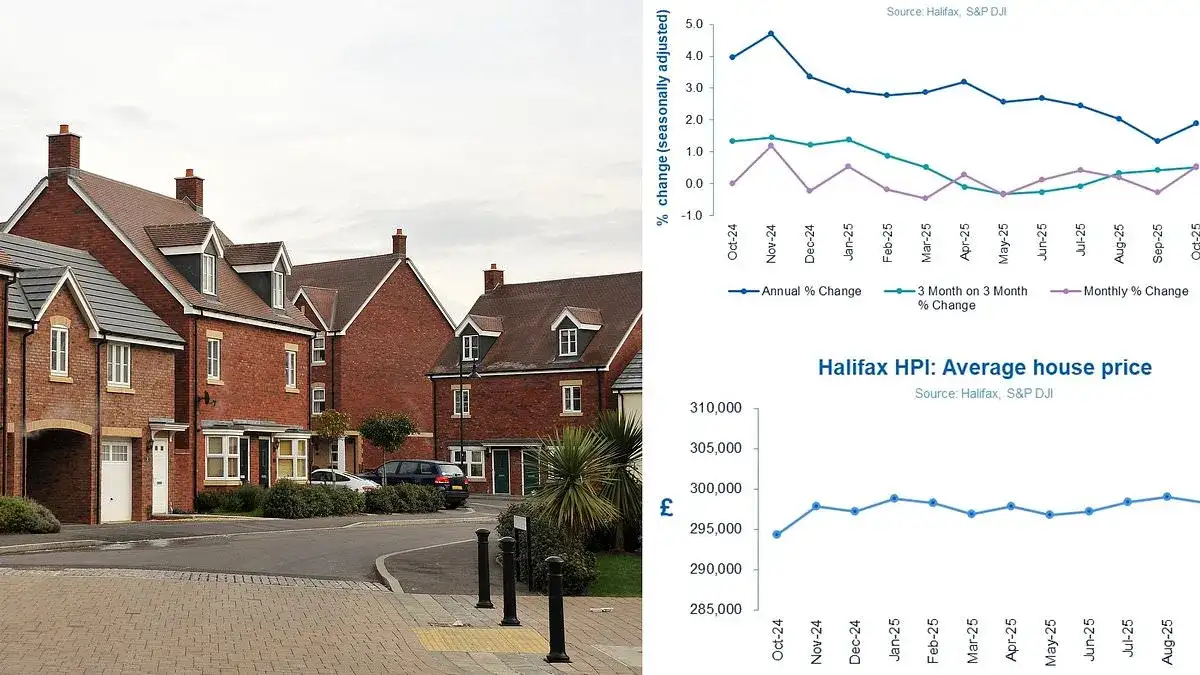
January 2026: Average UK house price exceeds £300,000 for the first time (Halifax).
Fastest Monthly Rise: January saw the most significant monthly increase in over a year.
However, this headline figure immediately brings into sharp focus the ongoing struggle for affordability. While the market may be "steadying," as some reports suggest, the question remains: steadying for whom? For many prospective buyers, particularly first-time buyers, this new record high only amplifies the already daunting challenge of getting a foot on the property ladder.
"While the milestone figure reflects a resilient market, affordability remains challenging for many prospective buyers." - Property Reporter
The Shifting Sands of Regional Performance
The national average, however, is a blunt instrument. Beneath the £300,000 mark, a clear and growing divide is emerging across the UK. The data points to a distinct north-south split, with some regions experiencing robust growth while others see prices stagnating or even declining.
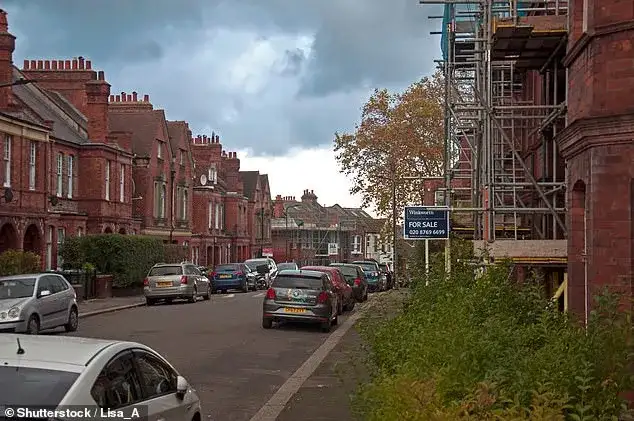
Northern Strength: Reports consistently highlight stronger price growth in northern regions of England, Scotland, and Northern Ireland.
The North East of England, for example, saw an annual increase of 4.1% by November 2025, with average prices around £179,799.
Scotland also reported significant growth, up 4.4% annually.
Northern Ireland recorded an impressive 8.1% annual rise by August 2025, with average prices at £217,082.
Southern Struggles: Conversely, southern regions, particularly commuter belts and areas around London, have experienced much slower growth or even price declines.
The South East saw prices rise by a mere 0.1% over the past year (by November 2025).
The South West actually recorded a minor decrease of 0.8% in the same period.
London, while still the most expensive, saw a modest 0.8% annual increase by August 2025, with average prices at a staggering £541,615.
This divergence raises critical questions: What economic forces are driving this growing regional disparity? Are these localized pockets of growth sustainable, or are they simply outperforming areas facing more significant economic challenges? And what does this mean for the future of regional development and social mobility across the UK?
Read More: UK Housing Market SHOCK: Prices Skyrocket 3.2% Amidst EV Collapse Fears!
| Region | Average Price (Nov 2025, est.) | Annual Change (Nov 2025, est.) | Key Trend |
|---|---|---|---|
| North East | £179,799 | +4.1% | Strong Growth |
| Scotland | £215,594 | +4.9% | Strong Growth |
| Northern Ireland | £217,082 | +8.1% (Aug 2025) | Strongest Growth Region |
| South East | £387,509 | +0.3% | Stagnation / Slow Growth |
| South West | £301,134 | -0.8% | Slight Decline |
| London | £541,615 | +0.8% (Aug 2025) | High Prices, Slowing Growth |
Sources: Halifax, Independent, This is Money, Evening Standard

The Mortgage Maze: Rates, Affordability, and Confidence
A significant factor underpinning the recent market activity has been the stabilization, and in some cases, reduction, of mortgage rates. While rates remain higher than the ultra-low levels seen in previous years, lenders have been actively cutting fixed-rate products. This has been partly in response to movements in swap rates and the expectation of future Bank of England base rate cuts.
Easing Affordability Pressures: Falling mortgage rates, even if marginal, can ease the financial burden for buyers and boost confidence.
Competitive Lenders: Lenders are offering more attractive fixed-rate deals, with some two-year fixes for those with substantial deposits dipping below 4% by November 2025.
"Stable mortgage rates have supported demand in recent months and the (Bank of England base rate) is now on a downward path." - Tom Bill, Head of UK Residential Research at Knight Frank (Independent)
However, this narrative is not without its complexities. Mortgage rates, while appearing to stabilize, have shown a tendency to be "sticky," even edging back up at times due to market movements. Furthermore, for those without significant deposit savings, the prospect of lower borrowing costs does little to address the fundamental issue of high house prices relative to incomes.

"First-time buyers still face a daunting hurdle while many existing homeowners are reluctant to take on new borrowing, keeping transaction volumes depressed." - Halifax (Evening Standard)
This raises a crucial question: Is the current market activity driven by genuine affordability improvements for a broad swathe of the population, or is it fueled by a smaller segment of buyers with access to larger deposits and more favorable borrowing conditions?
Read More: Andy Burnham Labour Leader Fears Cause UK Markets To Drop
Economic Ripples and Future Uncertainties
The housing market's performance is intrinsically linked to the broader economic landscape. While there have been positive signs, such as the Bank of England suggesting inflation may have peaked, significant uncertainties persist.
Inflation and Interest Rates: The trajectory of inflation and the Bank of England's subsequent moves on interest rates remain key determinants of future mortgage costs. A sustained rise in long-term borrowing costs could quickly reverse any gains in affordability.
Economic Growth: The overall health of the UK economy, including wage growth and employment levels, will ultimately dictate buyer confidence and demand.
Taxation and Policy: Changes in government policy, such as stamp duty, can act as market drivers or inhibitors. For instance, the anticipation of falling stamp duty thresholds in the coming year (by December 2024) was cited as a potential market boost.
"Sellers may want to wait before cracking open the bubbly, because the future is far from certain." - Sarah Coles, Head of Personal Finance at Hargreaves Lansdown (Evening Standard)
These uncertainties lead to probing questions: How sensitive is the current market resilience to potential shifts in inflation, interest rates, or government policy? Are we witnessing a market that is truly robust, or one that is highly susceptible to external economic shocks?
A Market Holding Firm, For Now?
The latest Halifax report, signaling the £300,000 barrier being breached, undoubtedly highlights a housing market that has shown considerable resilience. The pace of price growth in January was the fastest in over a year, and many industry figures describe the market as "steady."
Signs of Stability: Factors like stabilizing mortgage rates and underlying buyer confidence have contributed to this resilience.
Increased Listings: Some data suggests an increase in new instructions, sales agreed, and stock levels compared to the previous year, indicating a potentially more active market.
"The latest Halifax data reinforces what we’ve seen throughout 2025, a housing market that has remained remarkably steady in the face of wider economic pressures." - Iain McKenzie, CEO of The Guild of Property Professionals (Evening Standard)
However, the critical context of widening regional disparities and persistent affordability issues cannot be ignored. The £300,000 average is a figure that masks the struggles of many and highlights the growing chasm between prosperous and less affluent areas. The market appears to be holding firm, but the sustainability of this position hinges on a delicate balance of economic factors, lender behavior, and government policy.
Read More: UK Spring Statement 2025: New £2 Billion for Projects and Tax Changes
The coming months will be crucial in determining whether this record high signifies a new, stable plateau for the UK housing market or a temporary peak before potential adjustments, driven by economic realities and the enduring challenge of making homeownership accessible to all.
Sources:
The Guardian: Fastest jump in UK house prices in over a year as market ‘steadies’ – business live
https://www.theguardian.com/business/live/2026/feb/06/uk-house-prices-jump-halifax-stock-markets-inflation-latest-news-updates (Published: February 6, 2026)
Property Reporter: Average UK home breaks £300,000 barrier for the first time: Halifax
https://www.propertyreporter.co.uk/average-uk-home-breaks-300000-barrier-in-january-halifax.html (Published: February 6, 2026)
The Independent: Average UK house price jumped to new record high in October, says Halifax
https://www.independent.co.uk/money/halifax-london-budget-hargreaves-lansdown-knight-frank-b2860545.html (Published: November 7, 2025)
This is Money: House prices hit new record high of nearly £300,000, says Halifax as values rise at fastest pace since January
https://www.thisismoney.co.uk/money/mortgageshome/article-15268433/House-prices-hit-new-record-high-nearly-300-000-says-Halifax-values-rise-fastest-pace-January.html (Published: November 9, 2025)
Evening Standard: Average UK house price hits new record high of £299,331 in August, says Halifax
https://www.standard.co.uk/business/money/halifax-northern-ireland-london-tom-bill-north-west-b1246129.html (Published: September 5, 2025)
MoneyWeek: Halifax: pre-Budget and stamp duty rush pushes house prices to new record high
https://moneyweek.com/investments/property/halifax-house-prices-record-high (Published: December 6, 2024)
Halifax: Halifax House Price Index
https://www.halifax.co.uk/media-centre/house-price-index.html (Status: Low Priority, Seen on Bing)