The United Kingdom has again found itself at the nadir of the Eurovision Song Contest, with its entry receiving a brutal "zero points" from the public vote for the second consecutive year. This latest failure, embodied by the act "Remember Monday" and their song "What The Hell Just Happened?", mirrors a pattern of underperformance that has become a fixture for the nation in the competition. While "Remember Monday" earned praise for their performance, the public tally remained starkly empty, contributing to an overall 18th place finish with a mere 46 points from the jury vote.

The recent results paint a grim picture for the UK's Eurovision ambitions. Last year, Olly Alexander's entry "Dizzy" also suffered a public vote shutout, landing in 18th place with a total of 46 points, largely from jury allocations. This repeated zeroing from the public vote suggests a disconnect between British entries and the wider European audience, a sentiment echoed by observers who point to a consistent struggle to connect with the continental electorate.
Read More: Ryan Gosling chosen for Project Hail Mary movie adaptation

"The UK simply can’t or won’t take the competition seriously."
This ongoing struggle has led to widespread discussion about the root causes of the UK's Eurovision "disaster." Some commentators suggest a degree of "musical snobbery" or a perception that the contest is "beneath us," leading to a lack of genuine engagement from the nation's creative industries.
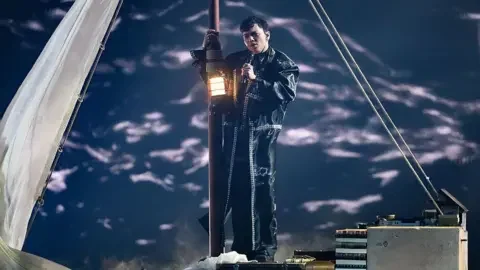
"The UK has a peerless reputation for producing some of the catchiest and most imaginative pop music on the planet. So we just lob another loser and stick our fingers in our ears screeching la, la, la."
The performance of "Remember Monday" at this year's contest, intended to be held in Basel, Switzerland, has ignited debate, with some describing the song as "torture to the ears." This contrasts with the past, where the UK held the record for the most second-place finishes, indicating a potential for success that has since eluded the nation. The departure from earlier attempts, which may have been seen as trying "too hard," now appears to have shifted towards a strategy that, while perhaps more earnest, has failed to resonate.
Read More: Grateful Dead 60 Years On: Fans Use Roses and Cards to Celebrate Music

Further complicating the narrative is the observation of shifting voting blocs. One analysis highlights that a significant former supporter of the United Kingdom in the voting patterns was Yugoslavia. With the dissolution of such unified voting entities, the current landscape presents a different dynamic, potentially contributing to the UK's "culture of losing."
The perceived "disease among English elites" has also been cited, particularly regarding the adoption of English by other nations' entries, seen as a snub to their native languages. This cultural observation, tied to an alleged adherence to external opinions, adds another layer to the complex tapestry of reasons behind the UK's perennial Eurovision predicaments.