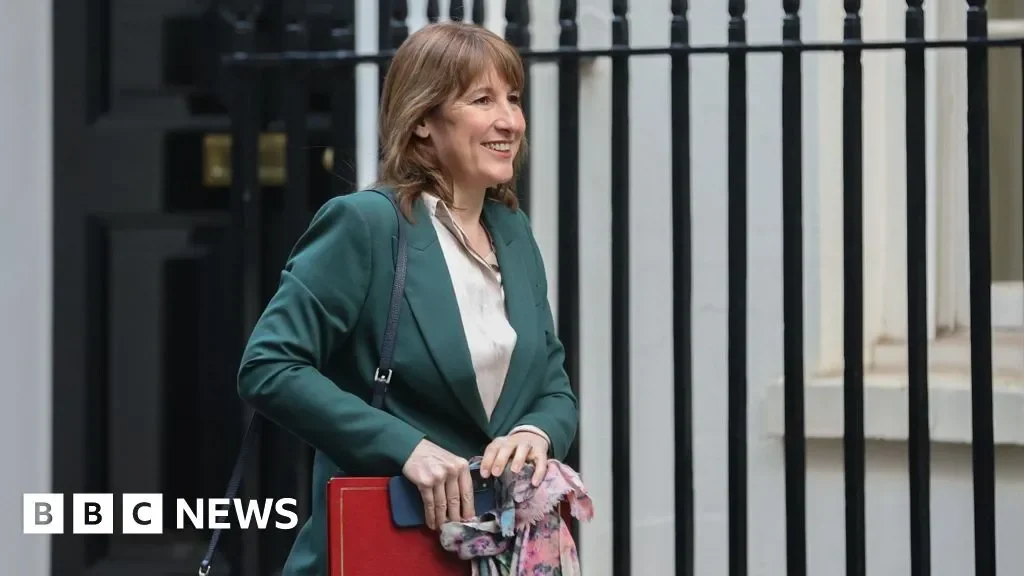
The United Kingdom's economy displayed a marginal uptick in growth, hovering around 0.1%, in the period leading up to and immediately following the late November budget. This slight expansion occurred despite prevalent uncertainty among consumers and businesses, which had previously led to reduced spending and delayed investments. The figures, released by the Office for National Statistics (ONS), offer a degree of relief for Chancellor Rachel Reeves, as an improving economic picture is seen as beneficial for the governing Labour party's prospects. However, the data also reveals a picture of fragile recovery, with growth rates falling short of some economists' expectations and pointing to continued weaknesses in key sectors.
Economic Performance Leading to the Budget
In the months preceding the late November budget, various economic indicators suggested a slowdown. Consumer and business surveys pointed to a reduction in activity as speculation mounted regarding potential tax increases.
Read More: Labour Now Says Brexit Hurts UK Economy

Household spending was reportedly curtailed.
Companies postponed investment decisions.
Nervousness around the budget is cited as a factor that likely dampened economic drivers.
The period of concern culminated in economic figures for the three months leading up to September showing growth stalled close to zero, with a 0.1% expansion.
GDP Growth Figures: A Closer Look
Official data from the Office for National Statistics (ONS) provides a detailed view of the UK's economic activity:

September Quarter (July-September 2025): The economy grew by 0.1% over this period.
Monthly data for September alone showed a slight contraction, partly attributed to a cyber attack affecting car production.
October 2025: Economic activity saw a 0.1% fall.
November 2025: A better-than-expected 0.3% growth was recorded.
This marked a return to positive territory after the dip in October.
Some reports suggest stronger-than-anticipated activity in this month.
Fourth Quarter (October-December 2025): The economy increased from a rate of 0.1% growth in the previous three months.
Economists had, on average, expected a rise of 0.2% for this quarter.
The Office for Budget Responsibility had previously forecast GDP growth of 1.5% for 2025 and 1.4% for 2026.
Impact of Budget Uncertainty
The anticipation and eventual delivery of the budget appear to have had a dual effect on economic sentiment and activity.

Pre-Budget Hesitation: Uncertainty surrounding the budget, particularly regarding potential tax changes, led to a reluctance among consumers to spend and businesses to invest. This hesitation contributed to the stagnation observed in the run-up to the announcement.
Post-Budget Clarity (Potential): Following the budget, some commentators suggest that increased certainty about future tax policies may have helped to ease speculation and stimulate a modest rise in spending. However, the extent of this impact is debated, with some industry surveys still pointing to continued weakness.
Sector-Specific Weaknesses
While overall growth figures are being closely watched, certain sectors continue to exhibit signs of strain:
Construction: Month-specific data, such as the construction Purchasing Managers' Index (PMI), has indicated continued weakness across housing, commercial construction, and civil engineering. This suggests a deep decline in these areas.
Pharmaceuticals: In contrast, stronger data from the pharmaceutical sector was cited as a reason for the revision of previous estimates for the September quarter.
Expert Commentary
Economists and analysts have offered varying perspectives on the recent economic data:
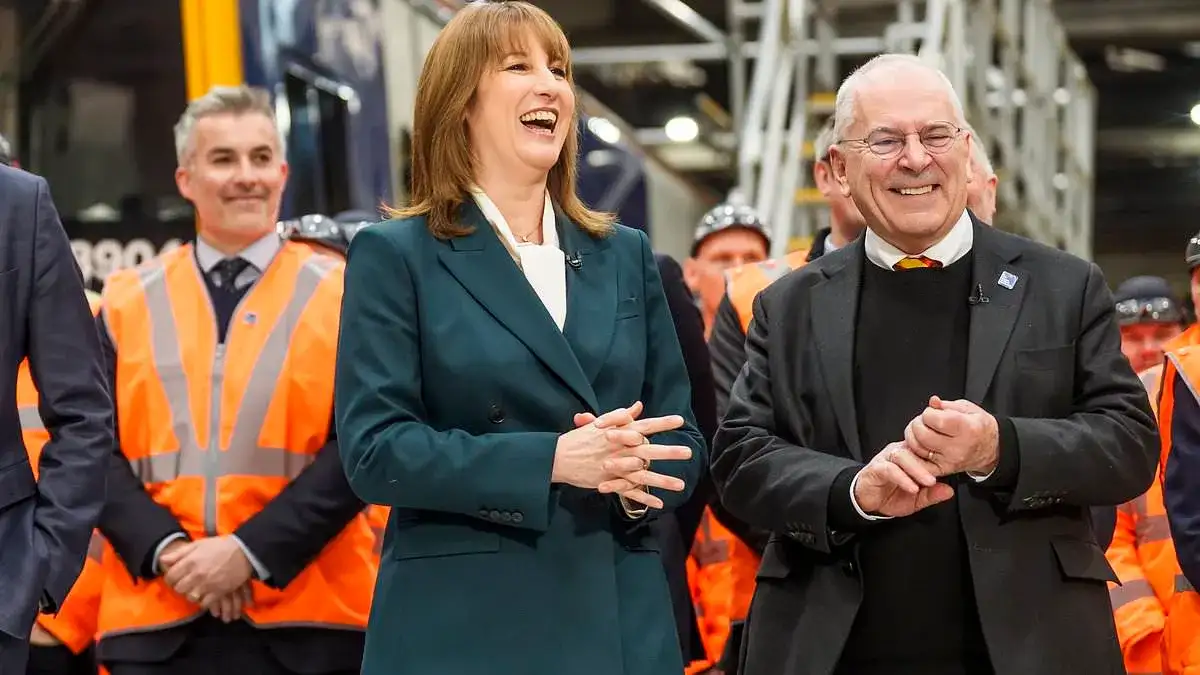
Some observers believe that improved certainty post-Budget might have stimulated a modest rise in spending, albeit at subdued levels.
Conversely, industry surveys like the construction PMI data point to continued weakness.
Pantheon Macroeconomics estimated that December might have experienced no growth, although other forecasts suggested a slight upward movement due to November's performance and post-budget clarity.
Economic Outlook and Political Ramifications
The observed economic performance carries significant implications for Chancellor Rachel Reeves and the Labour party.
A Fillip for Reeves: The return to growth, even if marginal, is seen as a positive development for the Chancellor, offering a measure of relief.
Labour's Fortunes: The government hopes that an economic turnaround will bolster Labour's electoral standing.
Borrowing Costs: UK borrowing costs reportedly dropped to their lowest levels in over a year, potentially linked to hopes for further interest rate cuts from the Bank of England.
Future Support: There are expectations that Reeves will announce additional measures, possibly including support for the hospitality industry, following a backlash over business rates changes. The government's broader aim is to reduce the cost of living.
Conclusion
The UK economy has navigated a period of significant uncertainty, culminating in modest growth figures that provide some positive signals. The 0.1% expansion for the September quarter and the stronger 0.3% growth in November indicate resilience, particularly in light of the hesitant sentiment that preceded the late November budget. However, the persistence of weaknesses in key sectors like construction, and the fact that overall growth rates have not consistently met expectations, suggest that the recovery remains delicate. The Chancellor's focus will likely remain on fostering sustainable growth and addressing cost-of-living concerns, with future economic data providing further insights into the impact of her fiscal policies.
Read More: FIFA World Cup 2026 Revenue Reaches $15 Billion With New Ticket Prices
Sources
The Guardian: UK economy grows by 0.1% despite uncertainty over Reeves’s budget
https://www.theguardian.com/business/2026/feb/12/uk-economy-grows-rachel-reeves-budget-ons-gdp-growth
Summary of Article 1 focuses on the 0.1% growth for the fourth quarter despite pre-budget slowdown and economists' expectations.
The Guardian: UK economy grew by better-than-expected 0.3% in November despite budget uncertainty
https://www.theguardian.com/business/2026/jan/15/uk-economy-grew-november-reeves-budget-ons-gdp
Summary of Article 2 highlights the 0.3% growth in November, better than anticipated, and its positive implications for the Chancellor.
The Independent: UK economy boost set to be announced as budget uncertainty fades
https://www.independent.co.uk/news/business/uk-economy-budget-gdp-rachel-reeves-b2916151.html
Summary of Article 3 discusses upcoming GDP figures for December and Q4, referencing prior 0.1% growth and contrasting views on post-budget stimulus.
LBC: UK economy set to have recorded modest growth amid budget concerns
https://www.lbc.co.uk/article/5b7ffe268fbe49e9a5e5d5e20f7dba3b-5HjdRz42/
Summary of Article 4 previews the upcoming GDP data for December and Q4, noting budget concerns and the potential for post-budget spending increases.
The Guardian: UK economy beats forecasts with 0.3% growth in November; Ofwat investigating South East Water over outages – as it happened
https://www.theguardian.com/business/live/2026/jan/15/uk-gdp-economy-growth-stagnation-november-rachel-reeves-pound-ftse-100-business-live-news-updates
Summary of Article 5 confirms the UK economy returned to growth, more vigorously than expected, in November.
Daily Mail: Relief for Reeves as UK economy clawed back ground in November
https://www.dailymail.co.uk/news/article-15466023/Relief-Reeves-UK-economy-clawed-ground-November-Budget-tax-blitz.html
Summary of Article 6 reports relief for Reeves as the economy showed growth in November, noting previous flatlining and a dip in October, with revisions from the pharmaceutical sector.
Inkl: New blow for Reeves as economy stalls close to zero in run up to Budget
https://www.inkl.com/news/new-blow-for-reeves-as-economy-stalls-in-run-up-the-budget
Summary of Article 7 details the economy stalling over the three months to September (0.1% growth), highlighting pre-budget nervousness and its impact on economic drivers.
BBC News: UK economic growth slows to 0.1% in final figures before Budget
Summary of Article 8 confirms slower-than-expected growth of 0.1% over July-to-September, adding pre-budget pressure.