


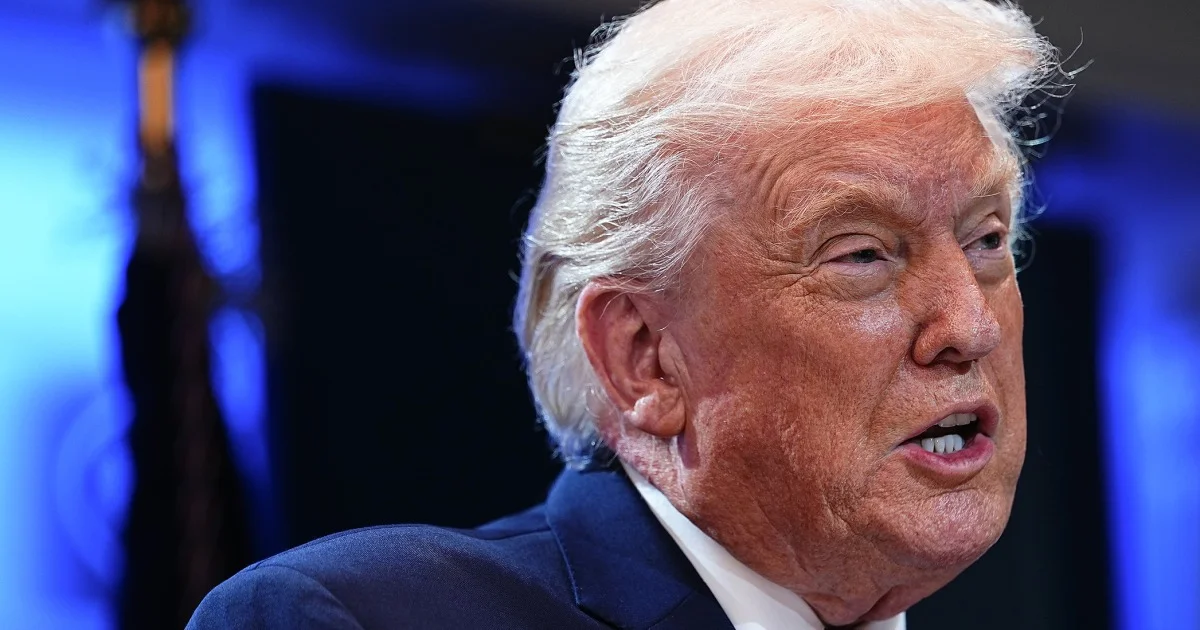
Washington D.C. – President Donald Trump announced on Saturday an increase in the global tariff rate on imports to the United States from 10% to 15%. This move comes a day after the U.S. Supreme Court delivered a ruling that invalidated a significant portion of his administration's previous tariff impositions, citing an overreach of presidential authority under the International Emergency Economic Powers Act (IEEPA). The president stated the new, higher rate is "effective immediately" and aims to address trade imbalances he claims have disadvantaged the U.S. for decades.

Timeline of Events and Key Actors
On Friday, the U.S. Supreme Court ruled that President Trump had exceeded his authority in imposing certain global tariffs under IEEPA. The ruling specifically addressed tariffs enacted during national emergencies, stating they were used improperly.

In the immediate aftermath of the Supreme Court's decision, President Trump announced the imposition of a 10% global tariff.
On Saturday, just hours after the initial announcement and the Supreme Court's ruling, President Trump declared on his social media platform, Truth Social, that he would raise the global tariff rate to 15%.
He stated this increase would be "effective immediately," aiming for the "fully allowed, and legally tested, 15% level."
The White House indicated that trading partners who had previously reached separate tariff agreements with the administration would also be subject to this new 15% global tariff.
President Trump is scheduled to deliver the State of the Union address on Saturday evening.
Key actors in this developing situation include:
Read More: Nexon names Patrick Söderlund Executive Chairman to change game growth from February 20, 2026
President Donald Trump: The primary decision-maker on tariff policy.
The U.S. Supreme Court: The judicial body that issued the ruling impacting existing tariffs.
The White House and U.S. Trade Representative's Office: Agencies responsible for implementing and communicating trade policy.
U.S. Trading Partners: Nations affected by the tariff changes.
Rationale and Circumstances of Tariff Increase
President Trump's announcement of increased global tariffs follows a specific legal challenge.

The Supreme Court's Friday ruling invalidated tariffs imposed under IEEPA, finding the President had exceeded his authority.
The ruling did not affect tariffs imposed under other legal authorities, such as Section 232 (used for steel, aluminum, and auto imports) or Section 301 investigations.
President Trump characterized the 15% tariff as being within "fully allowed, and legally tested" limits, suggesting it operates under a different, presumably legal, framework than the invalidated IEEPA tariffs.
He explicitly stated the increase was to counter countries he believes have been "ripping off" the U.S. for decades.
The White House fact sheet noted the 10% duty was announced immediately after the Supreme Court's decision.
Navigating Legal Frameworks and Trade Agreements
The legality and impact of President Trump's tariff actions are being viewed through different legislative lenses.
The Supreme Court's decision specifically addressed tariffs imposed via the International Emergency Economic Powers Act (IEEPA), finding them to be an overreach.
President Trump stated his intention to enact the 15% global tariffs using powers under Trade Act Section 122.
The use of Section 232 tariffs (for national security reasons) was not part of the Supreme Court's ruling and remains a separate category.
Exemptions for CUSMA-compliant goods (from Canada and Mexico) continue to apply to the new global tariff.
The administration also intends to open Section 301 investigations on most major trading partners, which could lead to further tariffs if trade agreement violations or unjustifiable burdens on U.S. commerce are found.
Varying Impacts on Trading Partners
The implications of the increased tariffs appear to differ based on existing trade relationships and agreements.
Most key trading partners are expected to see a major reduction in overall tariffs despite the 15% global rate, likely due to specific exemptions or previous agreements.
Tariffs on goods from Mexico, Canada, and China are specifically mentioned as likely to see significant reductions.
Trading partners who had reached separate tariff deals with the Trump administration will also face the new global tariff, indicating these agreements may be superseded or amended.
The announcement is unlikely to have a substantial impact on Canada, according to reports.
Expert Analysis and Interpretation
Analysts are examining the administration's actions in the context of established trade law and presidential powers.
Some observers view the rapid imposition of a new tariff rate following the Supreme Court's decision as an attempt to circumvent the court's rebuke and maintain an aggressive trade policy.
The administration's reliance on Trade Act Section 122 suggests an effort to utilize a different legal avenue for imposing tariffs, distinct from the IEEPA ruling.
The clarity and long-term viability of restarting tariffs after a 150-day period via executive order remain subjects of legal debate.
The opening of Section 301 investigations indicates a strategy to continue exerting pressure on trading partners through multiple legal channels.
Conclusion and Potential Next Steps
President Trump's declaration of a 15% global tariff represents a significant development in U.S. trade policy, occurring in direct response to a Supreme Court ruling.
The immediate increase to 15% from 10% signifies a commitment to maintaining a high tariff environment, even after a legal setback.
The administration appears to be leveraging Trade Act Section 122 as the legal basis for these new tariffs, differentiating them from those struck down under IEEPA.
The impact on various trading partners, including Canada, Mexico, and China, is expected to be moderated by existing agreements and exemptions, though all subject countries will now face the 15% rate.
Further Section 301 investigations suggest a continued and potentially expanding use of tariffs as a tool in U.S. trade relations.
It remains to be seen whether this new tariff structure will face further legal challenges or if the administration will need to secure approval from Congress for certain trade actions. The exact timing of the implementation and any specific adjustments for different countries are still being determined.
Sources
France 24: Published: il y a 55 minutes. Link: https://www.france24.com/en/live-news/20260221-trump-hikes-us-global-tariff-rate-to-15
Fortune: Published: Il y a 1 heure. Link: https://fortune.com/2026/02/21/trump-global-tariffs-15-percent-supreme-court-ruling-section-122-trade-act/
CBS News: Published: Il y a 1 heure. Link: https://www.cbsnews.com/news/trump-global-tariff-15-percent-supreme-court-decision/
CBC News: Published: il y a 39 minutes. Link: https://www.cbc.ca/news/politics/trump-global-tariff-supreme-court-decision-canada-mexico-9.7101004
CNN Business: Published: il y a 37 minutes. Link: https://edition.cnn.com/2026/02/21/business/trump-global-tariffs-increase-supreme-court
NBC News: Published: Il y a 1 heure. Link: https://www.nbcnews.com/politics/white-house/trump-raises-global-tariffs-15-percent-trade-supreme-court-decision-rcna260049
.png?width=1200&height=630&fit=crop&enable=upscale&auto=webp)


