President Donald Trump expressed strong disapproval of Supreme Court justices who ruled against his administration's tariffs, calling some a "disgrace." Following the court's decision to strike down his sweeping import taxes, Trump announced plans to implement new, across-the-board tariffs using a different trade law. This action sets up a potential conflict with Congress and signals a continued assertive approach to trade policy.
Background of the Ruling and Trump's Reaction
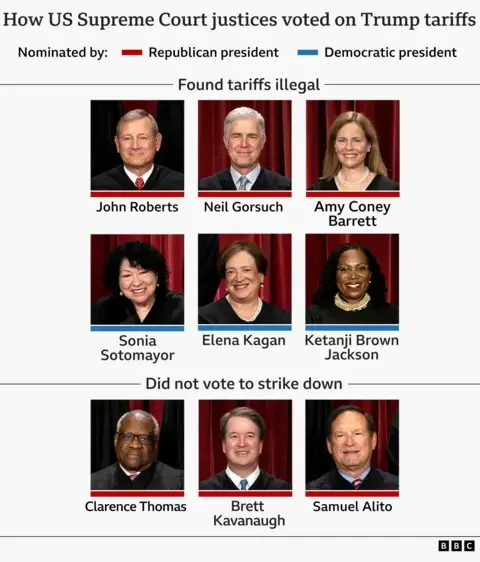
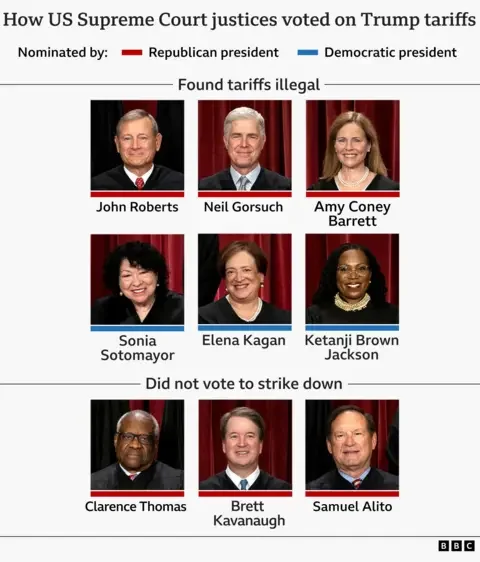
On Friday, the Supreme Court issued a 6-3 decision that denied President Trump the authority to unilaterally impose broad tariffs on goods from nearly all U.S. trading partners under a specific 1977 law. The court determined that this power primarily belongs to Congress during peacetime.
The Supreme Court's ruling rejected President Trump's claim of unilateral power to impose import taxes.

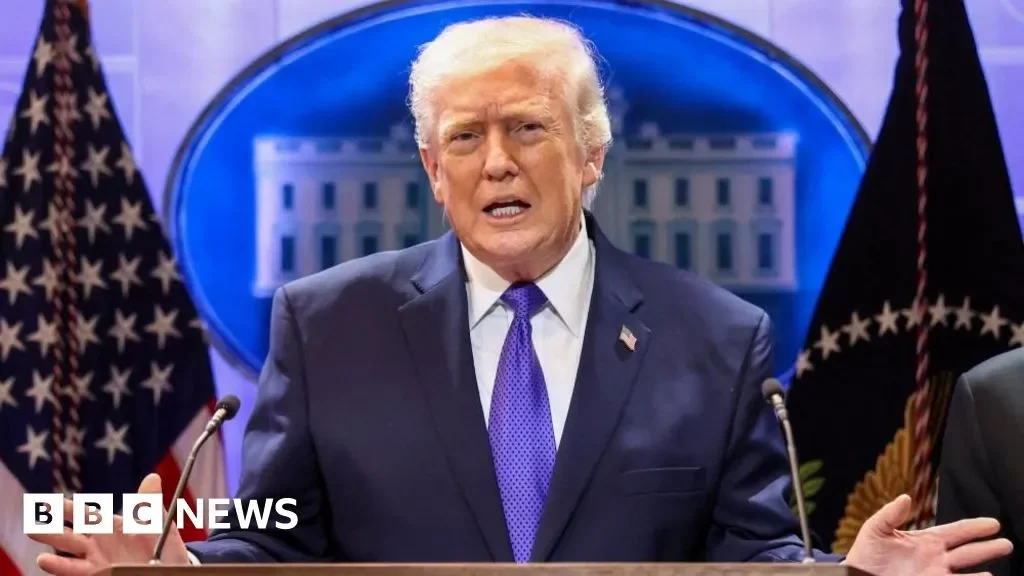
Trump's response was swift and public. In a White House briefing, he criticized the justices in the majority, using terms such as "disgrace," "fools," and "disloyal to the Constitution." He specifically highlighted his appointees to the court, expressing shame over their decision. Trump also praised Justices Clarence Thomas, Samuel Alito, and Brett Kavanaugh, who dissented from the majority opinion, for voting to uphold his tariff authority.
Read More: Taiwan Holds Nantou County Drills to Prepare for State Collapse
Implementation of New Tariffs
In the same briefing, Trump announced his intention to impose a 10 percent tariff on goods from all countries, citing a different, rarely used trade law from the 1970s. This law allows the president to implement tariffs in response to trade deficits or other international payment issues. This move is expected to take effect within three days and may lead to a confrontation with members of his own party in Congress who may not support such broad tariff measures. Canada and Mexico are expected to be exempt from these new tariffs due to existing trade agreements.
Trump invoked a 1970s trade law to announce a new 10% global tariff, potentially creating a clash with Congress.

Legal and Political Ramifications
The Supreme Court's decision represents a significant setback for Trump's economic agenda and his use of executive power to reshape trade policy. His administration has collected tens of billions of dollars through these tariffs, impacting companies and international trade. The ruling clarifies that the authority to enact tariffs in peacetime rests with Congress.
Read More: Why AI Market Growth Is Slowing Down As Of April 2026
The court's decision also has implications for the upcoming State of the Union address, where some justices are expected to be present, potentially creating an awkward dynamic given Trump's public criticism.
The ruling curbs the president's executive authority on tariffs, with Congress holding more power in this area.
Judicial Dissents and Support
While the majority ruled against Trump, three justices—Clarence Thomas, Samuel Alito, and Brett Kavanaugh—dissented. Kavanaugh authored a dissenting opinion suggesting that other legal avenues might still exist for a president to impose tariffs. Trump specifically lauded these three justices for their stance, contrasting them with those in the majority. Neil Gorsuch, another Trump appointee, sided with the court's liberals in striking down the tariffs.
Three justices, including Trump appointees Thomas, Alito, and Kavanaugh, dissented from the ruling.
Analysis of Trump's Statements and Actions
Court observers and trade experts noted that Trump's reaction was not unexpected, given his significant investment in the outcome of the tariff case. His public criticism of the Supreme Court, particularly his own appointees, is an extraordinary display of presidential discontent with a judicial ruling. Some reports indicate that Trump has historically faced scrutiny for surrounding himself with friendly reporters during press briefings to avoid challenging questions. The president did not provide further details when pressed on the specifics of his criticisms.
Read More: FBI Analysts Review Georgia 2020 Election Data in Fulton County
Trump's strong reaction is seen as consistent with his focus on the tariff case outcome.
Conclusion and Future Steps
The Supreme Court's ruling has declared many of President Trump's tariffs illegal, weakening a key aspect of his trade policy. In response, Trump has vowed to pursue new tariffs through different legal channels, setting the stage for further legal battles and potential political contention. The administration indicated that any expected refunds on the invalidated tariffs would likely involve years of litigation. The exact implications for global trade, the economy, and personal finances remain under observation.
The ruling marks a significant defeat for Trump's tariff policy, with new tariffs now being implemented through alternative legal means.
Sources:
BBC News: Trump lashes out at Supreme Court justices over tariffs ruling
The Guardian: Trump announces new 10% global tariffs, lashes out at supreme court justices for ‘ridiculous’ ruling - as it happened
The Guardian: Trump illegally used executive power to impose global tariffs, supreme court rules
Link: https://www.theguardian.com/us-news/2026/feb/20/trump-supreme-court-tariffs-ruling
The Guardian: Furious Trump signs global 10% duty after supreme court issues tariff blow
Link: https://www.theguardian.com/us-news/2026/feb/20/trump-tariff-scotus-response
The Washington Post: Trump imposes new tariffs, denounces Supreme Court justices as a ‘disgrace’ after ruling
Los Angeles Times: Trump calls justices ‘fools,’ announces new 10% global tariff after Supreme Court setback
CBS News: Trump attacks Supreme Court over tariff decision, announces new 10% global tariff
Link: https://www.cbsnews.com/live-updates/trump-tariffs-supreme-court-press-conference/
CBS News: Trump lashes out at his own Supreme Court picks over tariff ruling: "An embarrassment to their families"
NBC News: Trump calls Supreme Court justices 'disloyal to the Constitution' over tariffs ruling
AP News: Supreme Court strikes down Trump’s sweeping tariffs, sparking fierce pushback and vow of new levies
Link: https://apnews.com/article/supreme-court-tariffs-trump-0485fcda30a7310501123e4931dba3f9
BBC News: Trump brings in new 10% tariff as Supreme Court rejects his global import taxes
BBC News: Trump announces new 10% global tariff as he hits out at 'deeply disappointing' Supreme Court ruling