


Government to "Voluntarily" Vet Frontier AI Before Public Release
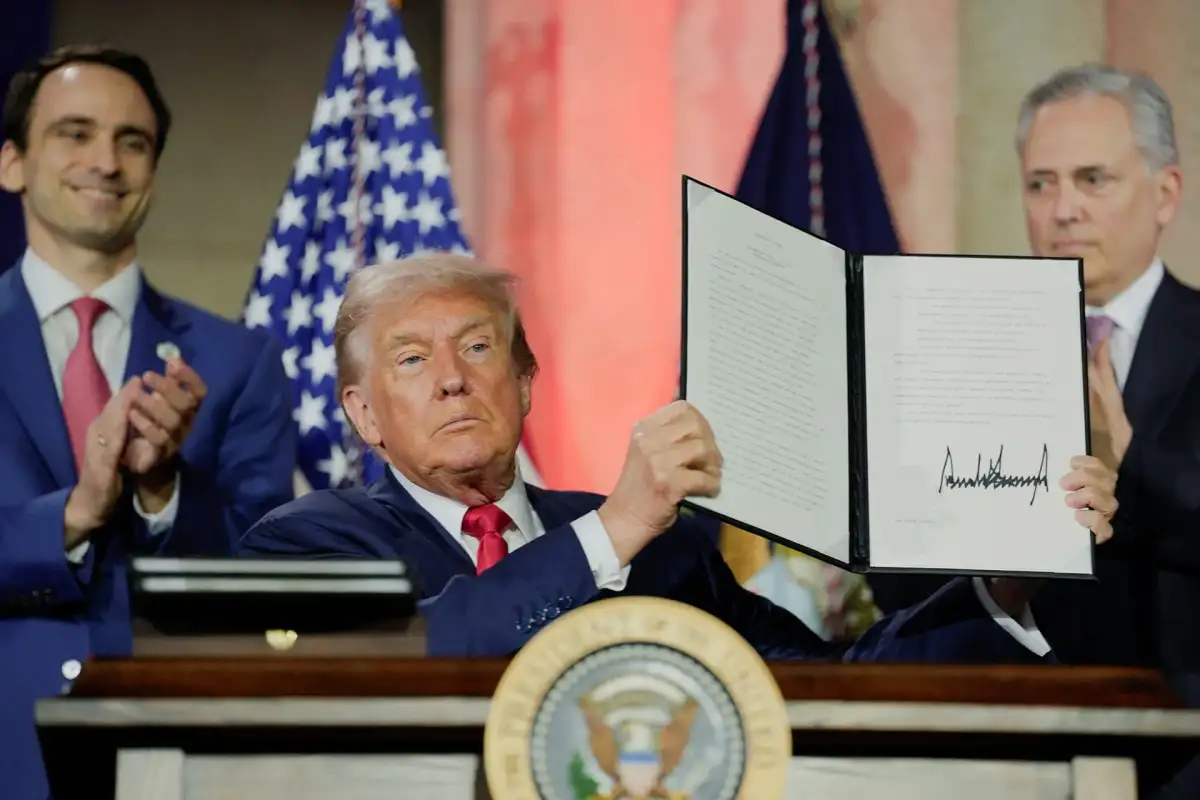
President Donald Trump on Tuesday signed an executive order that asks artificial intelligence companies to voluntarily provide the federal government with access to their most advanced models up to 30 days before a public release. This measure aims to allow for the assessment of potential cybersecurity risks and protection of critical infrastructure.

The executive order explicitly states that this voluntary pre-release mechanism does not authorize mandatory governmental licensing, preclearance, or permitting requirements. Major AI firms were involved in the development of this directive.
"Common-Sense Approach" to Balancing Innovation and Security
A White House spokesperson characterized the executive order as a "common-sense approach of collaborating with industry to balance innovation and security," and to "cement America’s continued global dominance in AI and cybersecurity." The directive also instructs national security agencies to bolster their cybersecurity defenses, proposing a "cybersecurity clearinghouse."
Read More: Chrome mimeHandler API lets extensions handle file types

The order comes in the wake of growing concerns within government and financial sectors, particularly following the announcement of advanced models like Anthropic’s Mythos. This particular model had reportedly spooked officials and Wall Street, highlighting anxieties surrounding the rapid advancements in AI capabilities.
Industry Input and Revised Timelines
AI companies, facing potential scrutiny and a boom in their fortunes, have played a central role in shaping the administration's stance on AI oversight. The tech industry had reportedly pushed for a shorter review window, with some insiders suggesting a period closer to two weeks. The final order’s 30-day window represents a reduction from an earlier draft that reportedly allowed for up to 90 days of review.
This latest executive order was initially slated for a ceremony on May 20, but was postponed. The earlier version, shelved on May 21, was reportedly a "slimmed-down" version of a previous iteration, which had also included a cybersecurity component but proposed a longer review period.
Read More: Acting DNI Pulte Fires Dozens of Intelligence Officials Starting Thursday
Broader Directives and Enforcement
Beyond the pre-release access provision, the executive order directs the Department of Justice to prioritize enforcement against crimes such as AI-assisted hacking and unauthorized access. The Department of Defense is also tasked with prioritizing the cyber defense of its information systems.
The National Security Agency and the Department of Defense are expected to assist in identifying which AI models warrant government scrutiny. The Treasury Department will reportedly focus on identifying vulnerabilities within these AI models.
Background and Context
The current executive order signifies a shift for an administration that has historically shown resistance to regulating artificial intelligence. It arrives as the Pentagon seeks to integrate "frontier AI" into its military operations. This move also follows a previous AI-focused executive order from December, which aimed to prevent states from regulating AI and established a federal taskforce to challenge state-level AI laws. Earlier in May, the Trump administration had reportedly reached an agreement with major tech players, including Microsoft, Google DeepMind, and xAI, to review early versions of their new AI models before public release.
Read More: BEREC Asks for Mobile Network API Ideas from Developers





