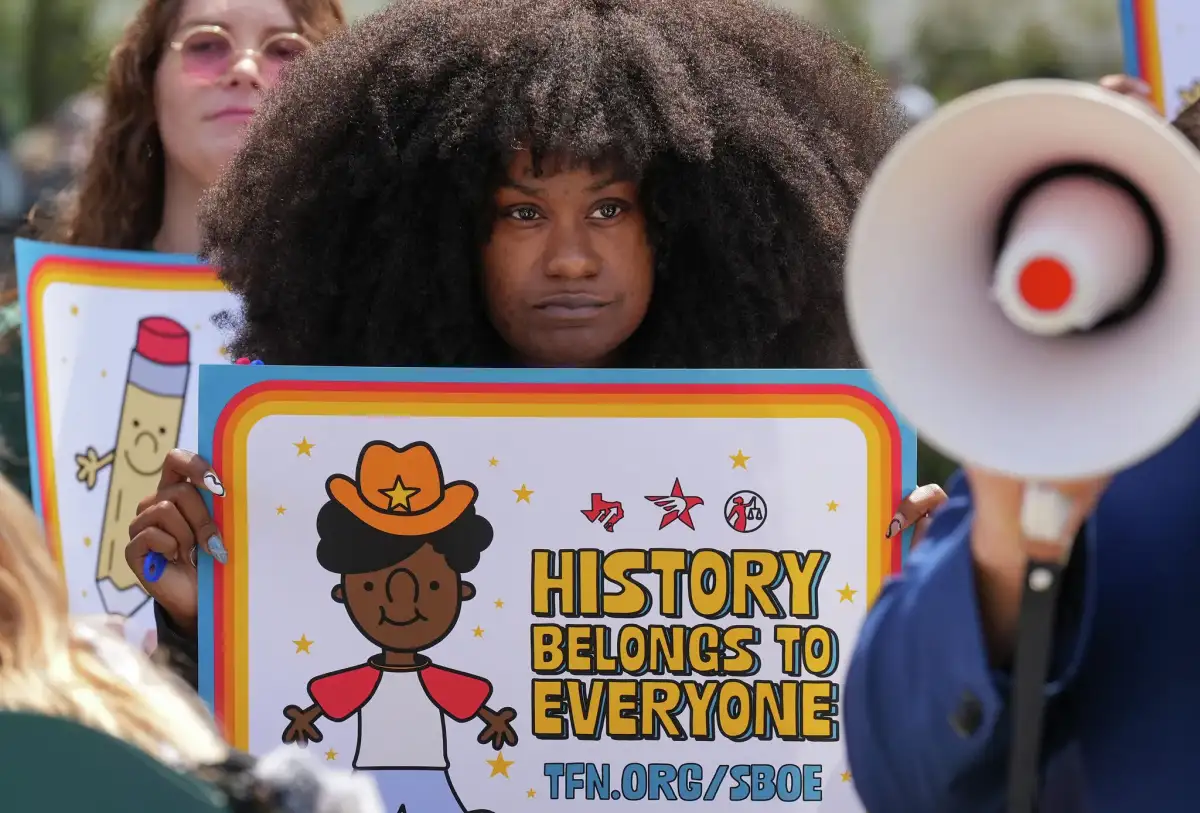
AUSTIN, TX – Amidst a contentious redesign of Texas' social studies curriculum, students have voiced strong objections, urging the State Board of Education (SBOE) to prioritize inclusivity and critical thinking over what they describe as political agendas. The ongoing debate centers on revised standards, the Texas Essential Knowledge and Skills (TEKS), which critics contend lean heavily towards American exceptionalism, Christian values, and rote memorization, at the expense of diverse global histories and the contributions of marginalized groups.
The core of the students' plea is a demand for a curriculum that reflects a broader, more nuanced understanding of history, including the histories of African kingdoms, the Middle East, and the perspectives of women, Hispanic, and Black communities. They also seek greater parental and teacher involvement in the standard-setting process.
The SBOE is expected to vote on the proposed revisions soon, following months of deliberation and controversy. The pushback from students, parents, and educators highlights a broader national tension regarding the influence of politics on educational content and the shape of history taught in public schools.
Read More: Google Learn About AI Tool Released April 2026 For Simple Learning
Concerns Mount Over Curriculum's Direction
Recent testimonies from students during marathon SBOE meetings paint a stark picture of their dissatisfaction. They argue the current drafts excessively focus on memorization and specific ideological viewpoints, neglecting the imperative of developing critical analytical skills.
Exclusionary Content: Reports suggest the revised standards emphasize Western and Texas history, with less focus on world history and cultures.
Prioritization of Specific Values: Critics point to an undue emphasis on Christian values and American exceptionalism, with concerns that this marginalizes non-Christian students and presents a narrow view of history.
Fragmentation of Learning: The proposed structure divides historical instruction into smaller, grade-specific segments (e.g., Texas history in one grade, U.S. history in another), a departure from a prior framework that allowed for a more comprehensive exploration of topics over entire grade levels.
Appointment of Advisors Sparks Criticism
Further fueling concerns is the composition of the content advisory panels appointed by the SBOE. A significant portion of these advisors reportedly lack experience in Texas public schools, raising alarms among educators and some political observers who see this as a signal favoring hard-right conservative viewpoints in shaping the curriculum.
Of the nine appointed advisors, only one is said to have direct experience in a Texas public school.
This selection process has led to accusations that the board is prioritizing specific political narratives over factual, comprehensive historical instruction.
A National Mirror
The contentious overhaul in Texas is being viewed as a microcosm of a larger national conversation about how history and social studies should be taught in an increasingly diverse and complex society. The outcome of the SBOE's deliberations is seen as potentially setting a precedent for educational content and reflecting the broader ideological battles playing out in classrooms across the country.
Read More: Texas Rangers beat Detroit Tigers 10-4 on July 2 2026 in Arlington
The board is scheduled for its first vote on the revised standards imminently, with a final vote anticipated in June. The current legislative climate in Texas has seen the passage of bills related to prayer and religious texts in schools, which some view as part of an intentional pattern to influence public education.