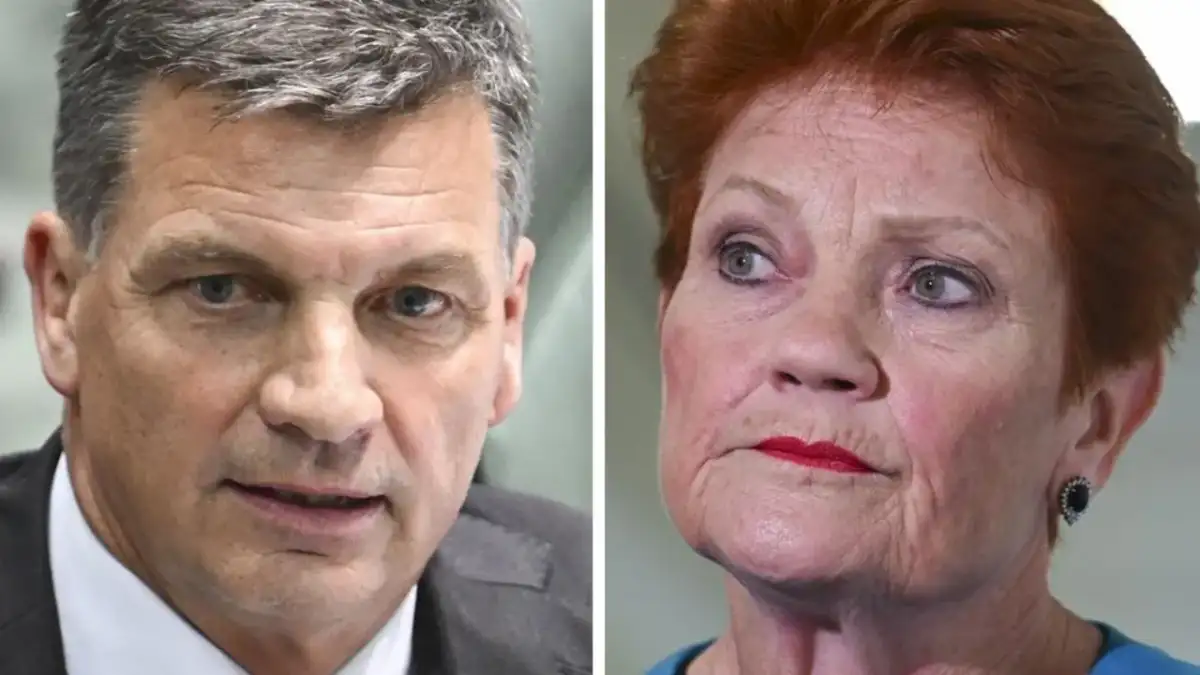
CANBERRA - In his federal budget reply speech today, opposition leader Angus Taylor has put forward a significant policy platform, prominently featuring a promise to automatically index income tax brackets to inflation each year. This proposal, framed as a generational tax reform, aims to counter what Taylor describes as "the thief in the night" – bracket creep driven by inflation. The Coalition also signalled a tougher stance on immigration and a commitment to the continued use of coal power.
Taylor's budget reply, delivered two days after Treasurer Jim Chalmers' federal budget, directly challenges Labor's recent fiscal announcements, particularly those targeting property investment. While Chalmers' budget included changes to negative gearing and capital gains tax rules, ostensibly to assist first-home buyers, Taylor's proposals suggest a different approach to economic relief and housing policy.
Read More: Coalition proposes automatic tax bracket changes for Australians in 2026
The core of Taylor's tax proposal centres on preventing wage earners from being pushed into higher tax brackets solely due to inflation. He claimed a typical worker on $70,000 could be up to $1,000 better off annually over four years under his plan, though he did not provide a precise cost estimate, stating it would depend on future inflation rates and that detailed costings would be released closer to an election. This initiative is presented as a move to ensure government revenue doesn't grow simply from the erosion of purchasing power.
Beyond tax reform, Taylor announced plans to cap net overseas migration to the number of homes built in the previous year, a policy he believes will complement efforts to boost housing supply. This stands in contrast to Labor's approach, where Minister Clare O'Neil acknowledged the complexity of housing affordability, with migration being only one factor. Taylor also indicated that welfare programs, including the NDIS, Jobseeker, Youth Allowance, and Family Tax Benefit, would be restricted to Australian citizens under a Coalition government.
Read More: Angela Rayner settles tax bill amid Labour leadership questions

On the energy front, Taylor pledged to run coal power "long and hard", signalling a commitment to fossil fuels as a cornerstone of energy security. He also stated a Coalition government would develop a National Security Strategy and appoint a dedicated National Security Adviser, with defence spending central to this plan. Notably, concessions for electric vehicles are also slated for removal under the Coalition's proposals.
Economic Context and Labor's Response
Taylor's speech positions the Coalition as an alternative to the government's economic management, particularly in light of Treasurer Chalmers' recent budget. Chalmers himself had earlier indicated that the government's next round of tax relief would be a one-off measure, an increase to the Working Australians Tax Offset.
The government's budget, delivered on May 12, 2026, outlined priorities including economic resilience, tax reform for individuals and businesses, and strengthening security and investment. The budget also addressed fuel security and efforts to alleviate pressure on Australians.
Read More: One Nation Leads Labor in National Poll After Budget
Broader Political Landscape
Taylor's address is seen as an attempt to differentiate the Coalition's agenda from Labor's, particularly on issues of aspiration and economic fairness. The focus on tax bracket indexation taps into a long-standing debate about the fairness of the tax system and the impact of inflation on household budgets. The stance on immigration and welfare also signals a potential ideological battleground with the incumbent government.