Claims of widespread financial malfeasance have surfaced concerning Tamil Nadu's regulated market system, with Pattali Makkal Katchi (PMK) president Anbumani Ramadoss alleging that some ₹500 crore may have been misappropriated over a four-year span. These accusations center on alleged phantom works and inflated expenses within the state's 27 market committees, which oversee 284 regulated markets intended to ensure fair prices for farmers through transparent auctions.
The core of the allegations suggests that financial records present a facade of activity, with listed expenditures on projects like compound wall construction, painting, flooring, and electrical work being either entirely fabricated or only partially completed. Farmers' organizations, cited by Ramadoss, are reportedly the source of these estimates of total financial mismanagement. Ramadoss has formally requested the Tamil Nadu government to launch an inquiry into the operations of all 27 market committees, with a directive to take action should any irregularities be substantiated.
Further complicating the landscape of governance and public trust, Anbumani Ramadoss has also been embroiled in allegations related to grain transport irregularities. Alongside T.T.V. Dhinakaran, leader of the Amma Makkal Munnetra Kazhagam (AMMK), Ramadoss has called for an independent probe into what are described as "improprieties" within the state's public distribution system. These concerns, while currently based on anecdotal evidence and unconfirmed reports, reportedly touch upon issues such as discrepancies in weight measurements, unauthorized diversions of grain shipments, and potential collusion between transport contractors and government officials.
Read More: New Wheat Makes Bigger Starch for Food and Industry
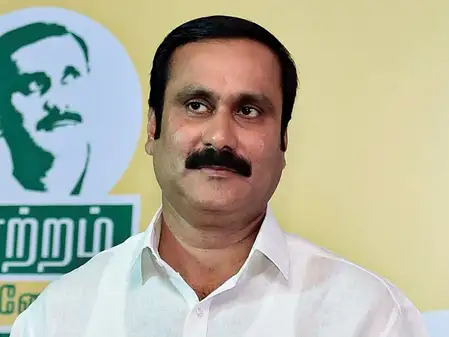
The specter of financial impropriety extends beyond agricultural markets and food distribution. Ramadoss has also directed criticism towards the DMK government's handling of sand quarries, demanding a Central Bureau of Investigation (CBI) probe into what he terms the "plunder of Tamil Nadu's mineral wealth." He points to reports indicating the impending opening of 30 new sand quarries, asserting that the DMK administration is persistently attempting to reopen or expand existing ones despite previous exposures of "large-scale irregularities." These actions, he warns, risk exacerbating existing issues like groundwater depletion and seawater intrusion in coastal areas.
Additionally, Ramadoss has urged for a broad investigation across all departments of the Tamil Nadu government, specifically mentioning the municipal administration and water supply sectors. This call follows communications from the Enforcement Directorate (ED), which has reportedly forwarded evidence of irregularities amounting to ₹1,020 crore in the municipal administration and water supply sector, and an additional ₹888 crore within the employment generation sphere, to the state's Director General of Police, requesting the registration of cases.
Read More: Taiwan Holds Nantou County Drills to Prepare for State Collapse
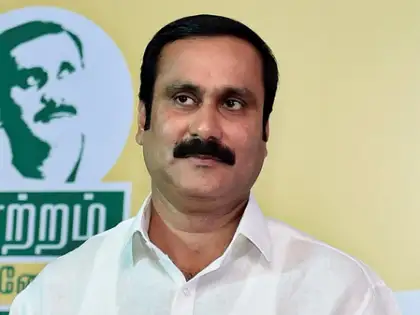
Adding a layer of internal political turbulence, Dr. Anbumani Ramadoss faces accusations of fabricating records submitted to the Election Commission of India (ECI). A criminal complaint, lodged by PMK MLA G.K. Mani, alleges that Ramadoss used forged documents to extend his tenure as party president. This complaint, invoking charges of forgery, cheating, and criminal conspiracy, has been referred to the police, with suggestions for a handover to the CBI due to potential overlaps with existing corruption probes against Ramadoss. The ECI's affirmation of Ramadoss's presidency, based on the disputed documents, has apparently exacerbated a feud within the Pattali Makkal Katchi.
Read More: Karnataka requests higher Totapuri mango limit for farmers in April 2026
Background: A Climate of Allegations
These recent pronouncements from Anbumani Ramadoss paint a picture of pervasive malfeasance within Tamil Nadu's governmental and market structures. The sheer volume and breadth of the alleged irregularities – spanning agricultural markets, food distribution, natural resource management, and even internal party administration – suggest a deep-seated crisis of oversight and accountability.
The specific figure of ₹500 crore, attributed to irregularities in regulated markets, serves as a potent focal point for public concern. It is a sum that, if substantiated, represents a significant diversion of funds meant to support the agricultural backbone of the state. The modus operandi described – phantom projects and falsified expenditures – points to a calculated exploitation of established systems designed for transparency and farmer welfare.
The convergence of these allegations with demands for probes by both central agencies like the CBI and ED, alongside calls for state-level inquiries, highlights a broader struggle for governance legitimacy. Each accusation, regardless of its ultimate verification, contributes to an environment where trust in public institutions is tested, and the efficacy of regulatory frameworks is brought into question. The political undertones, particularly the internal PMK dispute casting a shadow over Ramadoss's own standing, add another layer of complexity to these already serious claims.
Read More: FBI Analysts Review Georgia 2020 Election Data in Fulton County