

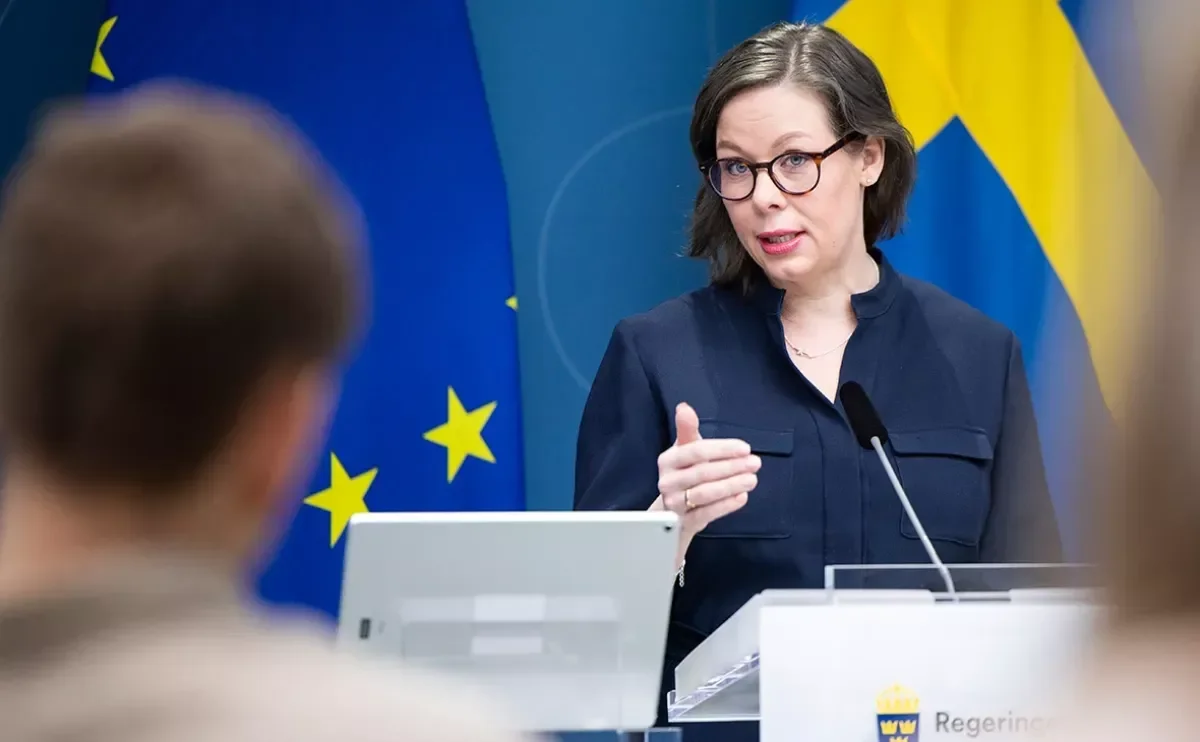
Sweden's Foreign Minister Maria Malmer Stenergard stated that the focus for European powers should be on intensifying sanctions against Russia, rather than pursuing immediate peace negotiations. Malmer Stenergard, speaking to Euronews, articulated that Russia is not presently interested in genuine peace talks. She emphasized that increasing pressure on the Kremlin is necessary to alter its strategic calculations concerning the war in Ukraine.
The Swedish minister insisted that Moscow’s current disposition suggests no inclination towards substantive dialogue, advocating for a reinforced sanctions regime instead. This stance positions Sweden as a proponent of a tougher, more coercive approach from the European Union.
Speculation regarding potential intermediaries for discussions between Moscow and Kyiv, including figures like former German Chancellor Gerhard Schröder, was dismissed by Malmer Stenergard. Her remarks suggest a belief that diplomatic energy is best directed towards strengthening economic and political isolation measures against Russia.
Read More: Khanna Questions Trump's China Plan Affecting US Workers

In parallel, Malmer Stenergard voiced support for enhanced EU pressure on Israel concerning the humanitarian conditions in Gaza and escalating violence within the occupied West Bank. She indicated backing for measures, potentially including sanctions, targeted at Israeli settlers and government members.
Discussions within the EU regarding cooperation have reportedly seen a smoother trajectory following the installation of Hungary’s new government, led by Prime Minister Péter Magyar. Malmer Stenergard noted a shift in tone that facilitates greater collaboration among member states.
Previously, Malmer Stenergard has expressed disappointment with the pace and scope of EU sanctions packages against Russia, particularly urging quicker and more decisive action in the energy sector. During events at the Munich Security Conference, she highlighted Sweden's joint proposals with Finland for new sanctions, encompassing bans on maritime services, restrictions on fertilizer imports, and halts to luxury goods exports.
Read More: Keir Starmer Will Not Resign as Labour Leader, Vows to Prove Doubters Wrong
The push for stronger sanctions comes amidst ongoing complexities in EU decision-making, as seen with Hungary and Slovakia’s temporary suspension of diesel exports to Ukraine. Such actions have, at times, complicated the unanimity required for new sanctions packages and underscored the influence of domestic politics on foreign policy decisions. Sweden's foreign policy, as outlined by Malmer Stenergard, is grounded in interlinked interests and values, with a strong emphasis on its Nordic-Baltic neighbors, European partners, and transatlantic allies.


