


Nation Reacts to Landmark Tariff Ruling
The United States Supreme Court has issued a significant ruling, striking down President Donald Trump's broad global tariffs. This decision, which President Trump has labeled "incorrect" and "terrible," represents a substantial setback for his trade policies. In response, Trump has voiced strong disappointment and announced plans to implement new tariffs, signaling a continued focus on his agenda despite the court's intervention. The ruling has ignited debate and scrutiny regarding presidential authority in trade matters and the future of tariffs in U.S. economic policy.
Context of the Ruling
The Supreme Court's decision on Friday addressed sweeping tariffs enacted by the Trump administration. The core of the legal challenge centered on whether the International Emergency Economic Powers Act (IEEPA), a law typically used for national emergencies, granted the president the authority to impose such broad duties. Lower courts had previously sided against the administration, a trend the Supreme Court has now affirmed.
Read More: Virginia Judges Name James Hundley New U.S. Attorney After Lindsey Halligan's Controversial Exit

Key Legislation: The case specifically examined the scope of the International Emergency Economic Powers Act (IEEPA).
Trump Administration's Argument: The administration contended that tariffs are a fundamental tool of foreign affairs and should not be subject to judicial second-guessing.
Court's Decision: In a 6-3 decision, the Supreme Court found that the IEEPA does not authorize the president to impose tariffs.
The ruling does not prevent President Trump from imposing duties under different legal statutes. Indeed, the White House has indicated that Trump plans to pursue alternative avenues to enact new tariffs, aiming to maintain the economic pressure his policies sought to create.
Evidence of the Decision and Reactions
The Supreme Court's judgment has been formally communicated, with Chief Justice Roberts articulating the majority's reasoning. President Trump has publicly responded to the ruling, expressing his discontent.

The Supreme Court, in a 6-3 vote, ruled that Trump exceeded his authority by imposing tariffs under IEEPA.
Chief Justice Roberts cited a lack of historical precedent in his opinion against the tariffs.
President Trump called the decision "deeply disappointing" and described it as "terrible."
He also praised the three justices who dissented: Justices Clarence Thomas, Samuel Alito, and Brett Kavanaugh.
Trump stated that he does not require additional congressional approval to impose new tariffs.
While the ruling is a blow to his tariff policy, it is understood that other U.S. statutes could permit him to reintroduce tariffs.
Deep Dive: Presidential Authority and Trade
The legal battle over tariffs highlights a broader tension between executive power and judicial oversight, particularly in the realm of foreign economic policy.
Scope of Presidential Powers
The Trump administration argued that the imposition of tariffs falls under the president's inherent authority in foreign affairs. This perspective suggests that decisions regarding international trade, especially those perceived as crucial for national interests, should be largely unchecked by the judiciary. The Supreme Court's rejection of this argument underscores a judicial stance that presidential actions, even in foreign policy, must be grounded in specific legislative authorization.
Read More: J.D. Vance Apologizes to Catholic Bishops for Claims About Migrant Aid Money
Judicial Interpretation of IEEPA
The International Emergency Economic Powers Act (IEEPA) was central to the Supreme Court's decision. The Court's interpretation suggests that the law, as written, was not intended to serve as a broad grant of authority for imposing nationwide tariffs. This limits the executive's ability to use emergency legislation for general trade policy objectives, signaling that such measures require more explicit congressional delegation.
Future of Tariffs
While the specific tariffs enacted under IEEPA have been struck down, the door remains open for future tariff implementations through other legal channels. President Trump has vowed to explore these alternatives, indicating that his commitment to using tariffs as an economic tool remains strong. This suggests that the debate over trade policy and the legal mechanisms for its implementation will likely continue.
Expert Analysis
Legal experts and political commentators have weighed in on the Supreme Court's ruling and President Trump's reaction.
Read More: Louisiana Schools Can Display Ten Commandments After Appeals Court Lifts Ban
Some analyses suggest that the ruling curtails the president's ability to unilaterally enact significant economic policies, reinforcing the principle of checks and balances.
Others note that the dissent by three justices indicates a differing view on the balance of power between the executive and judicial branches, particularly regarding trade.
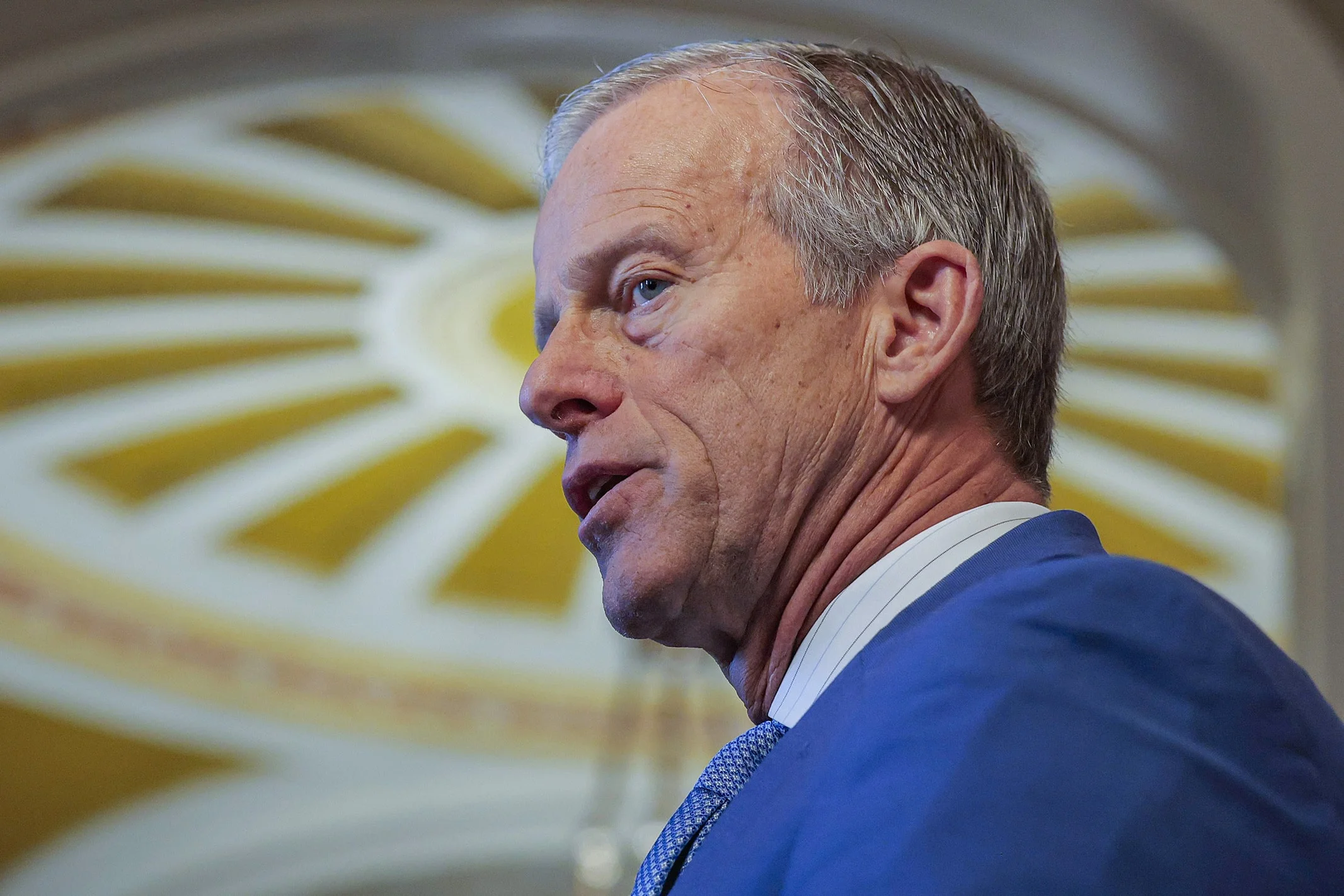
Mitch McConnell has reportedly praised the Supreme Court's decision, aligning with a view that supports the court's interpretation of the law.
The decision injects uncertainty into the future of tariff policy, even as President Trump seeks to chart a new course.
Conclusion and Implications
The Supreme Court's decision to strike down President Trump's sweeping tariffs is a significant legal and political development. It firmly establishes that the president cannot unilaterally impose such measures using the International Emergency Economic Powers Act, reinforcing the necessity of clear legislative authority for broad economic actions.
The ruling signifies a victory for those who advocate for limited executive power in trade policy.
President Trump's vow to implement new tariffs through other means indicates his persistent dedication to his economic agenda, suggesting ongoing friction over trade policy.
The court's decision, while specific to the tariffs enacted under IEEPA, may have broader implications for how future administrations utilize emergency powers for economic measures.
The dissenting opinions highlight the continued debate within the judiciary regarding the extent of presidential authority.
The situation underscores the complex interplay between legal interpretation, executive action, and economic policy in the United States.
Sources
Associated Press (AP News): Provided an overview of the Supreme Court's decision, Trump's reaction, and the legal basis of the tariffs. https://apnews.com/article/supreme-court-tariffs-trump-0485fcda30a7310501123e4931dba3f9
CBS News: Covered President Trump's press conference following the ruling, including his statements on imposing new tariffs and his remarks about dissenting justices. https://www.cbsnews.com/live-updates/trump-tariffs-supreme-court-press-conference/
NPR: Reported on Trump's "deeply disappointing" reaction and his stated plans for moving forward with his trade agenda after the Supreme Court's decision. https://www.npr.org/2026/02/20/nx-s1-5720826/trump-calls-scotus-tariffs-decision-deeply-disappointing-and-lays-out-path-forward
NBC News: Provided live updates on the Supreme Court's tariff ruling, detailing the court's opinion, Trump's planned press conference, and the statutes available for reimposing tariffs. https://www.nbcnews.com/politics/supreme-court/live-blog/-trump-tariffs-ruling-supreme-court-live-updates-rcna252655
Livemint: Captured President Trump's characterization of the ruling as "wrong" and "political," alongside his hopes for a reversal and his pride in other judicial picks. https://www.livemint.com/news/us-news/donald-trump-says-us-court-ruling-on-tariffs-was-wrong-political-hopes-supreme-court-reverses-horrible-decision-11748566721599.html


