

Significant emphasis is being placed on delivering specialized medical services directly to tribal populations in rural and remote areas across India. These efforts involve the establishment of specialist medical camps, a focus on strengthening existing healthcare infrastructure, and the deployment of mobile medical units, as indicated by recent announcements and ongoing programs.
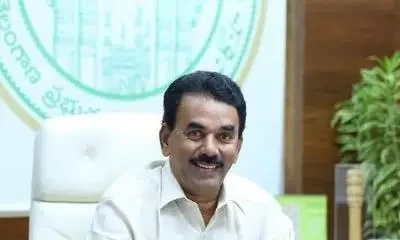
In Adilabad district, Telangana, Tourism and Excise Minister Jupally Krishna Rao has directed officials to launch specialist medical camps in tribal areas. These camps are intended to bring doctors from Rajiv Gandhi Institute of Medical Sciences (Rims) directly to villages, negating the need for residents to travel to district headquarters for treatment. This initiative aligns with a broader directive to ensure welfare schemes reach the most impoverished sections of society.
The Ministry of Health and Family Welfare outlines a national strategy to bolster healthcare in tribal, OBC, and SC-dominated rural regions. This includes a three-tier primary healthcare system, incentives for specialists to serve in remote areas, and the operation of 1,498 Mobile Medical Units (MMUs) under the National Health Mission (NHM). A particular focus is on reaching Particularly Vulnerable Tribal Groups (PVTGs) and strengthening maternal and child health services for marginalized communities.
Read More: Man's hearing problem ignored, leading to late brain cancer diagnosis
Further examples of this focused approach include:
Sundargarh, Odisha: Union Minister of Tribal Affairs, Shri Jual Oram, inaugurated a two-day mega medical camp at Sundargarh Government Medical College & Hospital. This event, part of Janjatiya Gaurav Varsh, was a collaboration between the Ministry of Tribal Affairs, AIIMS Delhi, and the Government of Odisha. The camp offered consultations and diagnostic services from 19 specialist departments of AIIMS Delhi, serving over 1,500 patients on its first day. Efforts here are also linked to the national mission to eradicate sickle cell disease by 2047.
Mandla, Madhya Pradesh: A free medical camp was organized with the patronage of Union Minister Faggan Singh Kulaste and in the presence of Madhya Pradesh CM Dr. Mohan Yadav and Chhattisgarh CM Vishnu Dev Sai. This camp provided health, eye, and dental check-ups, alongside medicine distribution.
Maharashtra: Under the National Health Mission, initiatives like Floating Dispensary & Floating Ambulance in Nandurbar district and Mobile Medical Units in Gadchiroli district are operational. The region also plans Specialists Medical and Dental Camps.
These varied deployments suggest a pattern of decentralized healthcare delivery, aiming to bridge geographical and accessibility gaps for communities historically underserved by mainstream medical facilities. The participation of various government bodies, medical institutions like AIIMS, and non-governmental organizations indicates a multi-pronged strategy to address healthcare needs.
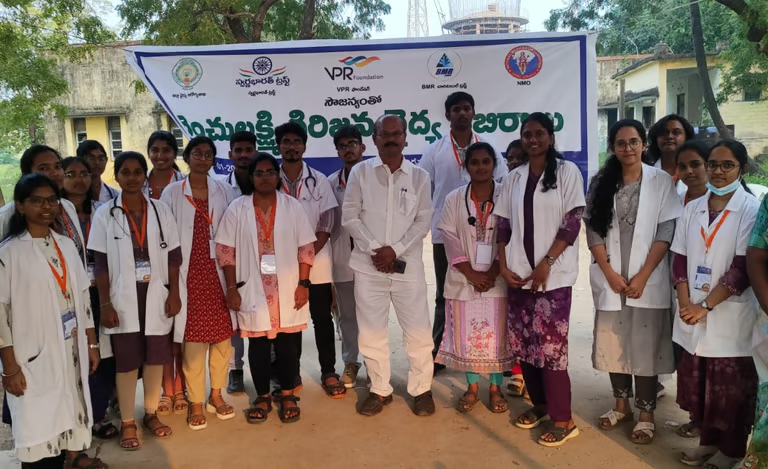
The underlying principle appears to be that healthcare access, particularly for specialized services, is being reconfigured to move towards populations rather than expecting populations to navigate complex systems to reach services. This is exemplified by the direct outreach of specialist doctors and the deployment of mobile units.
Read More: India Buys Russian Oil Despite Global Pressure on March 7, 2026
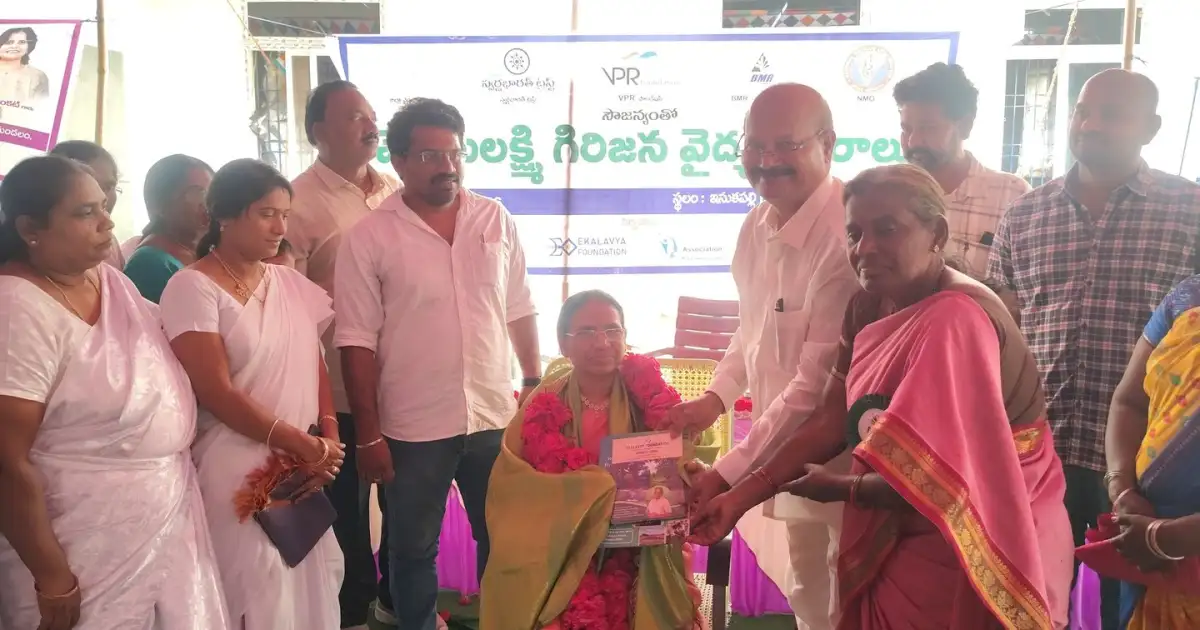
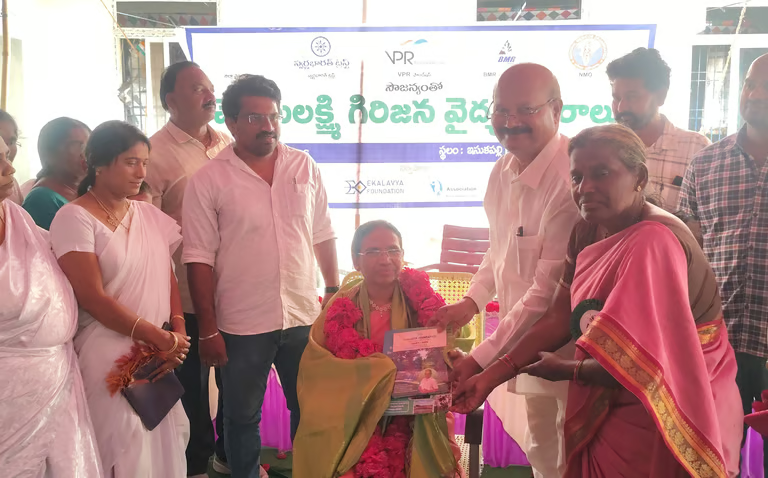
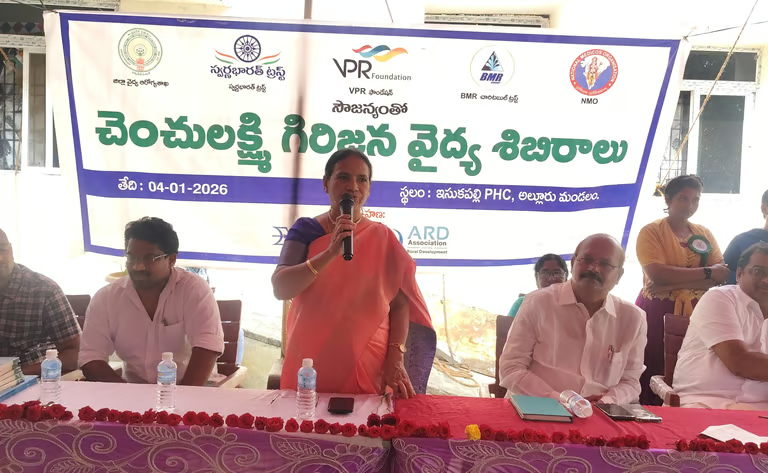
The context for these initiatives includes ongoing government commitments to tribal development, with a stated vision of "Healthcare for All," especially in remote areas. The Ministry of Tribal Affairs specifically aims to bridge healthcare gaps through proactive health initiatives. These camps and mobile units are presented as tangible steps in achieving this vision, fostering healthier and more self-reliant tribal communities. The reports also highlight community enthusiasm, as seen in the Association for the Rural Development's camp where over 3,000 tribal beneficiaries attended, despite initial apprehensions about hospital treatment.