


Anthony Greco spent two years describing a persistent hearing problem to medical staff who produced no answers. The silence from the diagnostic machine allowed a diffuse brain cancer to weave itself into his tissue. By the time the bureaucracy acknowledged the growth, the cancer had transitioned into a permanent resident. Greco has undergone five years of chemotherapy for a disease that now regenerates whenever treatment pauses.
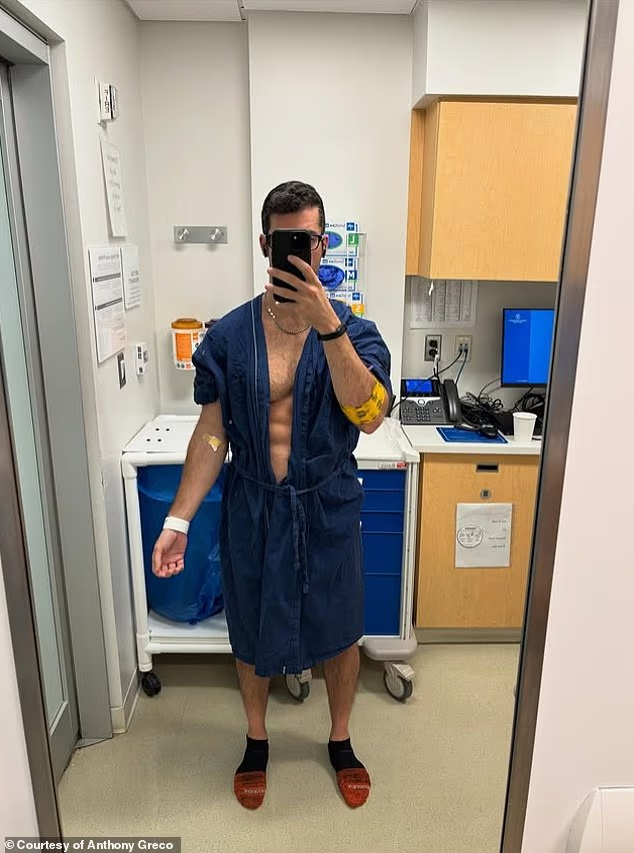
"This cancer just keeps coming back." — Anthony Greco
The Friction of Being Heard
The gap between feeling a symptom and receiving a label is often filled with a specific kind of institutional friction. When a body reports a malfunction that the standard of care cannot immediately categorize, the person inhabiting that body is frequently categorized instead—as anxious, mistaken, or loud.

The Tinnitus Wall: Patients with ear ringing are often told "nothing can be done," a phrase that functions more as a shutter on further investigation than a clinical truth.
Gendered Silencing: Statistics suggest women face a higher frequency of medical gaslighting, where physical pain is transmuted into psychological "distress" by the observer.
The Burden of Proof: To sue for a missed diagnosis, the victim must prove the doctor deviated from the "norm," a circular logic where the norm is often to dismiss uncommon complaints.
| Subjective Reality (Patient) | Institutional Process (Clinic) | Outcome |
|---|---|---|
| Persistent Ear Ringing | Symptom Dismissal | Diffuse Spreading |
| Repeated Self-Advocacy | Labelled "Difficult" | Delayed Intervention |
| Post-Diagnosis "Rage" | Medical Malpractice Defense | Long-term Trauma |
The Machinery of Dismissal
The current medical architecture relies on high-speed throughput. A credentialed observer has roughly fifteen minutes to map a patient's life-long history onto a insurance-approved grid. If the symptom—like Greco’s hearing loss—doesn't scream "emergency" on day one, the system defaults to "nothing."
Read More: Gardening Therapy Helps Mental Health in UK Community Gardens from April 2024
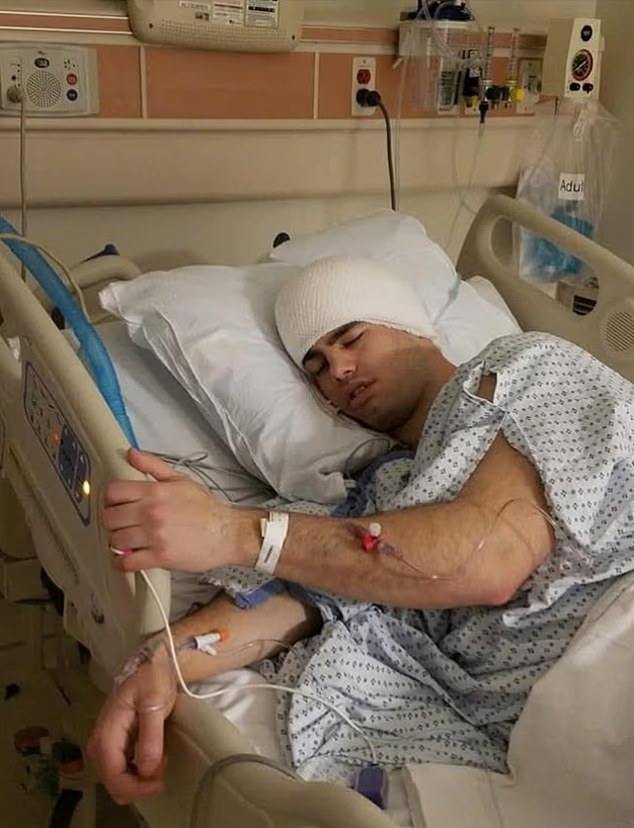
Self-defense in these environments has become a secondary job for the sick. Patients are now advised to bring witnesses (advocates) to appointments, record the names of every chemical they swallow, and remind the doctor that the patient is the "foremost expert" on their own skin and bone. This creates a strange adversarial theatre where the person seeking help must also act as the lead investigator and prosecutor of their own case.

Reflection: The Cost of the "Normal"
The tragedy of the "diffuse" diagnosis is that it implies the cancer was busy making itself at home while the patient was being told everything was fine. In Greco's case, the chemotherapy is no longer a cure, but a maintenance ritual. The medical system's failure to listen isn't just a rude interaction; it is a structural leak that allows manageable sparks to become uncontainable fires.
Read More: Democrats use Markwayne Mullin confirmation to push for ICE changes after Noem leaves DHS
When the expert tells a patient that their pain is a ghost, and the ghost eventually turns out to be a tumor, the resulting trauma breaks more than just the body—it dissolves the possibility of trust in the institution of "healing."