SpaceX has officially declared its intention to stage the largest initial public offering in history, aiming to secure $75 billion in capital. This ambitious move, confirmed on Wednesday, June 3, 2026, would instantly position the company among Wall Street's elite with a total valuation pegged at a staggering $1.765 trillion.
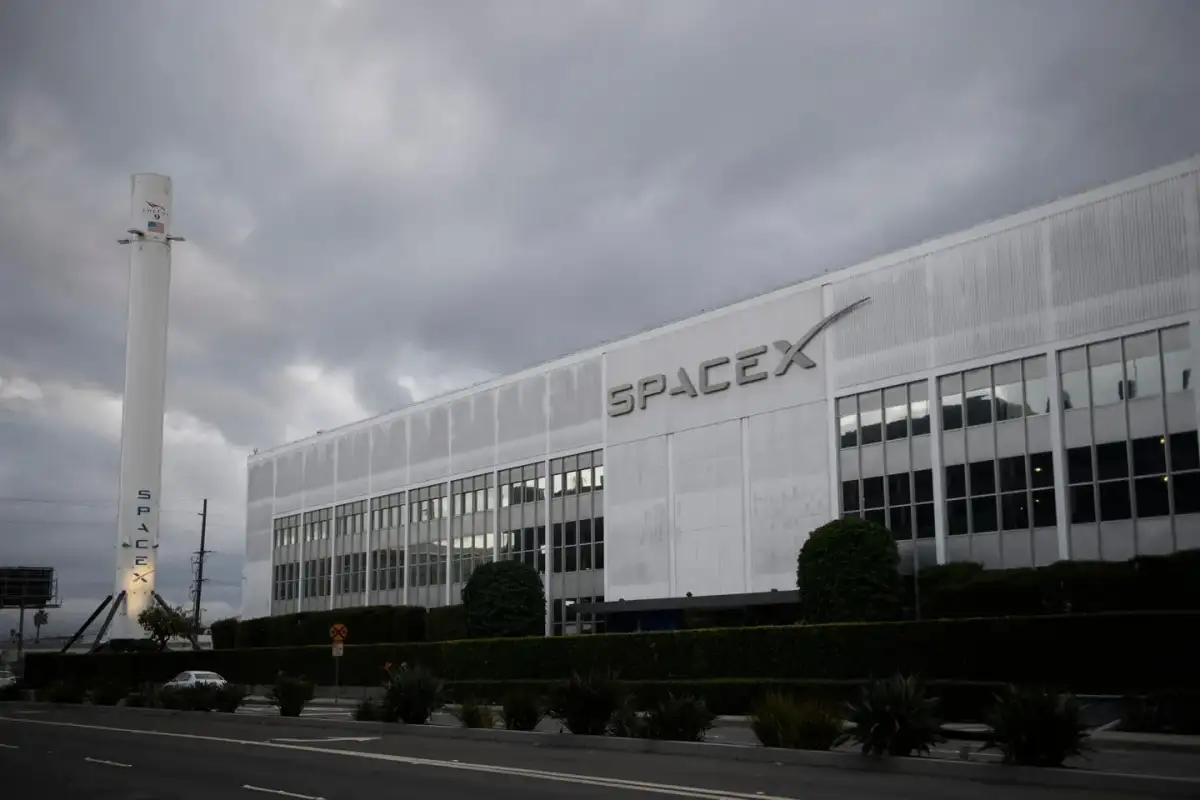
Should investor demand surge, SpaceX has also made provisions to offer additional shares, a move that could further inflate its market presence from the outset. This planned equity event surpasses the current record held by Saudi Aramco.
Financial Landscape and Strategic Mergers
The company's financial filings, made public around May 21, 2026, reveal a complex picture. While SpaceX generated $18.7 billion in revenue last year, it also recorded an operational loss of $2.6 billion.
A significant contributor to both revenue and loss appears to be the Starlink satellite constellation, which forms the primary income stream through its internet connectivity services. However, the newly consolidated AI division, encompassing the social media platform X and the AI developer xAI, incurred an operating loss exceeding $6 billion in the past year. These substantial figures reflect heavy expenditures in artificial intelligence development and the construction of new rocket technology.
Read More: Kent Hughes's Plan for Brendan Gallagher Unclear
Merging Futures: X and xAI Integration
The integration of xAI, Elon Musk's artificial intelligence venture which includes the social media platform X, into SpaceX was formally completed in February 2026. This merger underpins a key component of SpaceX's valuation strategy, with a stated emphasis on expanding not only human space exploration but also its ambitions in artificial intelligence and the establishment of in-space data centers. Despite the significant investments in AI, Musk is expected to retain nearly half of the company's total shares following the offering, maintaining substantial control.
Operational Realities and Public Perception
SpaceX's operational narrative is marked by both celebrated successes and notable setbacks. Recent events include the FAA classifying the debut flight of Starship V3 as a mishap, necessitating an investigation before further flights. Simultaneously, the company has executed back-to-back Starlink missions, launching numerous satellites just hours after a rival's rocket failure. Reports also highlight persistent local dissatisfaction regarding frequent rocket launches.
Read More: Nvidia DGX V100 server gives 15.5 tokens/sec for AI tasks
However, the company's trajectory also includes significant milestones such as a record-breaking launch for its Falcon 9 rocket and ongoing work with NASA on exoplanet missions. Discussions surrounding the transformation of SpaceX's Starbase facility into a town and securing a major contract with Italy for Mars exploration underscore the breadth of its long-term objectives.
Founded by Elon Musk, SpaceX has positioned itself as a leader in the private space exploration sector, notable for its reusable rocket technology and ambitious projects like Starship. The company's operations encompass satellite launches, human spaceflight, and the development of advanced space systems.
Read More: US Treasury Meets AI Leaders in San Francisco This Week

.jpg)