

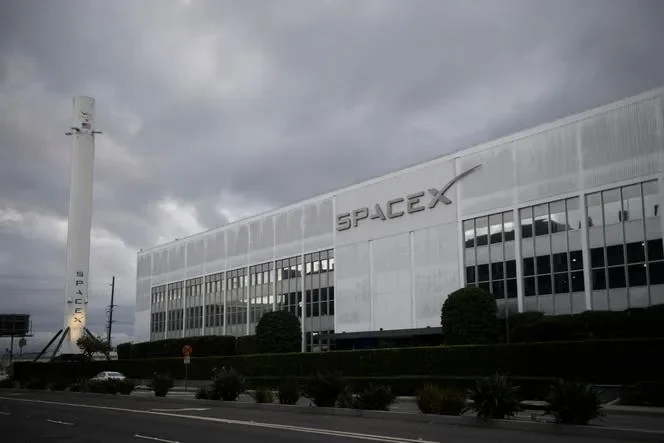
SpaceX has officially announced its intention to go public, aiming to raise an unprecedented $75 billion. This move, if successful, would represent the largest initial public offering in history, dwarfing the previous record held by Saudi Aramco. The aerospace giant’s public debut is expected to cement its position among Wall Street’s elite, with an estimated total valuation of $1.765 trillion. The company has indicated a possibility of offering more shares should investor demand be exceptionally high, potentially further increasing its market size.

The financial filings reveal Starlink, SpaceX's satellite internet constellation, as the primary revenue generator. Despite generating $18.7 billion in revenue last year, the company reported an operational loss of $2.6 billion. This deficit is largely attributed to substantial investments in artificial intelligence (AI) development and the construction of new rockets. The AI segment, encompassing the social media platform X and AI developer xAI, incurred an operating loss exceeding $6 billion in the past year.
Read More: FIFA World Cup 2026 Revenue Reaches $15 Billion With New Ticket Prices

Financials and Strategic Investments
SpaceX's ambition to raise such a significant sum is intended to fuel its ambitious long-term projects, including voyages to Mars and the establishment of space-based data centers. This IPO could also see Elon Musk's personal wealth cross the symbolic threshold of $1 trillion.

The company's previous valuation, following the absorption of xAI in February, stood at $1.25 trillion. However, recent financial disclosures point to operational challenges alongside its revenue streams.

Technological Advancements
Recent developments include the successful launch of Starship V3, described as SpaceX's most powerful megarocket yet, on its Flight 12 test. This advancement is seen as crucial for the company's ongoing efforts to achieve its ambitious space exploration goals.
Investor Considerations
For long-term investors, the critical question will revolve around the sustained strength of SpaceX's valuation, which is approaching $1.75 trillion. The accessibility of the IPO itself is secondary to the underlying financial robustness and future potential of the company. The pricing of these shares, currently determined through bilateral negotiations and prior funding rounds, is expected to become more transparent following the public offering.
Read More: Chrome mimeHandler API lets extensions handle file types






