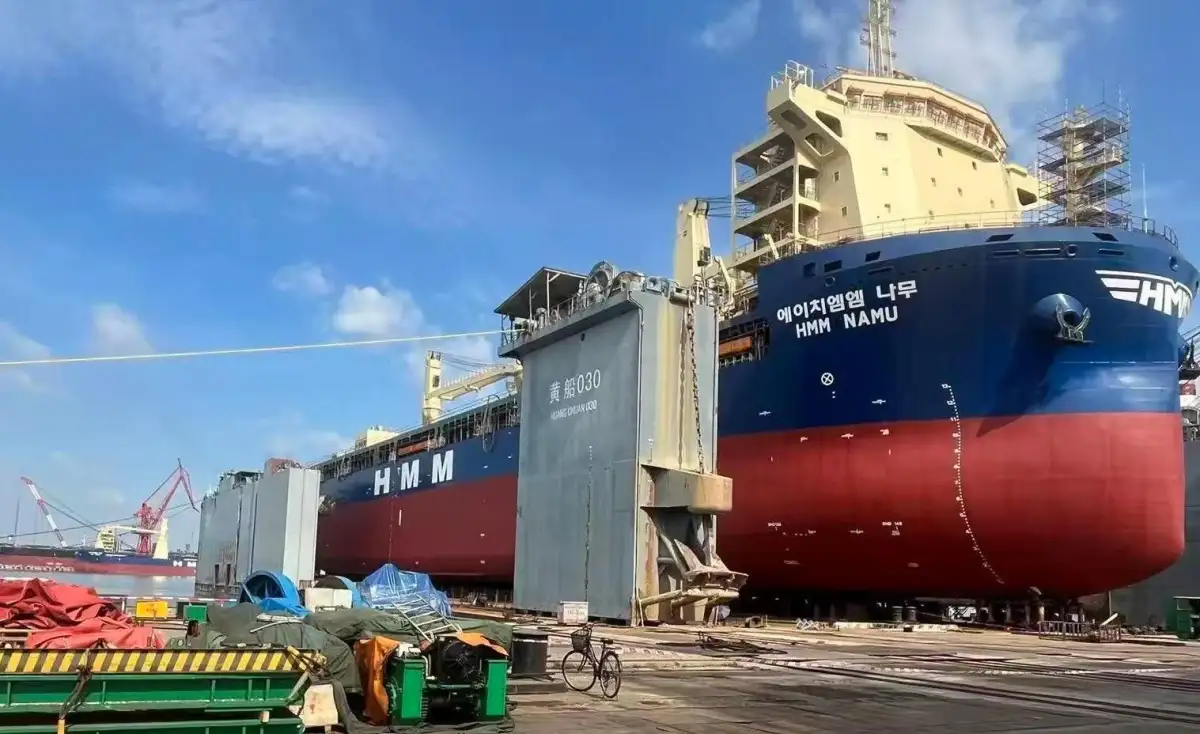
SEOUL – South Korea has firmly rejected claims made by US President Donald Trump that a South Korean-operated vessel, the HMM Namu, was attacked because it "decided to go it alone" without US protection in the Strait of Hormuz.
==Seoul's Ministry of Foreign Affairs stated on Thursday that the vessel had been anchored near the United Arab Emirates, within the Strait of Hormuz, for several days before the explosion and fire occurred. This directly contradicts Trump's narrative that the ship was sailing independently.==
Iran has also issued a denial, with its embassy in Seoul stating it "firmly rejects and categorically denies" any responsibility for the incident aboard the HMM Namu. The cause of the fire remains unconfirmed by South Korean authorities pending the vessel's return to port.
Trump had used the incident to press South Korea to join US-led maritime security initiatives, specifically the Maritime Freedom Construct (MFC) and Project Freedom, intended to ensure safe passage through the strait. However, this push appears to be facing internal resistance and a lack of clear international consensus.
Read More: AFP Reviews War Crime Claims Against Australian in Gaza
HMM, the shipping company operating the Panama-flagged cargo ship, corroborated the Korean government's account, confirming the HMM Namu was anchored and not attempting to navigate out of the strait. The ship's labor union leader also confirmed the vessel was at anchor when it sustained damage.
The HMM Namu, a 35,000-ton general cargo vessel, was reportedly not carrying any cargo at the time of the incident. It carried 24 crew members – six South Koreans and 18 foreign nationals.
South Korean officials had previously indicated a willingness to carefully consider joining US maritime operations, but such a move would require legislative approval. The US itself announced on Tuesday a pause in the Project Freedom initiative, shifting focus to negotiations with Iran.
Read More: Strait of Hormuz shipping to return to normal by June 26 2026
Meanwhile, reports indicate that 26 South Korean-flagged vessels were stranded in the vicinity of the Strait of Hormuz around the time of the incident. South Korea's Ministry of Oceans and Fisheries had advised Korean vessels in the area to move to safer locations and maintained close communication with shipping companies and affected vessels.
Trump's initial statement on social media platform Truth Social, asserting Iran fired at the ship and suggesting South Korea should join his mission, has been met with a qualified, yet firm, rebuttal from Seoul. The incident occurred on Monday, adding another layer of tension to the volatile region.