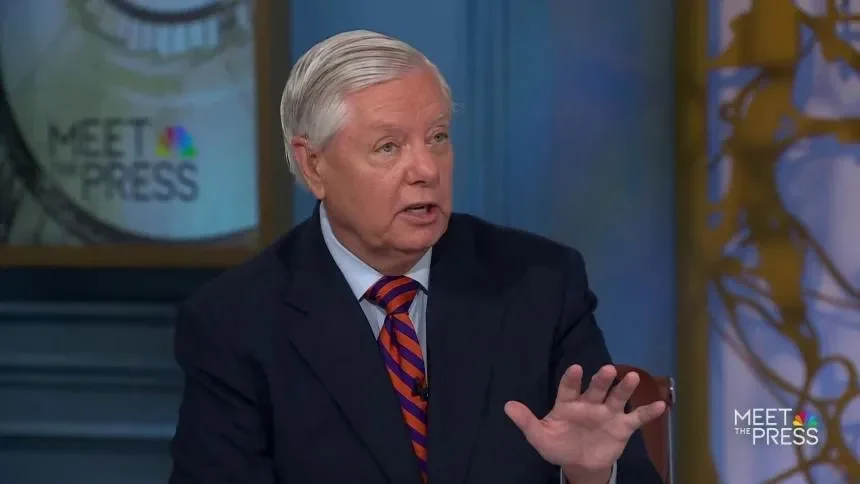
Senator Lindsey Graham has publicly urged President Donald Trump to recommence American military action against Iran, asserting that the current "status quo" in the Strait of Hormuz is detrimental to all parties involved. Graham’s stance, articulated in recent interviews, suggests that a renewed offensive would not only counter Iran’s alleged ceasefire violations but also potentially lower global energy prices.
The core of Graham's argument centers on the perception that the ongoing diplomatic impasse benefits Tehran, while simultaneously harming U.S. economic interests and regional stability. He contends that Iran is exploiting the pause in negotiations and the continued closure of crucial maritime passages to its advantage.
Military Action as Economic Lever
Graham's advocacy for renewed strikes is framed, in part, as a strategic move to influence energy markets. He posits that decisive military intervention could lead to a reduction in oil and gas prices, a claim that aligns with comments made by President Trump himself, who has indicated a willingness to take actions on Iran irrespective of potential electoral consequences. Trump’s remarks suggest a belief that such actions, while potentially unpopular with voters, are necessary to prevent Iran from acquiring nuclear weapons.
Read More: India Election Claims Delay Development Talks
Iran's Alleged Violations and Ceasefire Concerns
The senator's calls come in the wake of accusations that Iran has violated a ceasefire agreement. Graham stated, with a high degree of certainty, that Iran has indeed breached the terms of the agreement. This assertion underpins his belief that there is ample justification for stronger U.S. military responses, aimed at degrading Iran's capabilities and disrupting its interference with maritime freedom. He specifically referenced "havoc on the region" as a consequence of Iran's current trajectory.
Diplomatic Stalemate and Economic Pressure
The diplomatic channel between the U.S. and Iran remains frozen, with negotiations stalled and no immediate prospect of a deal to end ongoing hostilities. This lack of progress is seen by Graham as directly benefiting Iran. Adding to the economic strain, Iran recently removed subsidies on certain essential imports, a move that has already impacted the prices of goods like cooking oil. This internal economic pressure within Iran, coupled with the international standoff, creates a complex backdrop for the discussions.
Read More: Ukraine Drone Strikes Kill 4 in Russia, Injure 12
Background: Shifting Alliances and Geopolitical Tensions
Senator Graham, a notable ally of President Trump, has consistently adopted a hawkish posture regarding Iran. His recent pronouncements appear to amplify this long-standing position, particularly in the context of the current administration's approach to the region. The statements also highlight a broader debate within U.S. political circles regarding the optimal strategy for dealing with Iran, with some lawmakers reportedly grappling with how closely to align their own campaigns with Trump's more assertive foreign policy. The geopolitical landscape, marked by complex negotiations and regional instability, continues to be a focal point of international concern.