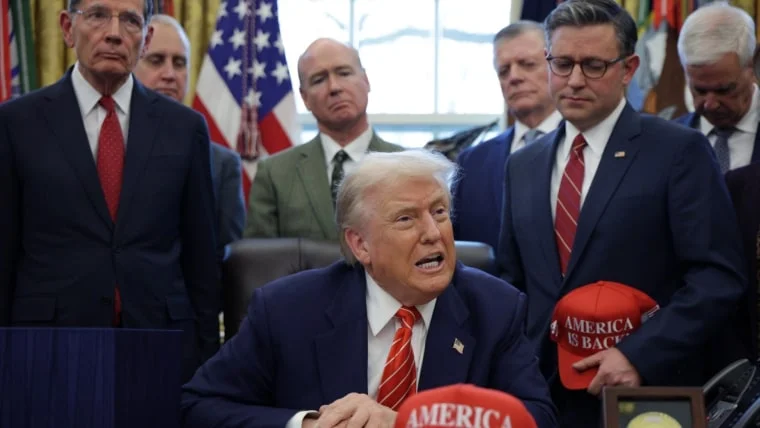
A significant legislative effort, known as the SAVE America Act, has successfully passed the House of Representatives and is now poised to face a vote in the Senate. This bill, which mandates voter identification and proof of citizenship for federal elections, has ignited a sharp division between Republican and Democratic lawmakers. While its proponents argue it is a crucial step to secure election integrity, opponents contend it serves as a barrier to voting for many citizens. The upcoming Senate vote is framed as a test for Democrats, particularly concerning the chamber's procedural rules.
The political landscape surrounding the SAVE America Act is complex, with different factions within the Republican party holding varying views on its passage and the procedural tools that might be employed. Senate Majority Leader John Thune has publicly committed to bringing the bill to a vote, despite predictable opposition from Senate Democrats, including their leader, Chuck Schumer. This commitment has led to anticipation and heightened scrutiny of the legislative process ahead.
Read More: Rahul Gandhi: Kerala LDF and BJP have secret deal for corruption

The SAVE America Act: A Detailed Overview
The SAVE America Act proposes significant changes to federal election procedures, centering on enhanced voter identification and verification measures. Key provisions include:
Voter Identification: The bill mandates that individuals present government-issued photo identification to cast a ballot in person.
Proof of Citizenship: It requires voters to provide proof of citizenship when registering to vote.
Mail-In Ballot Procedures: The legislation also aims to tighten rules for mail-in ballots, potentially requiring voters to submit a copy of approved identification when requesting and returning absentee ballots.
The bill's genesis traces back to President Donald Trump, who has actively urged its passage. The Republican-controlled House of Representatives has passed versions of this legislation, with the most recent vote being 218-213. This vote saw unanimous support from Republicans and opposition from all but one Democrat, highlighting the deeply partisan nature of the bill.

Legislative Journey: From House to Senate
The path of the SAVE America Act has been marked by decisive action in the House and anticipation in the Senate.
House Passage and Bipartisan Divide
The Republican-controlled House has passed the SAVE America Act on multiple occasions. The latest vote, securing 218-213 in favor, underscores the strong party-line divide.
Read More: How Beliefs About Race Affect Support for Welfare Programs in the US

Republicans have unanimously supported the bill, framing it as a common-sense measure to enhance election security and prevent noncitizen voting.
Democrats have largely opposed the legislation, with only one member voting in favor of the most recent iteration. Their central argument is that the bill constitutes voter suppression, disproportionately affecting minority groups and poorer citizens.
Some Republicans, such as House Administration Committee Chairman Bryan Steil, have described the bill as necessary to combat alleged threats of widespread noncitizen voting, a claim that has been described as "virtually nonexistent" by some sources.
Senate Confrontation: Thune's Commitment and Democratic Opposition
Upon its arrival in the Senate, the SAVE America Act faces significant hurdles, primarily due to the chamber's filibuster rule, which requires 60 votes to advance most legislation.
Senate Majority Leader John Thune has stated unequivocally that the bill will receive a vote on the Senate floor, declaring, "We will have a vote."
Senate Minority Leader Chuck Schumer has vowed to oppose the bill vehemently, labeling it "Jim Crow 2.0" and promising to fight its passage "tooth and nail."
Democrats, including Schumer, characterize the bill as a tool for voter suppression rather than election integrity.
Procedural Sticking Points: The Filibuster Debate
A key element of the debate surrounding the SAVE America Act in the Senate revolves around the chamber's filibuster rule.

Some Republicans, reportedly encouraged by former President Donald Trump, have advocated for altering or abolishing the filibuster to allow the SAVE America Act to pass with a simple majority.
However, Senate Majority Leader John Thune has expressed skepticism about changing the filibuster rule, stating he has "thrown cold water" on such proposals. He appears to be prioritizing a vote on the bill itself, rather than procedural reform.
This stance aligns with other Republican figures, like Senator Susan Collins, who, while potentially open to some voter ID measures, has not supported scrapping the filibuster.
The 60-vote threshold remains the primary obstacle for the bill's advancement, as it is unlikely to garner sufficient bipartisan support to overcome a filibuster.
Arguments and Counterarguments: The Core of the Debate
The debate over the SAVE America Act is multifaceted, with each side presenting distinct rationales and concerns.
| Aspect | Republican Stance | Democratic Stance |
|---|---|---|
| Purpose | To enhance election security, prevent voter fraud, and ensure only eligible citizens vote. | To suppress votes, particularly among minority groups and lower-income citizens, thereby undermining democratic participation. |
| Voter ID | Common sense measure; widely supported by the public (e.g., Pew Research Center data shows high support for requiring photo ID). | Creates unnecessary barriers for eligible voters who may lack the required identification, effectively disenfranchising them. |
| Citizenship Proof | Necessary to prevent noncitizens from voting in federal elections. | A pretext for voter suppression; questions the legitimacy of existing registration processes and potentially disenfranchises citizens. |
| Impact | Safeguards the integrity of elections and the electoral process. | Would disenfranchise millions of Americans and weaken democratic representation. |
| Legislation Name | "SAVE America Act" suggests a focus on preserving and protecting the electoral system. | Perceived by opponents as a tool for voter suppression, rather than election integrity. |
Expert Analysis and Political Positioning
Political analysts and lawmakers are closely observing the Senate's handling of the SAVE America Act, noting the strategic implications of the planned vote.
Senator Chuck Schumer has framed the bill as a partisan attack on voting rights, suggesting, "They don't want poor people to vote." This framing positions Democrats as defenders of voting access.
Republican proponents, such as Representative Anna Paulina Luna, express urgency, stating, "If we don’t send the SAVE America Act to President Trump’s desk, we lose our nation." This highlights the high stakes perceived by the bill's supporters.
The legislative strategy employed by Senate Majority Leader John Thune to ensure a vote, even without procedural changes, is seen as an attempt to put Democrats on record and potentially use the vote for political messaging heading into elections.
Some within the Republican party, particularly hardline members, have expressed frustration with the Senate's perceived inaction on voter ID legislation, with some reportedly threatening to obstruct House proceedings until the Senate addresses the bill.
Conclusion and Future Outlook
The SAVE America Act has successfully navigated the House of Representatives, largely along party lines, and is now slated for a vote in the Senate. The central conflict lies in the deep partisan disagreement over election integrity versus voting access, embodied by the opposing viewpoints on voter identification and citizenship verification.
Read More: Trump Says Iran Conflict Will End Soon, But No Clear Plan
Senate Majority Leader John Thune's commitment to a vote signifies a deliberate political maneuver to confront Democratic opposition. However, the 60-vote filibuster threshold in the Senate remains the most substantial impediment to the bill's potential passage. The debate is expected to highlight the stark contrasts in electoral policy and democratic philosophy between the two major parties.
The outcome of the Senate vote, irrespective of passage, is likely to serve as a significant political signal, informing campaign strategies and public discourse on voting rights and election security. The differing perspectives on the bill's intent and impact underscore the polarized nature of contemporary American politics.
Most Used Sources:
Fox News:
Schumer fights GOP citizenship voting requirement bill in Senate chamber | Fox News
Context: These articles provide direct quotes from key figures like Senator Thune and Senator Schumer, detailing their positions and the political framing of the SAVE America Act.
NBC News:
Republicans clash over the Senate filibuster and Trump-backed voter ID bill
House passes SAVE America Act, sending Trump-backed election bill to the Senate
Context: These reports detail the House passage of the bill and the internal Republican discussions and clashes regarding the Senate filibuster and the SAVE America Act.
CNBC:
SAVE Act voter ID bill is on the minds of Trump and Congress: What to know
Senate Leader Thune throws cold water on filibuster change in push for voter-ID bill
Context: These articles offer insights into the SAVE America Act's prominence in political discussions, President Trump's involvement, and Senator Thune's stance on filibuster reform.
Democracy Docket:
Context: This source focuses on the implications of the bill, particularly the argument that it could disenfranchise millions, offering a critical perspective on the legislation.
Newsweek:
Context: This report highlights the bipartisan divide in the House vote and also references public opinion data on voter ID requirements.