The whispers started long before the acclaim. As Brazil's Oscar-tipped film, The Secret Agent, rakes in international praise and festival awards, a darker narrative is emerging – one of alleged death threats, enforced silence, and a chilling reminder of a nation's brutal past. The filmmakers behind this gripping political thriller, Kleber Mendonça Filho and star Wagner Moura, have hinted at an unnerving pressure, with one stating, "I’ve been advised not to say certain things." This cryptic warning raises a crucial question: is the film's unflinching look at Brazil's dictatorial era so potent that it continues to stir fear, even decades later?
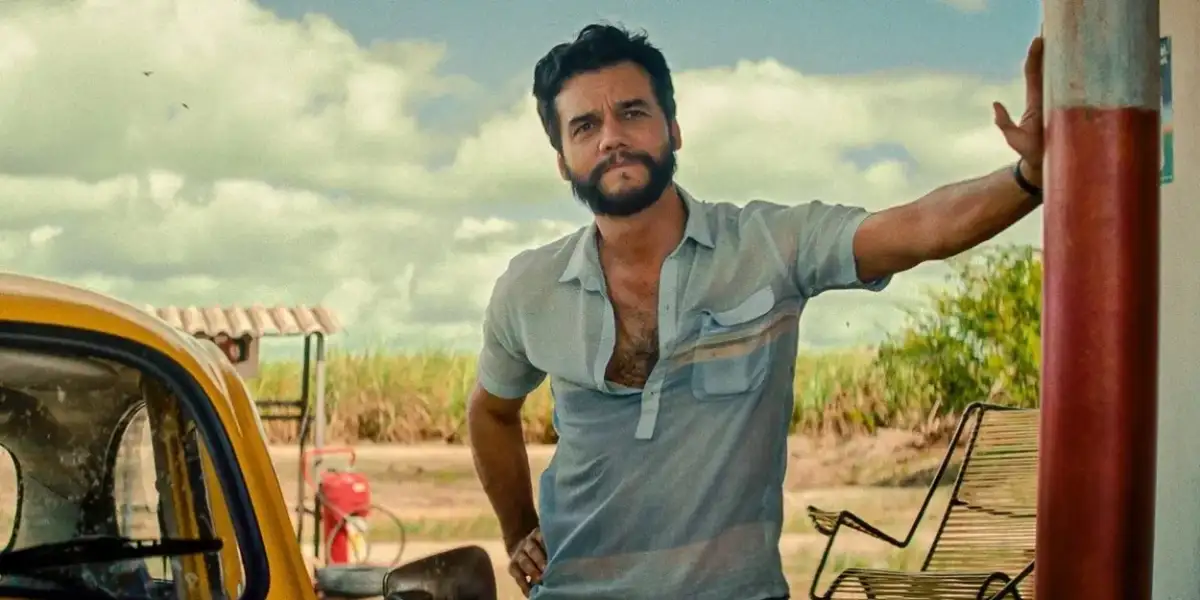
The Secret Agent, a film lauded for its artistic merit and searing portrayal of a nation grappling with its history, has been officially selected by Brazil for the upcoming Academy Awards and has already snagged Golden Globes and accolades from prestigious critics circles. It tells the story of Marcelo, a technology expert on the run during the oppressive 1970s dictatorship, who arrives in Recife seeking refuge but finds a city still deeply scarred by violence and corruption. While critics hail its "stylish and vibrant political thriller" nature and its ability to serve as a "welcome corrective" to the erosion of democratic norms, the subtle hints of external pressure cast a long shadow over its success.
Read More: Tamil Cinema Loses K. Bhagyaraj and Bharathiraja, Ending An Era
A Nation Divided: Echoes of the Dictatorship
Brazil's history is not a neatly concluded chapter. The military dictatorship, which spanned from 1964 to 1985, left an indelible mark, characterized by censorship, torture, and political repression. The Secret Agent doesn't just depict this era; it plunges into its "entrails," as one review puts it, exploring how its violence has been "entrenched" in modern Brazil.

The Context: The film is set in 1977, a period of intense state control. The narrative centers on Marcelo, who is not just fleeing personal danger but the pervasive atmosphere of fear that defined the dictatorship.
Modern Parallels: The film's relevance is underscored by contemporary statistics, such as the alarming rate of police killings in Brazil today – over 6,000 per year, according to one report. This raises the question: Is the film a historical account, or a stark reflection of ongoing issues?
Art as Resistance: Filmmakers like Mendonça Filho are actively engaging with "national memory," using cinema as a tool to confront the past. The Secret Agent is seen as a companion piece to Filho's earlier work, I Am Still Here, both tackling the dictatorship but from different angles, and both speaking "to Brazil today."
"The Pernambucan essence of Secret Agent helps us grasp why it is such a different film from I Am Still Here, even though both take place in the same decade, both portray Brazil under the dictatorship, and both speak to Brazil today."
Why does a film set decades ago provoke such strong reactions that lead to "advised" silences and potential threats?
Read More: Lula Calls Bolsonaro Family 'Traitors' After Meeting With Trump
The Shadow of Fear: Unpacking the Warnings
The most striking element from the filmmakers' statements is the admission of being "advised not to say certain things." This isn't the usual artist's reticence; it hints at external forces applying pressure. Who are these "advisors," and what exactly are they advising against?
The Nature of the Threats: While specific details remain elusive, the mention of "death threats" in the report's headline suggests a level of danger that goes beyond mere artistic critique. Are these threats coming from individuals who feel exposed by the film, or from broader, more organized entities with a vested interest in controlling the narrative of the past?
Wagner Moura's Performance: Moura's portrayal of Marcelo is described as embodying "paranoia written in his bodily exhaustion and his gaze." Is this just acting, or was there an element of real-world tension that informed his performance?
Historical Trauma: The film's focus on the dictatorship inherently touches upon sensitive historical wounds. Brazil remains deeply divided in its interpretation of this period. Could the film's portrayal be so incisive that it reopens old wounds and triggers defensive reactions from those who benefited from or perpetuated the regime?
"The Secret Agent reveals the dictatorship’s entrails."
What specific "entrails" of the dictatorship are so sensitive that they require filmmakers to self-censor or fear repercussions?
A Legacy of Censorship and Control
Brazil's past under military rule was marked by significant censorship. Books were banned, artists were silenced, and any form of dissent was brutally suppressed. The Secret Agent appears to be a direct challenge to this legacy of control, prompting questions about whether such tactics are still being employed, albeit perhaps more subtly.
Past Incidents: During the dictatorship, numerous artists and intellectuals faced persecution. Freedom of expression was severely curtailed. Filmmakers, writers, and musicians often had to work under the constant threat of censorship or reprisal.
The "Advisors": Are the individuals or groups advising silence connected to the remnants of the old regime, or to new power structures that wish to maintain a particular version of history? Could these "advisors" be operating through proxies, making it difficult to identify the source of the pressure?
The Power of Film: The very fact that a film can generate such a reaction speaks volumes about its impact. Why is it that a cinematic work, even decades after the events it portrays, can be perceived as such a threat?
"Director Kleber Mendonça Filho and Moura on the set of The Secret Agent."
Is the film's success, including its Oscar consideration, a victory against historical erasure, or is it a dangerous tightrope walk where artistic freedom is constantly under threat?
Read More: Maatrubhumi Film Release Delayed Again by CBFC in India
The Unseen Craft: VFX, Sound, and the Illusion of Reality
Beyond the political undertones, The Secret Agent is also a testament to cinematic craftsmanship. The film utilizes visual effects, particularly for elements like a seemingly uncanny cat and even a debated "hairy-leg sequence," to build its immersive world. This technical prowess adds another layer to its exploration of reality and perception.
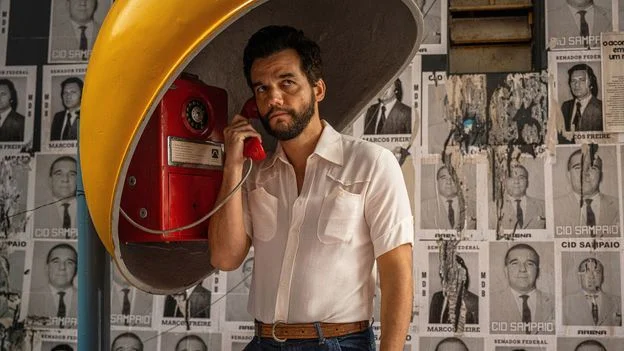
VFX and Realism: The report mentions that the VFX "are not sharp, but they gave the film exactly the look I’d pictured." This suggests a deliberate choice to integrate special effects in a way that enhances, rather than distracts from, the film's gritty realism. How do these effects contribute to the overall mood and the portrayal of Marcelo's paranoia and the oppressive environment?
Sound Design: The article briefly touches on sound work. How does the auditory landscape of The Secret Agent contribute to its atmosphere, and potentially, to the audience's sense of unease or immersion?
Meticulous Detail: The film's director, Kleber Mendonça Filho, is known for his keen observation and reconstruction of specific locations and milieus. This attention to detail, even in seemingly minor elements like VFX, helps to ground the narrative and make the historical context palpable.
| Aspect | Details | Significance |
|---|---|---|
| VFX Usage | Subtle, aiming for specific aesthetic, includes elements like a cat. | Enhances realism and mood without overwhelming the narrative. |
| Sound Design | Mentioned as a point of satisfaction for the filmmakers. | Likely contributes significantly to the film's atmosphere of tension and immersion in 1970s Brazil. |
| Production Design | Reconstruction of specific locations and milieus. | Grounds the story in a tangible reality, making the historical setting and its dangers more believable. |
How do these technical elements, often overlooked in discussions of political thrillers, serve to amplify the film's message and its capacity to evoke both empathy and fear?
An International Stage: Awards, Recognition, and Lingering Dangers
The international acclaim for The Secret Agent is undeniable. Its selection for the Oscars, coupled with wins at prestigious festivals like Cannes (Best Director, Best Actor, FIPRESCI Prize) and critical bodies like the Los Angeles Film Critics and New York Film Critics Circle, signifies its artistic triumph. However, this global spotlight might also amplify the very pressures the filmmakers face.
Read More: Brazil Monitors Two Suspected Novel Disease Cases
The Oscar Buzz: Being Brazil's official entry for Best International Feature Film at the 98th Academy Awards puts The Secret Agent on a global platform. Does this increased visibility make the filmmakers more vulnerable, or does it offer them a protective shield of international scrutiny?
Golden Globe Success: Winning Golden Globes for Best Actor – Drama and Best Motion Picture Not in the English Language further cemented its status. These accolades are significant, yet the filmmakers' reluctance to speak freely suggests that official recognition does not equate to absolute safety.
The "Why Not Both?" Question: Is it possible for a film to be both a celebrated artistic achievement and a source of genuine danger for its creators, even in the contemporary era? What does this say about the lingering power of historical narratives and the forces that seek to control them?
"The Secret Agent, already receiving significant international acclaim, follows on the heels of I’m Still Here… The two films are interesting companion pieces, and not only because Brazil has nominated The Secret Agent for Oscars consideration."
Why are certain historical periods so contentious that a cinematic exploration can still be met with veiled threats, even as the film itself receives universal praise on the world stage?
Conclusion: A Legacy Unfinished, A Truth Still Unfolding
The Secret Agent is more than just a film; it's a cultural artifact that bravely confronts Brazil's traumatic past while resonating deeply with present-day concerns. The international accolades are a testament to its power, but the filmmakers' guarded words and the whispers of threats reveal that the fight for truth and historical reckoning is far from over.
The film's success on the awards circuit, culminating in its Oscar submission, is a significant achievement for Brazilian cinema. Yet, the underlying tension – the fear of reprisal for speaking too freely about a dictatorial past – is a stark reminder that historical memory is not merely a subject for films, but a battleground where narratives are constantly contested.
Read More: Matt Damon Praises Anne Hathaway's Deep Emotion on 'The Odyssey' Project
Key Questions Remaining:
Who are the "advisors," and what specific aspects of the film's portrayal of the dictatorship are deemed too dangerous to discuss openly?
What concrete steps, if any, are being taken by Brazilian authorities or international bodies to ensure the safety of the filmmakers and their right to speak freely about their work?
How does the film's critical and commercial success balance against the potential for ongoing intimidation, and what does this dynamic reveal about the state of free expression in contemporary Brazil concerning its past?
The world watches The Secret Agent for its artistry and its historical commentary. But perhaps, the most profound insight it offers is not just about Brazil's past, but about the persistent power of fear and the courageous, yet perilous, act of challenging suppressed histories. The film may have reached its artistic crescendo, but the real-world drama surrounding its creators and its message is evidently still unfolding.
Sources:
Maratona Pop - Oscars 2026: The Secret Agent Review - Cinema against historical erasure
PostPerspective - The Secret Agent Director Talks Post on Oscar-Nominated Film
Foreign Policy - A Raucous Reckoning With Brazil’s Dictatorship
AP News - Oscar contender ‘The Secret Agent’ capitalizes on the rise of Brazilian cinema
Broadway World - Oscar-Nominated Film THE SECRET AGENT Now Available on Digital
LA Times - The 5 rules that guided the making of 'The Secret Agent,' according to its director