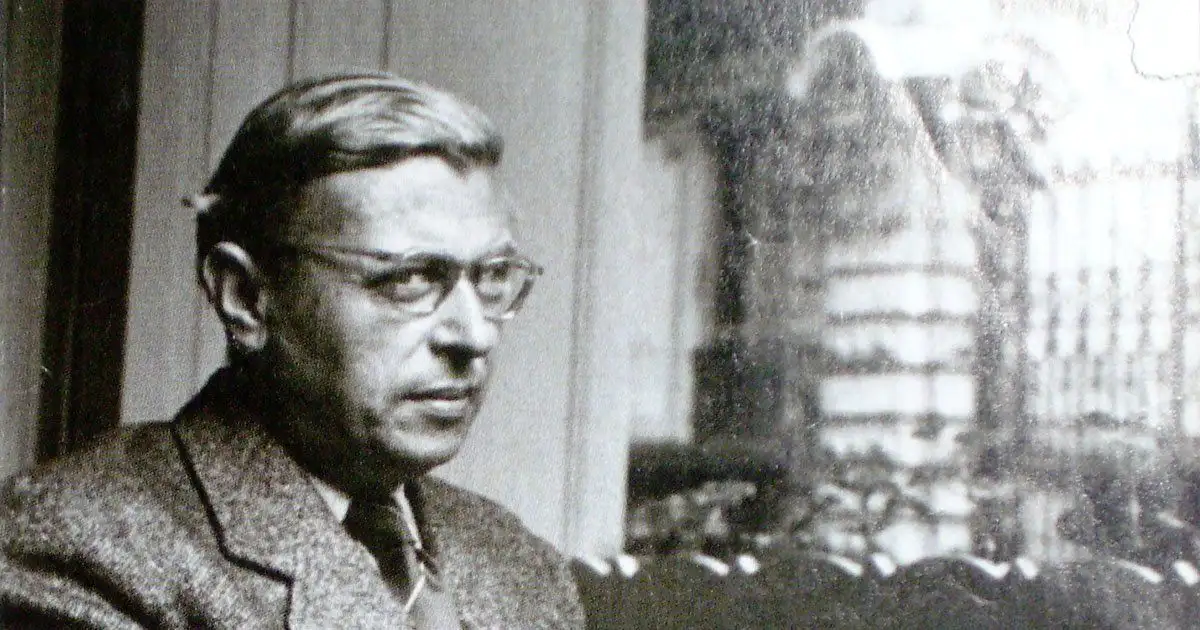
The pronouncements of the late Jean-Paul Sartre, echoing from mid-20th century existentialist discourse, continue to surface in digital spaces, re-examined and circulated. His reflections on the human condition, particularly the intertwined notions of freedom, responsibility, and the perception of others, remain a recurring theme in philosophical discussions.
At the core of Sartre's often-cited ideas is the assertion that "Man is condemned to be free." This paradox underscores the radical autonomy he attributed to individuals, suggesting that choice is not merely an option but an inescapable burden. This freedom, however, is not depicted as an unalloyed good. Instead, it is intricately linked to the concept that "Hell is other people," a phrase that encapsulates the profound impact and potential alienation arising from our interactions and judgments within society.

Sartre's writings frequently confront the nature of existence itself. One recurring, albeit fragmented, sentiment states, "You are nothing other than your life." This suggests a philosophy where individual identity is wholly constituted by one's actions and experiences, with no inherent or preordained essence preceding it. This idea, "Existence precedes essence," posits that we are born into the world without a defined purpose and must forge our own meaning through the choices we make.
Read More: Why the New Atheism movement lost public influence by April 2026
Further contemplation on the human predicament includes reflections on suffering and perception. Sartre suggested that "Pain is the void," and in a seemingly bleak assessment, stated, "The more absurd life is, the less bearable death is." His view on communication also carries a cautionary tone: "I distrust the incommunicable; it is the source of all violence."
The Weight of Choice and Societal Mirrors
The discourse surrounding Sartre's ideas emphasizes the active construction of self. The concept that "To do is to be" reinforces the existentialist tenet that actions define an individual. This is contrasted with external perceptions, where people are seen "in mirrors as they appear to their friends." The struggle between self-definition and societal reflection appears central.
The burden of freedom is presented not as a liberation but as a profound "heavy responsibility." Sartre posited that individuals are "left alone, without excuse" to confront this freedom. This absence of external justification means that "We are responsible for everything we do." The philosophical outlook suggests a continuous state of becoming, where "One is still what one is going to cease to be and already what one is going to become."
Read More: Matt Dillahunty discusses Christian morality with caller on April 2026
Contextualizing the Existentialist Echoes
Jean-Paul Sartre (1905-1980) was a prominent French philosopher, playwright, novelist, political activist, and literary critic. He was a leading figure in 20th-century French philosophy and an existentialist. His work, particularly in the post-World War II era, explored themes of freedom, responsibility, authenticity, and the absurd nature of existence. His philosophical stances often intersected with his political engagement, advocating for various social and political causes throughout his life. The persistent circulation of his quotes highlights the enduring, if sometimes simplified, influence of his existentialist thought on contemporary culture.