

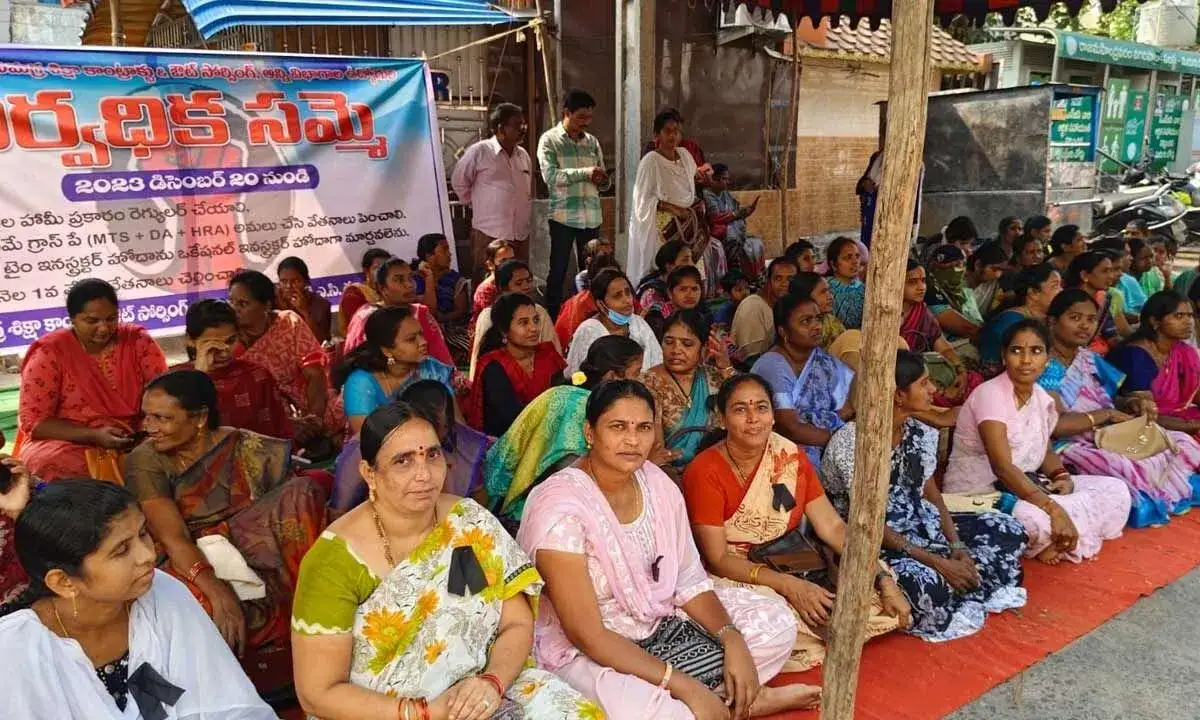
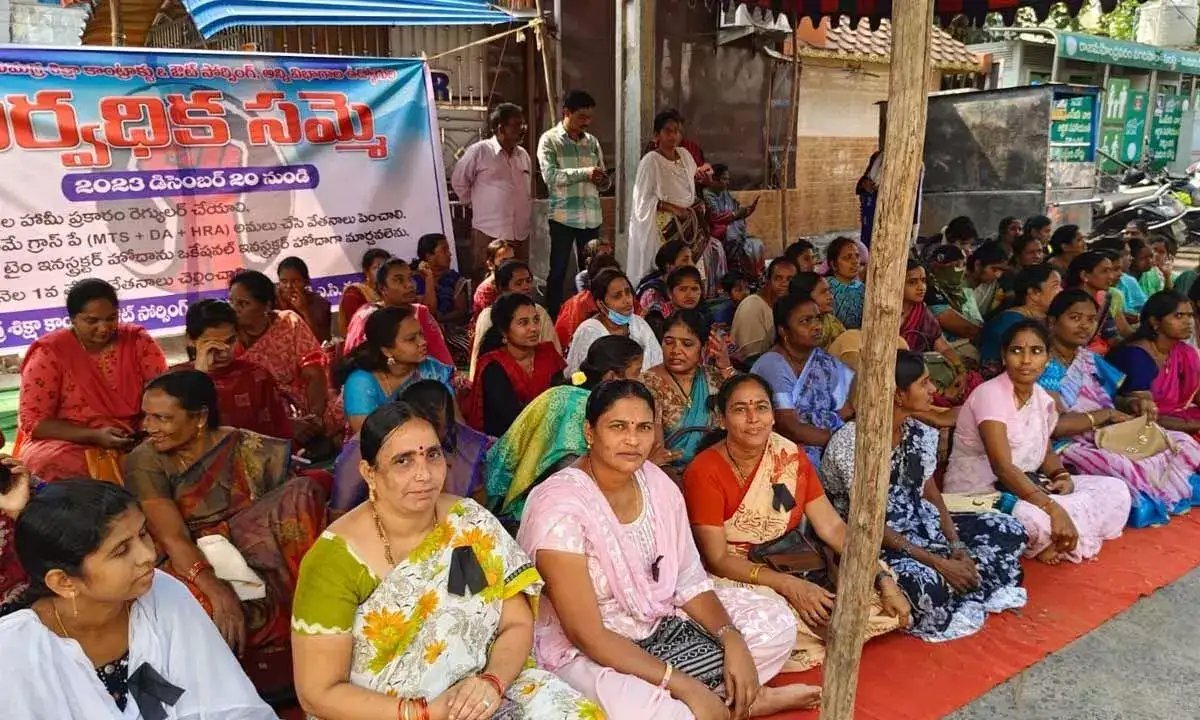
Contract and outsourced employees under the Samagra Shiksha initiative are intensifying their demands for improved working conditions, fair wages, and job security, culminating in recent protests across districts. Employees cite years of service marked by low pay and precarious employment, pushing them to call for governmental action.
Persistent Demands Echo Through Districts
Protesting employees, organized under the 'Samagra Shiksha Contract and Outsourcing Employees Federation,' have articulated a range of demands. These include the regularization of their services, integration into the main Education Department, the implementation of a Human Resources policy, and adherence to the principle of 'equal pay for equal work,' referencing Supreme Court directives. Furthermore, they seek revised salary structures, the provision of service benefits like provident fund, ESI, and pensions, an increased retirement age to 62, and concrete measures to guarantee job security. Federation leaders have signaled their intent to escalate their agitation if their concerns are not met with a positive governmental response.
Read More: Uber H-1B Salary Data for April 2026 Shows Pay Up to $410,000
A History of Agitation and Negotiated Pay for Strike Periods
This wave of protest is not an isolated incident. Records indicate that employees have engaged in strikes previously, with some periods of work stoppage spanning up to 21 days. In response to earlier strikes, the state government has approved the payment of honorariums and remuneration for the strike period, with conditions that employees attend duties for an equivalent number of holidays. This arrangement was communicated via official memos from the School Education Department.
These agreements, dated between November 2023 and March 2024, suggest a pattern of government response that acknowledges the employees' grievances while often framing resolutions as conditional leave arrangements rather than outright concessions on permanent status or salary parity.
Underlying Tensions and Future Prospects
The situation reflects a broader unease among contractual and outsourced staff within educational programs. Reports from Nagpur, dated December 4, 2025, highlighted similar warnings from contractual Samagra Shiksha staff, who expressed a sense of betrayal over what they describe as "indifferent policy" leading to financial and emotional distress. They spoke of decades of service without secure positions, fearing job loss despite rising workloads.
Read More: Google Learn About AI Tool Released April 2026 For Simple Learning
The persistence of these issues across different regions and over time underscores a deep-seated concern regarding the precarity of employment for those engaged through contract and outsourcing in public service sectors, particularly within education. The current push for regularization and fair pay appears to be a culmination of years of unaddressed structural inadequacies.


