

NIGER, MALI, AND BURKINA FASO, member states of the Alliance of Sahel States (AES), are reportedly preparing to reveal evidence of senior Nigerian politicians allegedly aiding armed groups. Intelligence agencies from these three nations claim to be tracking financial and weapon flows between Nigerian political figures and bandit groups operating in Nigeria's northwest. This accusation emerges from a context of increasing terrorist activity and shifting regional alliances across the Sahel.
Intelligence from the AES indicates a deliberate effort to expose alleged Nigerian political involvement in sponsoring insecurity within the Sahel region. The scale of arms transactions is cited as a significant concern by security sources involved in these coordinated operations. The AES, formed by Mali, Niger, and Burkina Faso, has been intensifying its campaign against jihadist groups, including ISIS affiliates and Boko Haram, following prolonged periods of attacks on civilians and security forces.
Read More: Taiwan Holds Nantou County Drills to Prepare for State Collapse
Regional Tensions and Terrorist Network Expansion
The allegations come as the Jama'at Nusrat al-Islam wal-Muslimin (JNIM), an al-Qaeda-affiliated group, escalates its activities. JNIM has been systematically spreading its influence, establishing cross-border networks into Mali’s neighbors. This expansion is partly financed by groups seeking to establish these networks. The group leverages issues like unemployment and ethnic grievances for recruitment.
Recent incidents highlight the porous nature of borders and the challenges in counterterrorism. In Benin, increased military presence along the northern border attempts to ward off potential terrorist activity originating from areas like northwest Nigeria and bordering Niger. Nigeria’s designation of the Lakurawa group as a terrorist organization has further complicated West Africa’s counterterrorism efforts.
Despite the formation of alliances like the Alliance of Sahel States (AES), mistrust between regional blocs such as ECOWAS and the AES has hampered unified counterterrorism strategies, leaving the broader region vulnerable. The AES nations, facing internal crises marked by Tuareg rebellions and extremist violence, now pose a threat to coastal countries along the Gulf of Guinea.
Read More: Secret Service Promotions After Butler Attack Criticized by Congress
Senegal's Resilience and Counter-Ideology Efforts
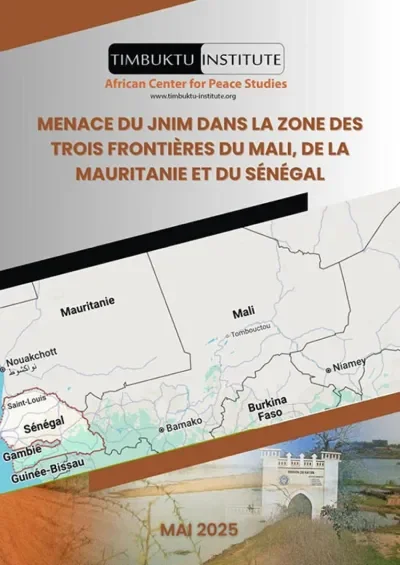
Meanwhile, Senegal is grappling with increased JNIM attacks, putting it in the crosshairs of the group’s expanding operations. The Timbuktu Institute highlights Senegal's resilience factors, including widespread religious moderation rooted in Sufi brotherhoods, which counters JNIM’s radical Salafist ideology.
Strategies to reinforce Senegal's resilience focus on enhancing security, community awareness, and socio-economic inclusion to reduce JNIM's appeal. Addressing unemployment and marginalization are seen as vital steps. Senegal’s moderate Islamic teachings and community-focused religious practices are contrasted with divisive extremist ideologies. Training local religious leaders in communication is proposed to amplify government legitimacy and foster a collective community response.
JNIM's Structure and Strategic Actions
JNIM, operating under an emir, was formed in 2017 through the unification of four al-Qaeda in the Islamic Maghreb (AQIM) factions. The group maintains allegiance to al-Qaeda leadership. JNIM has strategically used roadblocks to disrupt regional commerce, particularly targeting routes linking Mali to Senegal and Mauritania. These blockades threaten regional economies and civilian movement, although Malian forces have introduced patrols to mitigate their impact.
Read More: FBI Analysts Review Georgia 2020 Election Data in Fulton County
The broader Sahelian security landscape is characterized by shifting alliances. While organizations like the G5 Sahel Joint Force and the Multinational Joint Task Force attempt to address regional threats, the formation of the AES represents a move towards new, independent regional blocs, particularly among military regimes. This recalibration of alliances, influenced by national political issues and local security concerns, continues to reshape the region's security dynamics.







