


In the heart of Moscow, a chilling event has unfolded: Lieutenant General Vladimir Alekseyev, a top figure in Russian military intelligence, has been shot and wounded in what authorities are calling an assassination attempt. The incident, occurring on February 6, 2026, has Russia's foreign minister, Sergei Lavrov, swiftly pointing the finger at Kyiv. But is this a genuine accusation, or just the latest salvo in a protracted information war, mirroring a disturbing pattern of blame seen in past incidents? As the dust settles, a crucial question emerges: who truly benefits from these escalating accusations and the shadowy attacks themselves?
A HISTORY OF SHOTS FIRED AND ACCUSATIONS MADE
This is not the first time a high-ranking Russian official has been targeted, nor the first time Ukraine has been implicated. The Kremlin's accusations echo similar claims made in the past, often without concrete, independently verifiable evidence presented to the public. Examining the timeline reveals a series of unsettling incidents that paint a picture of escalating hostility, both on the battlefield and in the realm of covert operations and propaganda.
Read More: Kim Jong Un's Daughter May Be Next Leader of North Korea
December 2024: Lieutenant General Fanil Sarvarov, head of the General Staff's operational training directorate, died when a bomb detonated under his car as he started the engine. (Articles 10, 13)
April 2025: Senior Russian General Yaroslav Moskalik, deputy head of the military's General Staff's main operational directorate, was killed in a car bombing near Moscow. Russia immediately accused Ukraine. (Articles 4, 6)
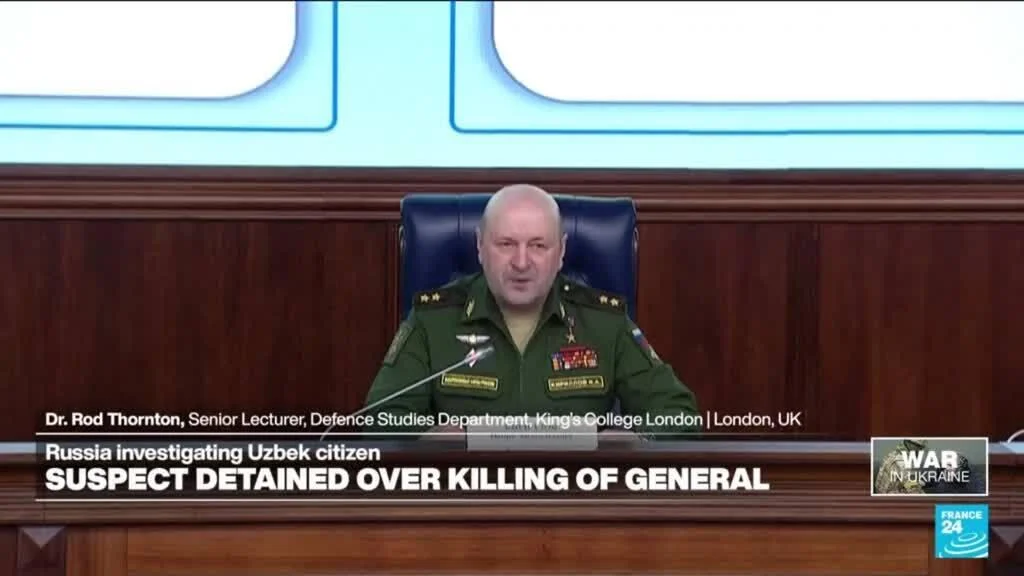
December 2024: Lieutenant General Igor Kirillov, head of Russia's Radiation, Biological and Chemical Protection Forces, was killed by a bomb planted on an electric scooter outside his apartment. Ukraine's security service later acknowledged responsibility for this attack, citing Kirillov's alleged use of banned chemicals on Ukrainian soldiers. (Article 10, 14)
February 2026: The recent attack on Lieutenant General Vladimir Alekseyev, first deputy head of Russia's GRU.
"Russia blames Ukraine for car bombing that killed top general near Moscow." - France24, April 25, 2025.
Read More: Iberia Now Charges for Bags That Are Not the Right Shape
This repeated pattern of blaming Ukraine raises critical questions:
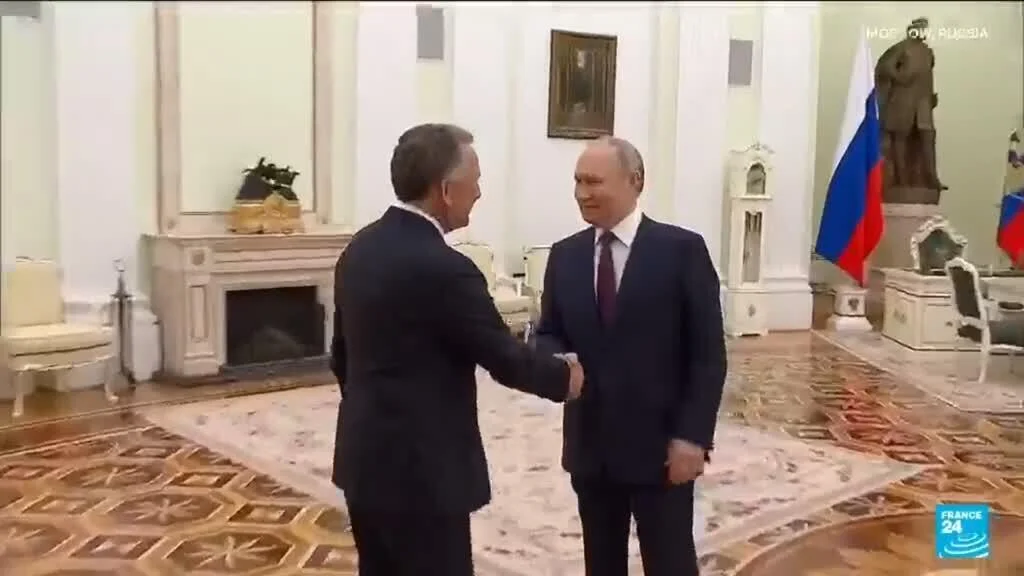
Are these accusations a genuine reflection of Ukrainian actions, or a deliberate strategy by Russia to sow discord, justify its own actions, and rally domestic support?
What independent evidence, beyond Russian state pronouncements, links Ukraine to these specific attacks?
How does the timing of these accusations, often made swiftly and without detailed substantiation, serve Russia's geopolitical narrative?
THE ACCUSED AND THE ACCUSER: A DIVIDED REALITY
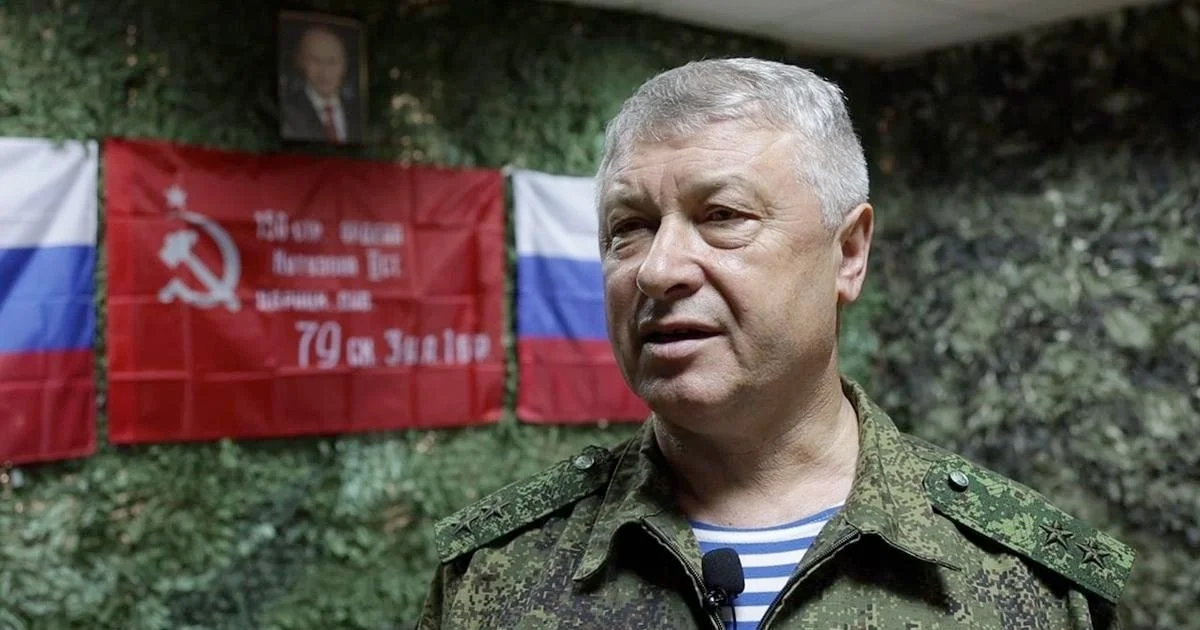
Russia's swift blame of Ukraine in the latest attack on Vladimir Alekseyev is noteworthy. Alekseyev, identified as the No. 2 officer at the Russian military intelligence agency, the GRU, is a figure deeply entrenched in Russia's military apparatus. His alleged involvement in operations, including counter-terrorism efforts in Syria and overseeing aspects of the campaign in Ukraine, places him squarely in the crosshairs of any intelligence war. (Articles 6, 12, 16)
Read More: People Protest Worldwide Due to Money Problems
"The victim was taken to one of the city hospitals," Petrenko said. "The Russian Investigative Committee has opened a criminal case on the grounds of a crime under Articles 30 and 105 ("Attempted Murder"), as well as Article 222 ("Illegal Trafficking of Firearms") over the attempted murder of Lieutenant General Vladimir Alekseyev in northwestern Moscow." - TASS, February 6, 2026.
Meanwhile, Ukraine's response to such accusations has varied. While Ukraine has, at times, acknowledged responsibility for certain attacks, particularly when the targeted individual is seen as directly implicated in war crimes (as with Lt. Gen. Kirillov), they have also remained silent on others, or their responses have been less direct. This selective acknowledgement, or lack thereof, adds another layer of complexity to the situation.
Russia's stance: Consistent, immediate accusations against Ukraine.
Ukraine's stance: Acknowledged responsibility for some attacks, particularly those with alleged war crime links, but not consistently for all.
Read More: EU Leaders Disagree on How to Help Europe's Economy
The key here is to distinguish between outright accusations and confirmed responsibility. Russia's narrative is one of constant Ukrainian aggression within Russia, while Ukraine's actions, when confirmed, often appear to be retaliatory or targeted against individuals directly involved in its own defense.
THE GRU: A TARGET-RICH ENVIRONMENT?
The GRU, Russia's Main Intelligence Directorate, is known for its aggressive and often clandestine operations. Figures within this agency, particularly those involved in planning or executing military campaigns, could realistically become targets. Alekseyev's role as First Deputy Head makes him a significant figure. His alleged oversight of operations linked to Russia’s military campaign in Ukraine, and his prior involvement in Syria, paints him as a high-value individual in the context of ongoing conflict. (Articles 9, 12, 16)
The GRU itself has a history of audacious operations, including sabotage, assassination, espionage, and cyberattacks. (Article 6) This makes individuals within its ranks, like Alekseyev, potential targets for intelligence agencies of adversarial nations. The question then becomes: is this a targeted assassination attempt by a state actor, or an opportunistic attack?
Read More: Memorial for Nightclub Fire Victims Burns Down Again
Alekseyev's Profile:
First Deputy Chief of the GRU.
Oversaw operations linked to the Ukraine campaign.
Involved in counter-terrorism in Syria.
Awarded "Hero of the Russian Federation."
The very nature of the GRU's work suggests that its senior officers would be under scrutiny by intelligence agencies worldwide. The question remains, however, how such an operation could be carried out within Moscow itself, and what this signifies about the capabilities and reach of those responsible.
INFORMATION AS A WEAPON: THE NARRATIVE WAR
Beyond the physical attacks, there's a fierce battle for narrative control. Russia's rapid blame of Ukraine in these incidents serves multiple purposes:
Domestic Consolidation: By portraying Ukraine as a terrorist state launching attacks on Russian soil, the Kremlin can reinforce a narrative of external threat, bolstering domestic support for its policies and war efforts.
International Isolation of Ukraine: Repeated accusations, especially if not fully countered with irrefutable evidence from Ukraine's side, can chip away at international sympathy for Kyiv and complicate its diplomatic efforts.
Justification for Retaliation: Such incidents can be used as pretexts for more aggressive military actions or crackdowns within Russia.
Read More: Cold Weather and Flooding Expected in Parts of Europe
"What we can learn from Ukraine's assassination of a senior Russian general in Moscow is that it's intended to send a signal that Ukraine will continue to fight on and that Ukraine could impose costs on Russia around the world." - Alexander Vindman, former Lt. Col., quoted by NPR, December 18, 2024.
The timing of the accusations is also crucial. Often, they come immediately after an incident, before any thorough investigation could realistically conclude, let alone provide definitive proof. This suggests a pre-existing narrative framework into which these events are immediately slotted.
Rapid Accusation: Russia's tendency to immediately blame Ukraine.
Lack of Publicly Verified Evidence: The absence of detailed, independently corroborated evidence presented by Russia.
Narrative Utility: How the accusations serve Russia's strategic communication goals.
It's imperative to ask: where is the impartial forensic evidence? Where are the independent intelligence assessments confirming Ukrainian involvement? Without these, Russia's accusations remain within the realm of a state-sponsored narrative, designed to shape perception rather than reflect undisputed fact.
Read More: Epstein Files Cause Problems for Keir Starmer

CONCLUSION: A CALL FOR SCRUTINY, NOT ACCLAMATION
The attempted assassination of Lieutenant General Vladimir Alekseyev is a grave incident, highlighting the continued shadow war playing out alongside the overt conflict in Ukraine. Russia's immediate blame of Ukraine fits a well-established pattern, a narrative strategy that consistently paints Kyiv as a rogue aggressor within Russia's borders.
While Ukraine has at times claimed responsibility for targeted killings, often linked to alleged war crimes, the pattern here requires critical examination. The lack of transparent, independently verifiable evidence presented by Russia alongside its swift accusations necessitates a skeptical approach.
Moving forward, we must demand:
Independent Investigations: Calls for international observers or bodies to investigate such incidents, if possible, to ensure impartiality.
Verified Evidence: A shift from blanket accusations to the presentation of concrete, verifiable intelligence and forensic evidence.
Analysis of Motives: A deeper understanding of who benefits most from these attacks and the subsequent accusations, considering both the military and propaganda dimensions.
Read More: Russia Attacks Ukraine; Leader May Hold Elections
Until such scrutiny is applied, the recurring pattern of Russian accusations against Ukraine risks becoming a tool that obscures truth, fuels further conflict, and undermines genuine efforts towards peace and accountability. The shots fired in Moscow are not just an attack on an individual; they are echoes in a broader information war, and their true meaning depends on whose narrative we choose to believe.
Sources:
Article 1: Russia blames Ukraine for attempted assassination of top general – Europe live
Article 2: Ukraine war latest: Kremlin responds after Russian general shot in Moscow 'assassination attempt' (Note: This article focuses on nuclear arms treaty and appears less relevant to the assassination narrative itself, but is included as per provided data)
Article 3: Putin general gunned down in assassination bid by 'woman posing as cleaner'
Article 4: Russia blames Ukraine for car bombing that killed top general near Moscow
Article 5: Russia foils attempted assassination of general in Moscow — Investigative Committee
Article 6: Officials: Top Russian Intelligence General Shot, Wounded In Attempted Assassination
Article 9: Attempted assassination of Russian Lieutenant General Alexeyev reported in Moscow
Article 10: Russia detains suspect in car blast killing of its top general
Article 11: What we can learn from Ukraine's assassination of a senior Russian general in Moscow
Article 12: Russian general shot in suspected assassination attempt – officials
Article 13: War in Ukraine: Russia grapples with third assassination of a senior officer
Article 14: Ukraine's security service confirms it was behind assassination of Russian general
Article 17: Ukraine war latest: Putin’s senior general shot ‘several times’ in Moscow (Note: Low Priority, Summary not extracted)
Article 18: Senior Russian officer shot in Moscow in apparent assassination attempt (Note: Low Priority, Summary not extracted)


:max_bytes(150000):strip_icc():focal(612x1166:614x1168)/Switzerland-accident-fire-020826-02-7cbc5d49ad0f413883178cfd825a77de.jpg)


