Rome, Italy - A newly unearthed manuscript, identified by researchers from Trinity College Dublin, places a copy of 'Caedmon's Hymn' between the years 800 and 830 AD. This makes it the third oldest surviving text of the poem, a pivotal work widely considered the genesis of English literature.

The most striking feature of this discovery is the placement of the Old English poem: it appears within the main body of a Latin manuscript. This contrasts sharply with two older known versions, held in Cambridge and St. Petersburg, where the Old English text is relegated to the margins or appended at the end.

This manuscript’s existence demonstrates that the original Old English poem was reinserted into its Latin context a mere century after the Venerable Bede completed his Ecclesiastical History of the English People. Bede himself opted to translate the poem into Latin for his history, omitting the vernacular original.
Read More: Why Henry David Thoreau quotes on experience matter on May 6 2026
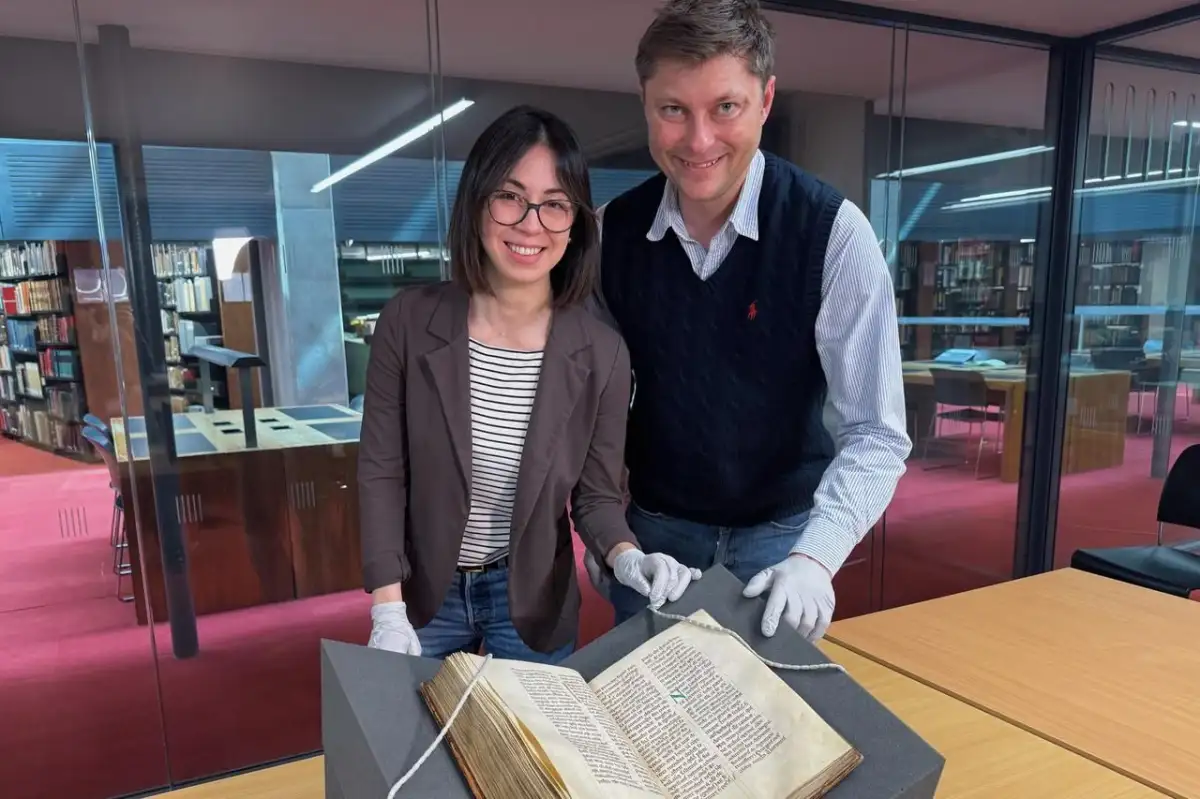
"The present times may be rather dark, yet such intellectual contributions are genuine rays of sunlight: the continent is less isolated." - Riccardo Fangarezzi, head of archives at the Abbey of Nonantola.
The text also offers a window into the evolving mechanics of written language. The poem is punctuated with a full stop after every word, an indicator that word spacing was a relatively novel concept at the time. This detail provides tangible evidence of the early development of written English.
The manuscript’s journey has been eventful. It was apparently stolen from the church of San Bernardo alle Terme in Rome during the Napoleonic Wars in the 1810s, alongside other manuscripts sent there for safekeeping. Its rediscovery occurred during the digitisation of holdings at the National Central Library of Rome.
While Bede’s Latin translation became the standard for scholarly transmission, this Roman copy suggests a continued appreciation for the vernacular English version within learned circles. This detail alone alters current understanding of how early English literature was disseminated.
Read More: St. Augustine's ideas on justice help explain US politics
Researchers Elisabetta Magnanti and Mark Faulkner from Trinity College Dublin’s School of English were credited with identifying the manuscript. Andrea Cappa, head of manuscripts and rare books at the Rome library, noted that the institution is actively digitising its collections, potentially unlocking further historical insights.