Friedrich Nietzsche's thought, particularly concerning morality, truth, and the pronouncement "God is dead," remains a persistent source of misunderstanding, often deliberately distorted. His critique of conventional morality, viewed as a tool of reactive subjugation, and his concept of truth as a "mobile army of metaphors" stand as central, yet frequently misconstrued, tenets.
Nietzsche's philosophical output is characterized by a profound critique of established moral frameworks, particularly those rooted in Christian doctrine, which he saw as a product of weakness and resentment. His ideas on 'value' and 'sense' are often debated, with some scholars positing that he introduced the concept of value into philosophical discourse.
The oft-quoted declaration "God is dead," most famously articulated by a madman in his work, signifies not an assertion of divine non-existence but a cultural and existential observation. It speaks to the erosion of the Judeo-Christian God's foundational role in Western society, a deity Nietzsche had a complex relationship with.
Read More: Why the New Atheism movement lost public influence by April 2026
Challenging Philosophical Norms
Nietzsche's approach to philosophy itself was unconventional. He presented his ideas not through dry exposition but as a performative unveiling, akin to experiencing a vision. This distinct style, coupled with his critique of other philosophers whom he sometimes diagnosed with personal neuroses, contributed to his work being largely overlooked and dismissed in the decades following his death.
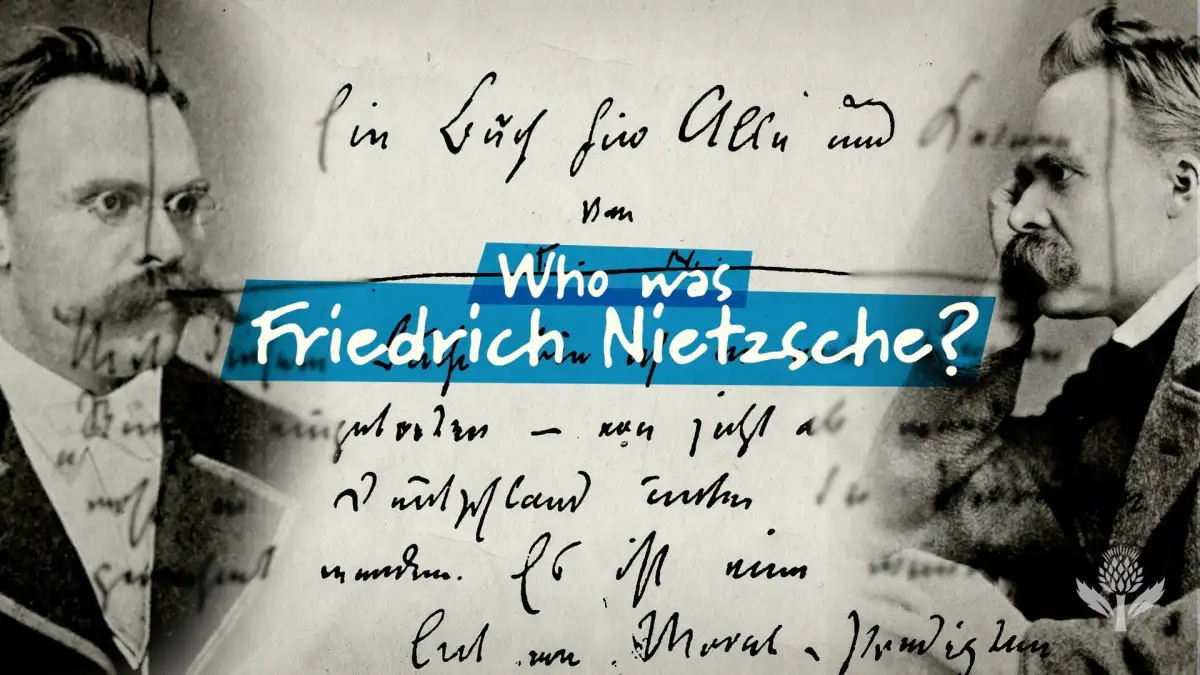
His concept of 'will to power' is not simply about seeking dominance but a more nuanced notion of striving and overcoming. This, along with ideas like the 'eternal recurrence'—the unsettling concept of living one's life an infinite number of times—is central to his call for a 'revaluation of all values' and an affirmation of life.
Truth and the Subjective Lens
Nietzsche's views on truth are particularly challenging. He described truth as "superficial, illusory, and counterfeit," and famously defined it as "a mobile army of metaphors." This perspective, often termed 'perspectivism', suggests that all knowledge is fundamentally subjective and contingent, viewed through particular lenses rather than as objective, universal facts. His essay 'On Truth and Lie in an Extra-Moral Sense' is key to understanding this aspect of his philosophy.
Read More: St. Augustine's ideas on justice help explain US politics
Morality: A Genealogist's Dissection
In works like On the Genealogy of Morality, Nietzsche dissected the origins of modern moral concepts, scrutinizing the enforcement mechanisms of conventional Christian morality. He distinguished between 'good and bad' and 'good and evil,' associating these with constellations of other oppositions. It is important to note that Nietzsche did not reject all morality; rather, his objection was to specific, reactive forms he deemed hypocritical and life-denying. His critique of morality is often intertwined with his critical stance toward Christianity.
Legacy and Reception
Despite his controversial status, Nietzsche's work has profoundly influenced later thinkers. However, his philosophy has also been appropriated and distorted, notably by elements of far-right ideology, leading to further layers of misunderstanding. His writing, though often stark, also contained elements of humor, as evidenced in his letters and musings on book titles like The Will to Power.
Read More: Matt Dillahunty discusses Christian morality with caller on April 2026