Homes Empty as Suspected Device Prompts Exclusion Zone
Plymouth, Devon — A significant police and military operation unfolded recently in Plymouth's Southway area after the discovery of what is believed to be unexploded ordnance. Residents within a 400-metre radius were compelled to evacuate their homes as Royal Navy explosives experts worked to assess and manage the situation. The initial reports surfaced around 14:30 BST, leading to the swift implementation of a cordon and road closures.
The incident saw homes evacuated and a cordon established, with residents advised to seek accommodation elsewhere for up to two nights, highlighting the potential danger posed by the suspected device.
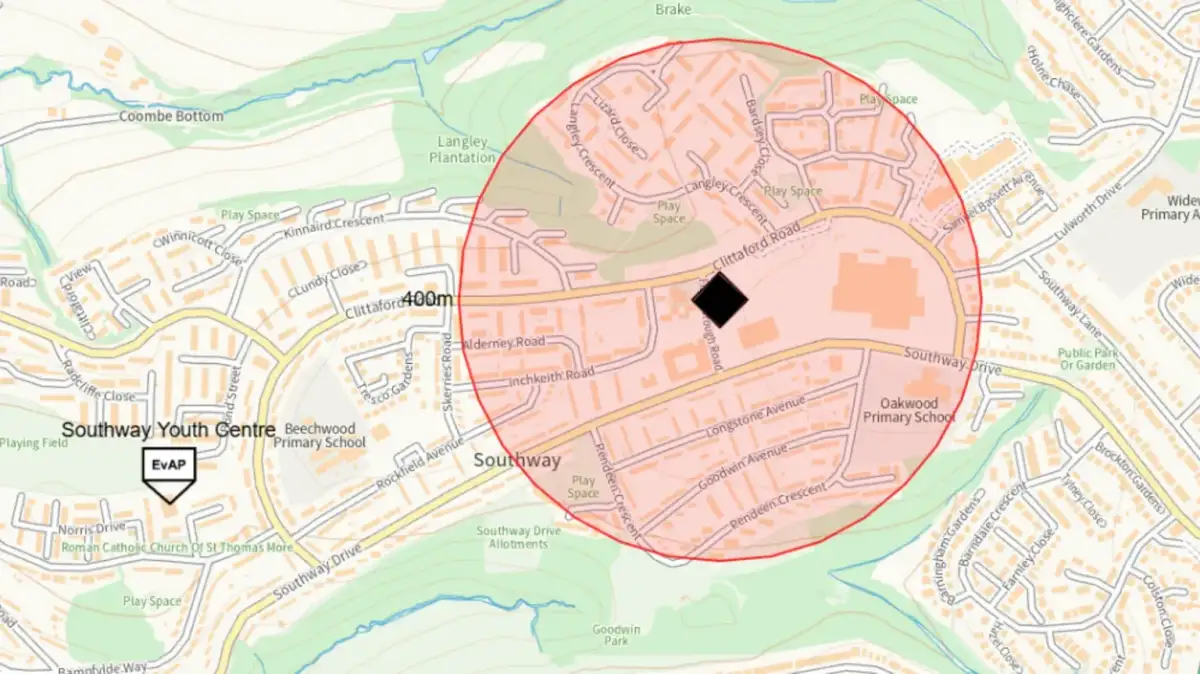
An assistance centre was set up at the Southway Youth and Community Centre to provide support for displaced residents. Council staff and representatives from Plymouth Community Homes were on hand to offer information, practical help, and wellbeing support. For those unable to arrange alternative accommodation with friends or family, this centre served as a designated hub.
Read More: Belagavi and Goa Forests Closed Until Monsoon Ends
Safety and Assessment Underway
The Devon and Cornwall Police confirmed the cordoned area initially spanned 200 metres around a building site on Flamborough Road, but this was later expanded. A spokesperson for the force stated that a Royal Navy explosives team was on site to "assess the item." Plymouth City Council reinforced the necessity of the cordon, emphasizing it was in place "to ensure the safety of local residents while specialist teams complete their assessment."
Background: A City's Past Echoes
This event is not isolated for Plymouth, a city with a history deeply marked by the impacts of World War II. The presence of unexploded ordnance, particularly from aerial mining and bombing raids during the war, remains a recurring concern. Such discoveries are often made during construction projects and dredging operations, as seen in similar incidents in locations like Exmouth Marina. The coordination between local authorities, the Royal Navy Explosive Ordnance Disposal (EOD) teams, and other multi-agency protocols is a well-established framework for managing these historical hazards, reflecting a permanent response capability for such emergencies in the region.
Read More: Drunken Philosophy event at Luce Line Brewing Plymouth on May 22 2026