A simple, widely circulated ethical query—pressing a red or blue button—has sparked a cascade of divergent analyses, each revealing more about the interpreters than a definitive truth about human nature. The core of the debate hinges on survival, self-interest versus collective good, and the perceived trustworthiness of others, though consensus remains elusive.
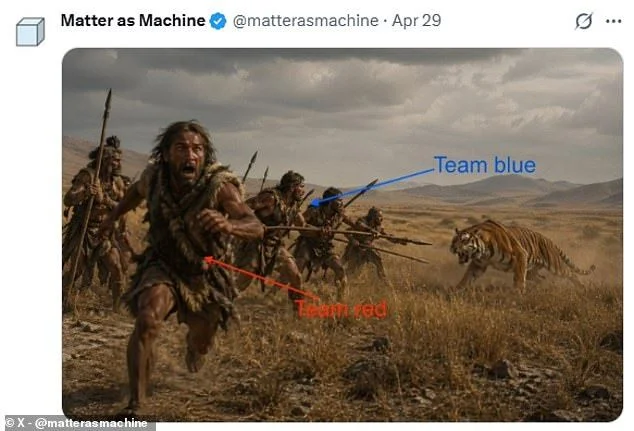
The fundamental premise involves a choice: press the red button and you survive, regardless of others' choices. Press the blue button, and you survive only if a majority also chooses blue. If the majority opts for red, those who chose blue perish.

The apparent simplicity belies a complex web of motivations and anxieties. For some, the red button represents a straightforward act of self-preservation. This perspective, often framed through the lens of game theory, suggests that basic self-interest dictates choosing red, as it guarantees individual survival whether others cooperate or not. This aligns with scenarios where "panic-buying seems rational" because the immediate benefit outweighs an uncertain collective outcome.
Read More: How AI ethics evaluations change software design on April 7 2026
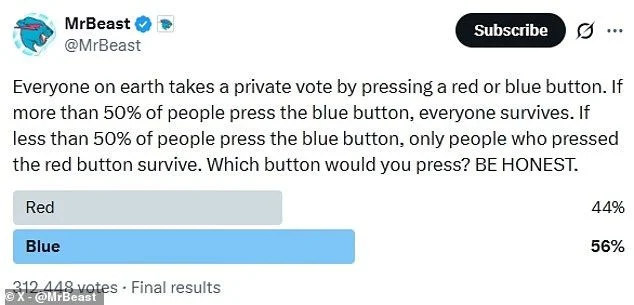
Conversely, the blue button is interpreted as a gamble on collective welfare, a wager on humanity's capacity for cooperation. Choosing blue suggests a disposition toward altruism, a willingness to risk personal safety for the potential benefit of the group.' It implies a level of trust in others, a belief that the collective will act in a way that ensures shared survival. Yet, this choice also carries the burden of responsibility; if the majority chooses red, those who gambled on blue bear the weight of the resulting casualties.

Online discussions reveal a spectrum of reasoning:
Red Button Rationale:
Guaranteed personal survival.
Assurance that if everyone chooses red, everyone survives.
Potential fear of social judgment for appearing selfish by choosing blue, leading some to privately favor red but publicly abstain or feign indecision.
Blue Button Rationale:
Prioritizing the collective good over individual gain.
A belief in shared responsibility and the possibility of a cooperative outcome.
Risking personal destruction for the welfare of others.
The debate also highlights how individuals project their own trust, or lack thereof, onto others. The choice between red and blue becomes a litmus test for one's faith in humanity's ability to act in concert for mutual benefit.' Some participants are labeled "unrealistic" for advocating blue, while others find the red choice obvious.
Read More: New York City Youth Play Less on Streets Due to Safety and Screens
The origins of this particular iteration of the dilemma are tied to its viral spread on social media platforms, particularly 'X' (formerly Twitter), where its concise format allows for rapid dissemination and heated, often polarized, discussion. The dilemma forces participants to confront their moral reasoning and the underlying assumptions they hold about societal dynamics.