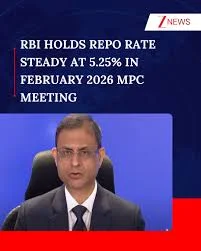
The Governor's Delicate Dance: Growth Soars, But Inflation's Shadow Looms
Mumbai, February 6, 2026 – The Reserve Bank of India's Monetary Policy Committee (MPC), led by Governor Sanjay Malhotra, has delivered its verdict for February 2026: the repo rate remains firmly anchored at 5.25%. This decision, while perhaps anticlimactic for those anticipating a cut, signals a central bank meticulously balancing a robust growth outlook with persistent inflationary undercurrents. The MPC's "neutral" stance further underscores this equilibrium, suggesting a patient approach rather than an aggressive pivot. But what exactly does this hold mean for the common Indian, the savvy investor, and the nation's economic trajectory? Are we witnessing a strategic pause, or a potential end to the rate-cut cycle?
The stakes are undeniably high. Governor Malhotra’s addresses are not mere pronouncements; they are carefully crafted signals that ripple through every facet of the Indian economy. From the EMIs on household loans to the cost of capital for businesses and the returns on savings, every Indian feels the impact of these decisions.
Read More: UK Economy Grows Very Slowly at End of 2025
Borrowers: Will their loan burdens ease further, or will the current rates become the new normal?
Savers: Are their fixed deposits offering a real return against inflation, or is their purchasing power being eroded?
Businesses: Will the cost of expanding operations become more palatable, or will capital expenditure remain hesitant?
Markets: How will this "hold" decision influence stock valuations and investment flows?
This decision comes at a crucial juncture, following the Budget 2026 and amidst a landscape of global economic uncertainties. The RBI finds itself navigating a complex terrain, where domestic growth prospects are bright, yet international capital flows and currency movements remain volatile.
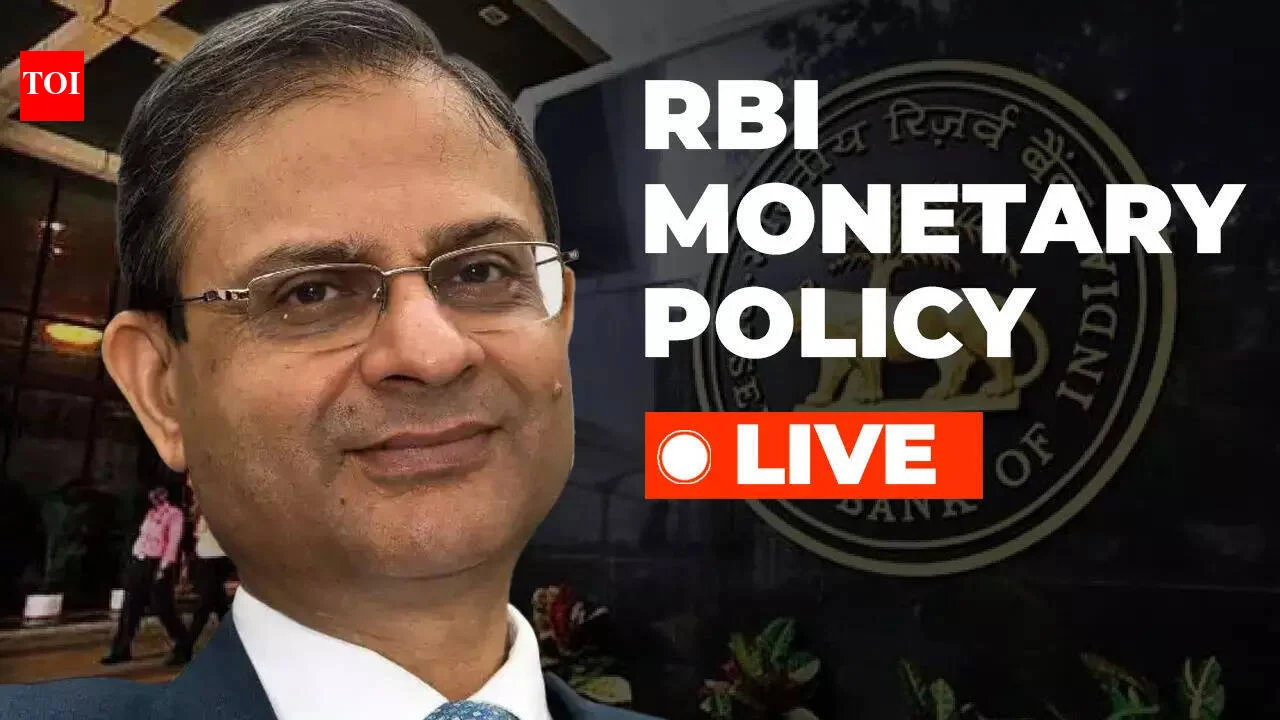
A Policy Tightrope Walk: The Numbers Behind the Hold
The MPC's decision to maintain the status quo is rooted in a careful assessment of two critical economic indicators: inflation and growth. While the former has shown some signs of moderation, it remains a key concern for the central bank.
Read More: Udit Narayan's First Wife Accuses Him and Family of Removing Her Uterus Without Consent
| Metric | RBI's Forecast (FY26) | Previous Projection (Dec 2025) | Key Implication |
|---|---|---|---|
| GDP Growth | 7.4% | 7.3% | Strong domestic economic momentum. |
| Inflation (CPI) | 2.1% | 2.0% | Slight uptick, nearing upper comfort zone. |
The upward revision of the GDP growth forecast to 7.4% from 7.3% for FY2025-26 paints a picture of a resurgent Indian economy. This optimism is partly fueled by the increased fiscal support post-Budget 2026 and a brightening external trade outlook. However, the simultaneous upward revision in the inflation forecast from 2.0% to 2.1% is the critical counterpoint. While the new inflation target of 2.1% for FY2025-26 is still within the RBI's broader comfort zone, the quarterly projections reveal a gradual upward trend:
Q4 FY26: 3.2%
Q1 FY27: 4%
Q2 FY27: 4.2%
This trajectory suggests that while inflation might be managed for now, it isn't entirely conquered. The RBI's mandate is to ensure price stability while also supporting growth. Governor Malhotra’s challenge lies in ensuring that the current growth momentum doesn't inadvertently fuel higher inflation.
Read More: US Debt Growing Fast, Experts Say It's a Problem
The Ghost of Interest Rate Cycles Past: What Led Us Here?
To understand the RBI's current stance, we must look back at the recent monetary policy journey. The current easing cycle has seen a cumulative 125 basis points of rate cuts. This aggressive monetary easing was a response to the economic slowdown exacerbated by global headwinds.
Past Actions: The RBI had been actively cutting rates to stimulate demand and support economic recovery.
Impact on Borrowers: These cuts have already translated into lower Equated Monthly Installments (EMIs) for many, making loans more accessible.
The Transmission Gap: A recurring theme in the RBI's commentary is the issue of "monetary transmission." This refers to how effectively the policy rate cuts translate into lower lending rates for consumers and businesses. Despite significant easing, transmission has been noted as "weak."
Read More: Puducherry Leaders Say Elections Are Less Meaningful Without More Power
"We observe that despite policy rate easing, government bond yields have exhibited persistent hardening in recent periods. We believe that the choice of eligible securities itself may influence the effectiveness of OMO operations, even when the aggregate quantum of liquidity injection is unconfined." - (Paraphrased from Article 2)
This statement points to underlying complexities in the financial system that are impeding the full pass-through of rate cuts. Factors such as deposit rates, overall liquidity conditions, and market competition are cited as crucial determinants of transmission, rather than just the RBI's policy rate alone.
Furthermore, the RBI has acknowledged that the effectiveness of its tools, like Open Market Operations (OMOs), can be influenced by various factors, including exchange rate pressures and the specific securities used. This suggests a shift in focus towards more nuanced liquidity management rather than relying solely on headline rate adjustments.
Read More: Global Food Prices Dropped in April

Beyond the Repo Rate: The Spotlight on Liquidity and Market Operations
With the repo rate holding steady, the RBI's focus is shifting towards other, perhaps more subtle, levers of monetary policy. The market is keenly watching how the central bank will manage liquidity and influence bond yields, especially in light of the government's significant borrowing program for FY27.
"As a result, the RBI may rely more on targeted liquidity tools and active market operations rather than headline rate moves. Trade Deals and External Stability Add Comfort" - (Article 3)
This highlights a strategic pivot. Instead of outright rate cuts, the RBI is likely to employ more targeted measures to manage financial conditions.
Liquidity Infusion: How much liquidity will the RBI inject into the system? Too little could choke growth; too much could fuel inflation.
Open Market Operations (OMOs): Will the RBI actively buy or sell government bonds to manage yields? The effectiveness of these operations, as noted earlier, is a subject of scrutiny.
Yield Curve Stability: The RBI's actions will be crucial in ensuring that longer-term borrowing costs for the government and corporations remain stable and predictable.
Read More: ASUS Releases New Laptops in India with AI Power
The RBI's commentary on these "liquidity tools" and its approach to yield management will be a key takeaway from Governor Malhotra's address. This emphasis on liquidity management indicates a central bank that is exploring the full spectrum of its policy toolkit to achieve its dual objectives of price stability and growth.
Global Uncertainties and Domestic Resilience: A Balancing Act
The Indian economy, while showing robust domestic strength, is not an island. Global economic conditions continue to pose significant challenges and opportunities.
"Global uncertainty remains high, with volatile capital flows, currency movements and shifting risk sentiment. RBI doesn’t target the rupee, but policy signals often move it." - (Article 1)
The RBI is keenly aware of these external factors. Volatile capital flows and currency fluctuations can impact inflation and financial stability. While the RBI doesn't explicitly target the rupee's exchange rate, its policy signals often influence it.
Read More: Education Helps People and Countries Get Richer
US Trade Deal Impact: The mention of a "US trade deal" (Article 14) suggests that geopolitical and trade developments are actively being factored into the RBI's decision-making process.
Global Central Bank Caution: A growing trend among global central banks to adopt a more cautious approach to rate cuts (Article 7) might also be influencing the RBI's tone and forward guidance.
Despite these global risks, India's domestic economy has demonstrated remarkable resilience. The current account deficit is projected to remain "moderate," and the overall domestic inflation and growth outlook is described as "positive" (Article 13). This internal strength provides the RBI with a degree of latitude to manage its monetary policy, even amidst international turbulence.
What Lies Ahead: The End of the Pause or a Breath Before the Next Move?
The RBI's decision to hold the repo rate at 5.25% and maintain a neutral stance is more than just a static announcement; it's a statement about the evolving economic landscape and the central bank's strategic priorities.
Read More: Woman Feeds Elephants in Keonjhar, Showing How People and Animals Can Live Together
Implications for Markets: The initial market reaction saw the Sensex and Nifty trading with cuts (Article 6), indicating that while a pause was expected, the lack of a rate cut might have tempered immediate bullish sentiment. Investors will be dissecting the RBI's commentary for clues about the future path of interest rates.
The End of the Easing Cycle?: Will this pause mark the end of the rate-cut cycle, or is it a temporary breather? The RBI's forward guidance will be crucial in answering this question.
Focus on Transmission: The persistent issue of weak monetary transmission suggests that even if inflation pressures ease further, the RBI might still be hesitant to cut rates until it's confident that the benefits of earlier cuts are fully reaching the real economy.
"Markets will closely watch the RBI’s commentary on liquidity, inflation risks and the future policy path to gauge whether this pause marks the end of the rate-cut cycle — or just a breather." - (Article 10)
Governor Malhotra's concluding remarks will undoubtedly be dissected for any subtle hints about the MPC's future intentions. The tightrope walk between nurturing growth and anchoring inflation continues, and the RBI's measured approach at 5.25% repo rate suggests that prudence remains the guiding principle. The true impact of this decision will unfold in the coming months, as we see how effectively the RBI manages liquidity, how inflation evolves, and whether the domestic growth story continues to be robust enough to warrant further policy adjustments.
Sources:
Article 1: https://www.moneycontrol.com/news/business/economy/rbi-monetry-policy-meting-live-updates-rbi-mpc-feb-2026-repo-rate-cut-interest-rates-sanjay-malhotra-speech-liveblog-13814169.html
Article 2: https://timesofindia.indiatimes.com/business/india-business/rbi-mpc-meeting-february-2026-live-updates-rbi-governor-sanjay-malhotra-mpc-repo-rate-cut-monetary-policy-committee/liveblog/127965184.cms
Article 3: https://www.timesnownews.com/business-economy/economy/will-rbi-cut-the-repo-rate-or-hold-steady-what-to-expect-from-the-2026-mpc-meeting-article-153568548
Article 4: https://www.business-standard.com/finance/news/rbi-mpc-february-meeting-repo-rate-sanjay-malhotra-cpi-inflation-growth-1260206003131.html
Article 5: https://www.timesnownews.com/business-economy/economy/rbi-mpc-meeting-today-repo-rates-kept-unchanged-at-5-25-article-153568677
Article 6: https://www.news18.com/business/rbi-mpc-meeting-february-2026-live-updates-rbi-repo-rate-cut-today-monetary-policy-committee-sanjay-malhotra-latest-news-liveblog-ws-l-9883036.html
Article 7: https://www.firstpost.com/business/rb-mpc-meeting-live-updates-rbi-repo-interest-rate-cut-liveblog-13976772.html
Article 8: https://www.indiatoday.in/business/story/rbi-mpc-today-repo-rate-cut-or-stable-governor-sanjay-malhotra-sdf-msf-expert-views-2863937-2026-02-06
Article 9: https://economictimes.indiatimes.com/news/newsblogs/rbi-monetary-policy-2026-live-updates-rbi-governor-sanjay-malhotra-repo-rate-cut-gdp-cpi-inflation-mpc-meeting-highlights-6-february-2026/liveblog/127964303.cms
Article 10: https://www.news18.com/business/economy/will-rbi-cut-repo-rate-or-pause-it-mpc-meeting-decision-to-be-announced-tomorrow-ws-l-9880578.html
Article 11: https://www.livemint.com/market/stock-market-news/rbi-mpc-policy-meet-2026-live-updates-repo-rates-mpc-rbi-monetary-policy-sanjay-malhotra-gdp-inflation-6-february-2026-11770314292509.html
Article 12: https://www.financialexpress.com/business/news/rbi-mpc-meeting-february-2026-live-updates-sanjay-malhotra-repo-rate-rupee-tariff/4132719/
Article 13: https://indianexpress.com/article/india/rbi-mpc-meeting-2026-live-updates-repo-rate-announced-monetary-policy-sanjay-malhotra-10516392/
Article 14: https://www.business-standard.com/finance/news/rbi-mpc-meet-begins-will-rbi-keep-rates-unchanged-after-us-trade-deal-1260204008651.html
Article 15: https://www.5paisa.com/news/rbi-mpc-meeting-2026-policy-review-from-february-4-6-rate-decision-due-on-february-6
Article 16: https://www.thehindubusinessline.com/money-and-banking/rbi-mpc-meet-feb-2026-date-taime-expectations-live-details/article70594936.ece
Article 17: https://economictimes.indiatimes.com/news/new-updates/rbi-mpc-meet-feb-2026-date-time-expectations-when-and-where-to-watch-the-live-speech-of-governer-sanjay-malhotra/articleshow/127932686.cms
Article 18: https://www.venturasecurities.com/news/economy/rbi-mpc-meeting-february-2026-will-the-central-bank-cut-rates-or-hit-pause/