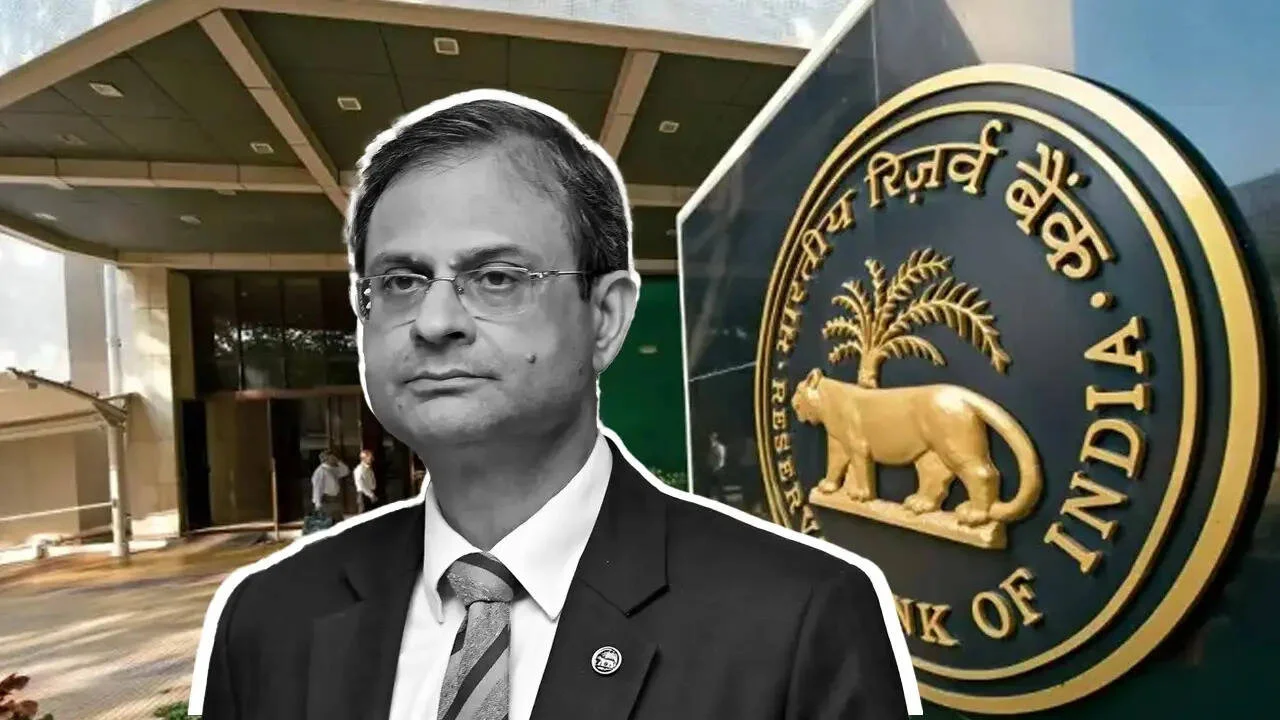
The Reserve Bank of India's Monetary Policy Committee (MPC) has concluded its crucial three-day meeting, leaving a nation of borrowers and investors holding their breath for the verdict on interest rates. While the air is thick with predictions of a "status quo" – meaning the repo rate will likely remain unchanged at 5.25% – a deeper dive reveals a more complex picture. The central bank, under the leadership of Governor Sanjay Malhotra, is walking a tightrope, balancing domestic stability with a volatile global economic landscape. But are we seeing a confident, strategic pause, or a reluctant holding pattern in the face of unseen headwinds?
The MPC's decision, due to be announced on February 6th, is the final word for the fiscal year 2026. This meeting, more than just a routine update, comes at a time when previous rate cuts are still being absorbed by the economy, and external factors, including a new US trade deal, are casting their shadow. The question isn't just if rates will change, but why, and what the implications of this carefully managed "neutral" policy stance truly are.
Read More: UK Economy Grows Very Slowly at End of 2025
The Familiar Script: A Predictable Pause?
The overwhelming consensus among analysts and financial news outlets is that the RBI will maintain its current policy rates. This is largely attributed to several factors that have been building over the past few months.
Previous Easing Cycle: The RBI has already orchestrated a significant cumulative cut of 125 basis points in the current easing cycle. This has demonstrably lowered borrowing costs for both individuals and businesses, with EMIs seeing a reduction.
Surplus Liquidity: The financial system is currently awash with liquidity, providing the central bank with ample room to maneuver and manage financial conditions without resorting to headline rate changes.
Focus on Transmission: A key objective appears to be ensuring that the benefits of the earlier rate cuts are fully passed on to borrowers and that the liquidity infusions are effectively channeled through the economy.
Read More: Udit Narayan's First Wife Accuses Him and Family of Removing Her Uterus Without Consent
"The RBI has already delivered a cumulative 125 basis points of rate cuts in the current easing cycle, significantly lowering borrowing costs and easing EMIs for households and businesses. System liquidity is in surplus, giving the central bank flexibility to manage financial conditions without altering the policy rate." (Times Now News)
Current Policy Rates at a Glance:
| Rate | Current Percentage |
|---|---|
| Repo rate | 5.25% |
| Reverse repo rate | 3.35% |
| Standing Deposit Facility (SDF) | 3.25% |
| Marginal Standing Facility (MSF) | 5.50% |
| Bank rate | 5.50% |
Source: Zee News
Beyond the Repo Rate: Where Does the Real Action Lie?
If the repo rate is set to remain unchanged, the spotlight inevitably shifts to other policy levers. Experts are keenly awaiting Governor Malhotra's commentary on the RBI's strategy for liquidity management and its approach to stabilizing bond markets.

Liquidity Tools: With headline rates on hold, the RBI is expected to rely more heavily on targeted liquidity tools and active market operations. This includes:
Open Market Operations (OMOs): The buying and selling of government securities to inject or absorb liquidity.
Variable Rate Repo (VRR) Operations: Shorter-term liquidity infusions through auctions.
Bond Market Stability: The government's substantial borrowing program for FY27 looms large. Persistent hardening in government bond yields, even after previous rate cuts, signals underlying pressures that the RBI will need to address. The MPC's stance on yield-curve stability will be crucial.
Read More: US Debt Growing Fast, Experts Say It's a Problem
"While the repo rate is expected to remain unchanged, experts believe that the RBI’s policy statement will closely outline its approach to liquidity infusion, open market operations (OMOs), and yield-curve stability—especially in light of the government’s sizeable borrowing programme for FY27." (Times Now News)
The question arises: is this shift towards liquidity management a proactive strategy to fine-tune the economy, or a reactive measure to counter market anxieties and potential fiscal pressures?
Global Murmurs and Domestic Anchors: The US Trade Deal's Echo
The timing of this MPC meeting is particularly interesting, coinciding with the news of a US trade deal. While presented as a factor that "adds comfort" and provides the RBI with "greater room to focus on liquidity management" (Times Now News), one must probe deeper.
Read More: Puducherry Leaders Say Elections Are Less Meaningful Without More Power
Currency Volatility: Has the trade deal stabilized the global currency markets, or has it introduced new uncertainties that the RBI is cautiously monitoring? Reports from SBI suggest that currency volatility remains a concern.
Global Economic Uncertainty: The global economic outlook continues to be fraught with unpredictability. How will this uncertainty translate into domestic economic conditions, and what specific risks is the RBI anticipating?
"The report stated that, despite earlier policy-rate easing, the central bank will hold rates this time, as several macroeconomic and global factors continue to pose challenges… the report cautioned that the global economy remains uncertain." (Economic Times)
Is the US trade deal truly a source of comfort, or is it merely another complex variable in an already intricate global economic equation that the RBI must navigate? How much independence does India's monetary policy truly have in the face of global economic giants?
Inflation and Growth: The Unspoken Dilemma
While the immediate focus is on rates and liquidity, the fundamental mandates of the RBI – price stability and sustainable growth – remain paramount.
Read More: Global Food Prices Dropped in April

Inflation Dynamics: Despite a favourable growth-inflation dynamic mentioned in some reports (Livemint), the persistent focus on inflation as the "main focus" (Zee News) cannot be ignored. What specific inflation risks are being closely watched, and how do they influence the MPC's cautious approach?
GDP Targets: Will the RBI revise its GDP and inflation targets? Any significant upward or downward revision could signal a shift in its assessment of the economy's trajectory and the effectiveness of its past policies.
"Analysts say the central bank is likely to focus more on liquidity management and policy transmission rather than immediate rate changes." (Zee News)
Are the current growth figures robust enough to withstand any potential inflationary pressures that might emerge? Is the "favourable" growth-inflation dynamic sustainable, or is it a temporary equilibrium?
The "Neutral Stance": A Sign of Confidence or Hesitation?
The MPC has maintained a 'neutral' policy stance. On the surface, this indicates that the committee is neither looking to stimulate nor curb growth aggressively. However, the continuous emphasis on this stance, especially when external pressures are evident, begs scrutiny.
Read More: ASUS Releases New Laptops in India with AI Power
What does "Neutral" really mean in this context? Is it a genuine reflection of balanced economic forces, or a diplomatic term to avoid signaling definitive future policy directions?
Past Incidents of "Neutrality": Have previous periods of a "neutral" stance by the RBI been followed by unexpected policy shifts, or have they indeed represented a period of sustained stability?
"The MPC maintained a ‘neutral’ policy stance. RBI Governor Sanjay Malhotra will announce the decisions on Friday, with a key focus on the repo rate." (Business Standard)
Could this "neutral" stance be a carefully crafted narrative to manage market expectations while the MPC grapples with evolving global and domestic challenges? What are the underlying macroeconomic and global factors that necessitate this prolonged period of cautious neutrality?
Conclusion: A Holding Pattern with Unseen Depths
The RBI's Monetary Policy Committee is poised to maintain the status quo on interest rates, a decision that aligns with market expectations and reflects a period of cautious optimism tempered by external uncertainties. The shift in focus towards liquidity management and bond market stability, rather than headline rate changes, signals a nuanced approach to steering the economy.
Read More: Education Helps People and Countries Get Richer
However, the prevailing narrative of a stable pause might be masking deeper concerns. The persistence of bond yield hardening, the unpredictable global economic environment amplified by geopolitical events, and the inherent tension between controlling inflation and fostering growth create a complex tapestry. The "neutral" stance, while appearing predictable, could be a deliberate strategy to retain flexibility.
The true test for the RBI lies not in the immediate decision of keeping rates unchanged, but in its ability to effectively communicate its strategy for navigating the forthcoming fiscal year. What hidden risks are being factored into their calculations? How will the RBI's actions on liquidity management truly impact credit flow and economic activity? And most importantly, how will this carefully calibrated approach fare against the inevitable shocks of the global economic landscape? The market, borrowers, and investors will be watching closely, seeking clarity beyond the immediate "hold."
Read More: Woman Feeds Elephants in Keonjhar, Showing How People and Animals Can Live Together
Sources: