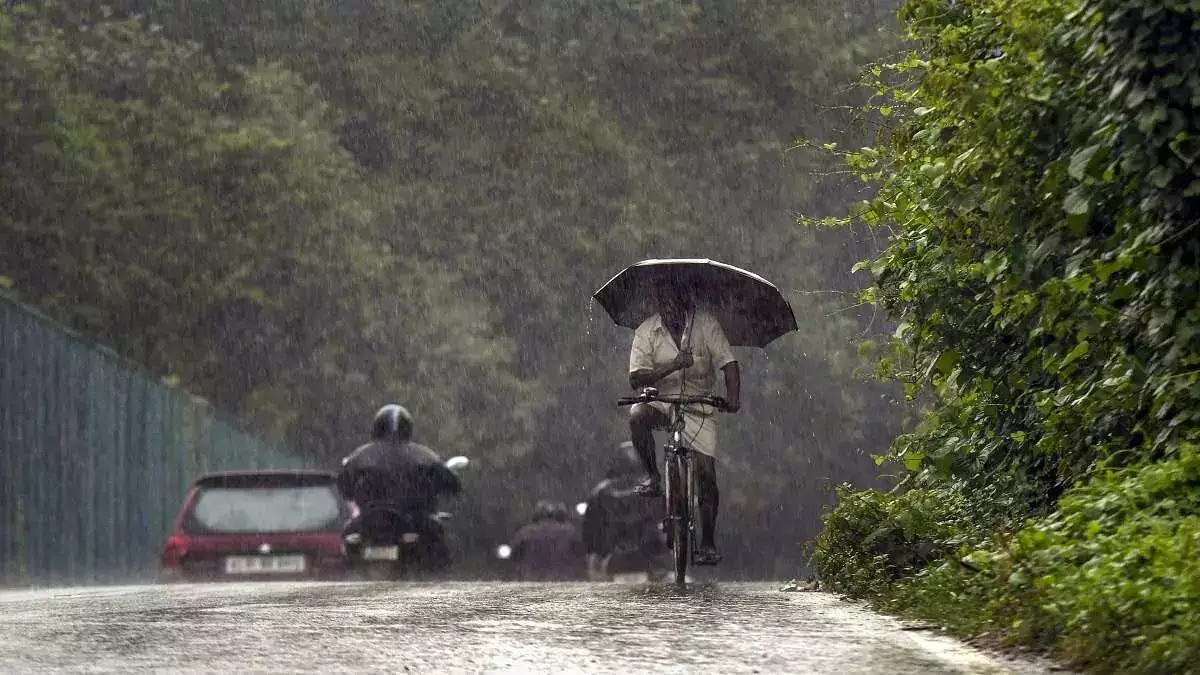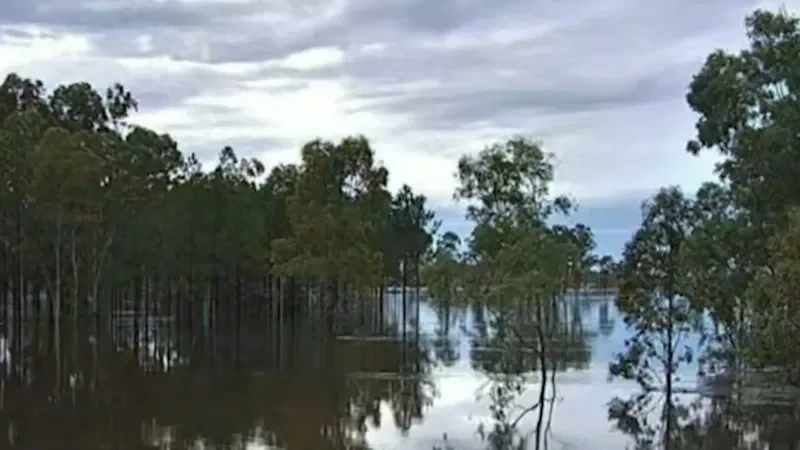
Water has stopped being a backdrop in Queensland. The movement of Tropical Low 29U across the coast has turned the atmosphere heavy, dragging rain from the north-west into the south-east corner. For the next 24 hours, the ground is expected to take on between 50 and 100 millimetres of water, with certain spots absorbing up to 150 millimetres. This is not a sudden event but a slow accumulation of pressure that makes the dirt move and the rivers rise.
Current Risks: Flash flooding is no longer a warning but a physical likelihood for the south-east coast and the Granite Belt.
Inland Movement: The low-pressure system is shifting its weight across the Maranoa, Warrego, and Darling Downs.
Duration: Authorities suggest this wet weather will occupy the region for at least another 48 hours, keeping catchments saturated.
Saturated Dirt and the Logic of Extraction
The geography of the state is currently defined by which river basins are holding and which are spilling. In the middle of February 2026, the logic of "staying put" failed for many, leading to forced extractions from rising waters. The catchment list reads like a census of every moving body of water in the region, from the Logan and Albert Rivers to the Sunshine Coast creeks.
Read More: Mumbai Red Alert July 2026 Causes School Closures and Train Delays

| Catchment System | Primary Impact Area | Recent Volume |
|---|---|---|
| Logan & Albert Rivers | South-East Coast | 100mm+ in 24hrs |
| Upper Brisbane River | Central Catchments | Flood Watch Active |
| Weir & Moonie Rivers | Inland/Southern | Heavy Inflow |
| Pine & Caboolture | North of Brisbane | Localized Flooding |
"It just came out with hail," a resident remarked during the November surge, a simple observation of a sky that had ceased to be predictable.
The Infrastructure of Fragility
When the rain isn't the primary weight, the wind and ice take over. The events of late 2025 proved that the power grid is a delicate web, easily snapped by frozen water. During that period, the air crackled with between 525,000 and 880,000 lightning strikes, a number so high it loses its meaning until the lights go out for 150,000 customers.
The physical consequences were varied and messy:
Logan Village and Cornubia saw ice the size of cricket balls.
Roofs were not just damaged but removed from their structures.
Concrete was chipped by falling debris, and cars were flipped, turning suburban streets into a scrap of failed engineering.
The Financial Labeling of Ruin
The term "Insurance Catastrophe" is the way the corporate world makes sense of a landscape that is falling apart. By late November 2025, over 16,000 claims were lodged across 140 postcodes. This is a bureaucratic counting of loss. The "catastrophe" isn't just the hail; it's the realization that the built environment in South-East Queensland is perpetually unprepared for the erratic behavior of the tropics.
Read More: Minister denies children sleep on office floors in Queensland 2026
Background:Historically, the region has oscillated between dry heat and sudden, violent deluges. The recent string of storms—from the Nov 2025 hail to the March 2026 tropical low—shows a pattern of constant atmospheric reloading. Each time the water recedes, the process of rebuilding begins, usually in the same spots where the rivers previously proved their dominance.