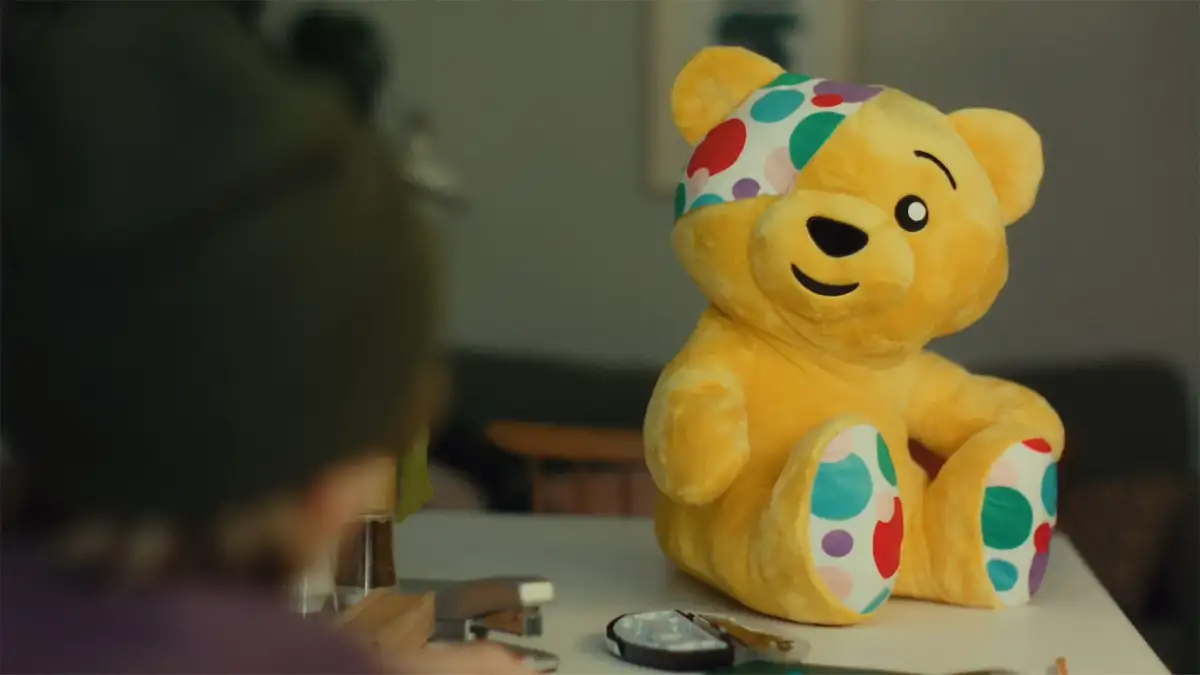
BBC Children in Need has initiated a strategic campaign, Pudsey Finds His Voice, coinciding with Mental Health Awareness Week 2026. For the first time in over 40 years, the organization’s mascot—historically a silent figure—will speak in a short film to advocate for open communication between children and adults.
Data from the organization indicates that 24% of children regularly suppress their worries, while 38% report that silence, driven by fear or embarrassment, has diminished their quality of life. The initiative includes a £1.24 million investment distributed among partners such as The Children’s Society and Mental Health Innovations to bolster local support structures.
Core Metrics and Objectives
The campaign shifts the focus from passive mascots to active intervention by targeting adult behavior. The underlying logic posits that environmental support correlates directly with childhood well-being.
| Metric | Reported Status |
|---|---|
| Children keeping worries private | 24% |
| Children reporting diminished life quality | 38% |
| Happiness gap for those with a confidant | 9x more likely to feel happy |
| Primary Campaign Instrument | 'Pudsey Finds His Voice' (Short film) |
The film, featuring actor Dexter Sol Ansell, premieres today, 11 May 2026, on The One Show.
The effort is supported by an updated Mental Health Hub designed to equip adults with tools to initiate difficult conversations.
Claire Hoyle, interim chief executive of the charity, stated that the goal is to bridge the gap for children who currently navigate crises without adult support.
Contextual Evolution of the Mascot
This campaign follows a shift in how the charity utilizes its imagery to signal social issues. In 2023, the organization launched Behind The Bandana, which featured the removal of the mascot’s eye covering to symbolize the "invisible" nature of modern childhood challenges.
Read More: Tracy Piggott 14km Galway Bay charity swim on 28 July 2026
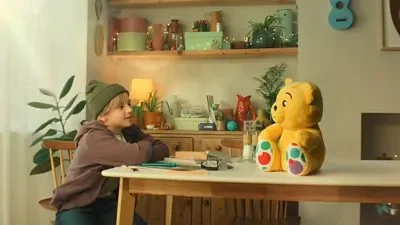
By breaking the mascot’s silence, the institution is attempting to transform a recognizable, mute brand asset into a pedagogical tool. While the aesthetic changes (removing the bandana) previously highlighted the existence of invisible struggle, this current development focuses on the remediation of that struggle through verbal exchange.
The strategy relies heavily on the psychological premise that children are more likely to seek help if the authority figures around them—parents, teachers, and guardians—demonstrate a receptive, communicative posture. The BBC framework suggests that silence is not merely a symptom of childhood anxiety, but a structural hurdle that requires adult-led disruption.