Scientists Uncover New Principles Guiding Protein Interaction
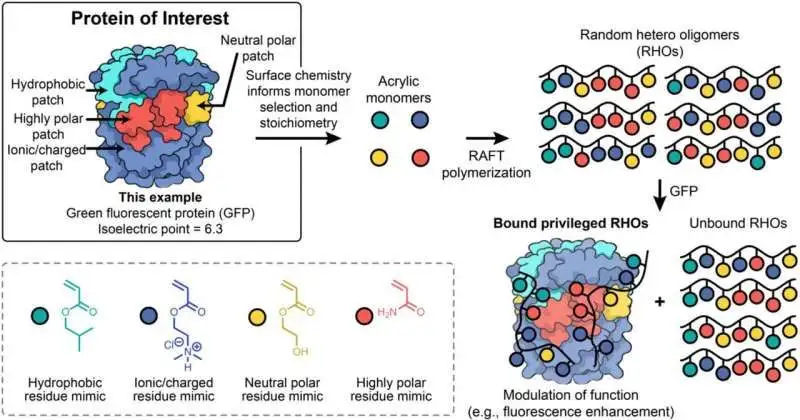
Virginia Tech researchers have published findings suggesting that the precise sequence of polymer chains is not the sole determinant of protein function. The study, appearing in Angewandte Chemie, indicates that overall composition plays a far more significant role than previously understood. This challenges long-held assumptions in biomaterials and drug design, where meticulous sequence tailoring has been the norm.
The core revelation is that proteins can maintain their intended functions even when the polymer sequences binding to them are imperfect or less than perfectly tailored. This implies a degree of robustness in biological systems, where "good enough" structural arrangements can still lead to desired outcomes. The research involved a collaborative effort spanning chemistry, chemical engineering, and computational science.
Embracing Imperfection
Traditionally, creating polymers with exact sequences for specific binding and function has been a significant hurdle. However, the work led by Darwin Gomez in Adrian Figg's lab, with contributions from Ronnie Mondal and Swarn AnyObject Seth, demonstrates that achieving more specific polymers, even if not perfectly exact, can still yield functional results.
Read More: New 50-Meter Telescope to See Hidden Universe Parts
The findings offer a potential paradigm shift, moving away from an exclusive focus on absolute precision towards a broader understanding of how molecular components interact. This could simplify the design process for new materials and medicines, potentially accelerating development by accommodating inherent variability.
Disordered Chains and Cellular Order
This development echoes broader trends in protein research, including studies on intrinsically disordered protein polymers. Work in this area, published in journals like ScienceDirect, explores how these flexible chains can self-assemble into distinct cellular structures. Such research investigates their 'stimulus-responsive phase behavior' and how 'sequence features impact phase behaviors', particularly in 'prion-like domains'. The ability of these disordered polymers to form 'biomolecular condensates' – described as 'organizers of cellular biochemistry' – highlights the functional significance of less rigid molecular architectures.
Read More: Cannes Film Festival 2026 AI and Politics Rules Explained
While the Virginia Tech study focuses on specific polymer-protein interactions, it aligns with a growing appreciation for how biological systems leverage flexibility and compositional nuances, rather than demanding absolute perfection, to achieve complex tasks. The implications extend to designing therapeutics and advanced materials that can better navigate the complexities of biological environments.