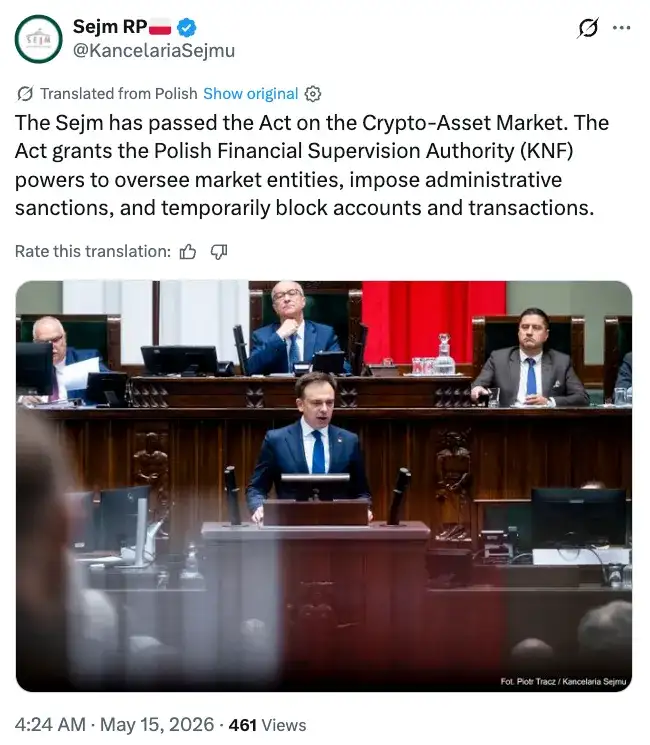
WARSAW – Poland's parliament has again moved to align its digital asset market with the European Union's Markets in Crypto-Assets (MiCA) regulation. Lawmakers in the lower house, the Sejm, approved a government-backed bill establishing a licensing regime for crypto asset service providers (CASPs). This legislative push aims to integrate Poland into the broader EU framework for digital currencies, with significant implications for oversight and operation within the nation's crypto sector. The move comes amid a looming EU deadline and follows repeated presidential vetoes of earlier iterations of the legislation.
The recently approved bill designates the Polish Financial Supervision Authority (KNF) as the primary regulator for crypto activities. This grants the KNF expanded enforcement powers, which critics contend go beyond the stipulations of the EU's MiCA regulation. These powers reportedly include the ability to block websites and impose substantial fines, reportedly in the millions of zlotys.
Read More: Solaris Energy SEI Stock Price Forecast Reaches $91.98 by July 2027
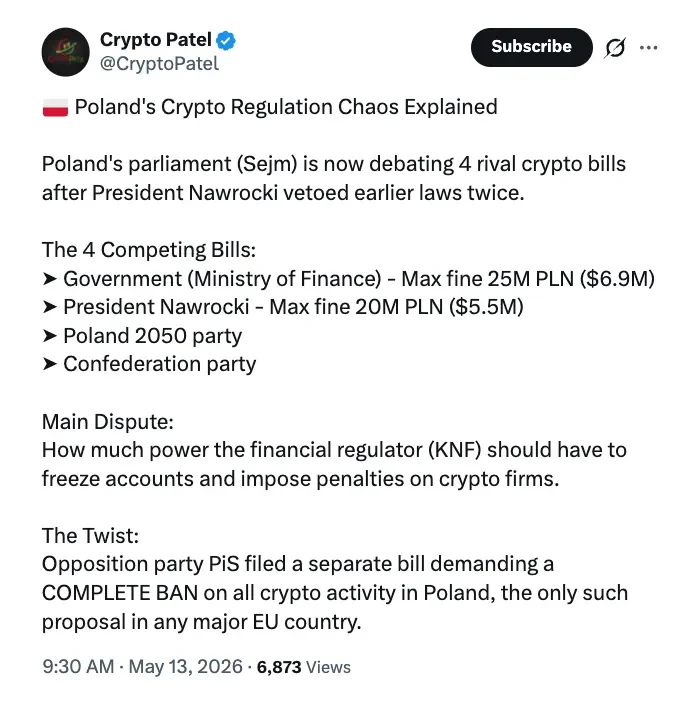
Despite objections from some quarters of the crypto industry and figures like President Karol Nawrocki, who previously vetoed similar bills, Prime Minister Donald Tusk's government reintroduced the legislation without amendments. The government frames the passage as essential for national oversight and for avoiding potential isolation within the EU's single market for financial services. Failure to comply with MiCA by the July deadline could jeopardize firms' authorization to operate and limit access to the EU's passporting system.

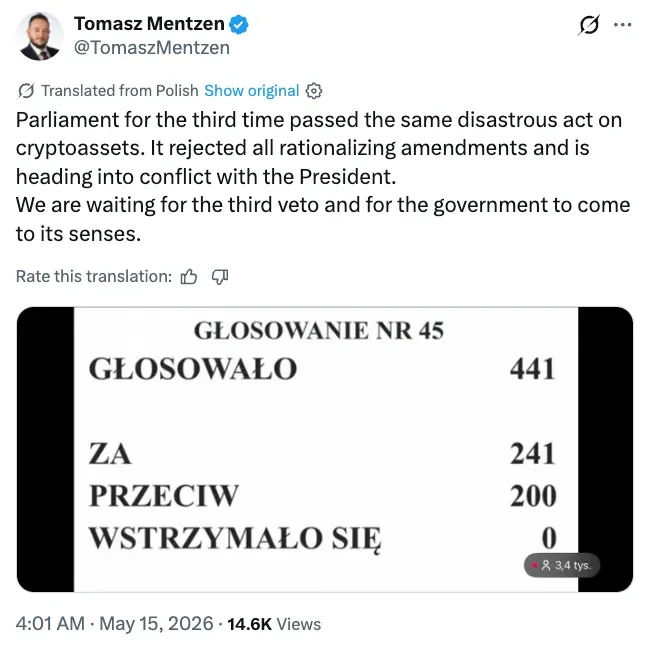
The parliamentary vote saw 241 lawmakers in favor and 200 against. This marks at least the third attempt by Poland to establish a comprehensive regulatory structure for cryptocurrencies. The legislative process has been marked by political contention, with the opposition Law and Justice party (PiS) proposing a separate bill advocating for a complete ban on all crypto-asset activities in Poland.
Read More: US troops in Poland delayed, not cancelled, officials say
The broader context includes ongoing scrutiny of the sector, exemplified by a fraud investigation into Zondacrypto, a former prominent domestic exchange, following numerous user complaints about lost funds. This probe, which prosecutors have expanded, casts a shadow over the operational landscape even as the legal framework is being formalized.
The push for stricter regulation, potentially making Poland's rules among the most stringent in the EU, has drawn criticism from within the crypto community. Concerns have been raised that overly restrictive measures could stifle innovation, deter investment, and hinder job creation by driving startups and exchanges away from operating within the country. The stated aim of integrating digital assets into regular financial systems, however, is presented as a move towards standardization and greater participation in the growing global digital asset economy.
Read More: Rocket Companies brand update in April 2026 changes logos and names